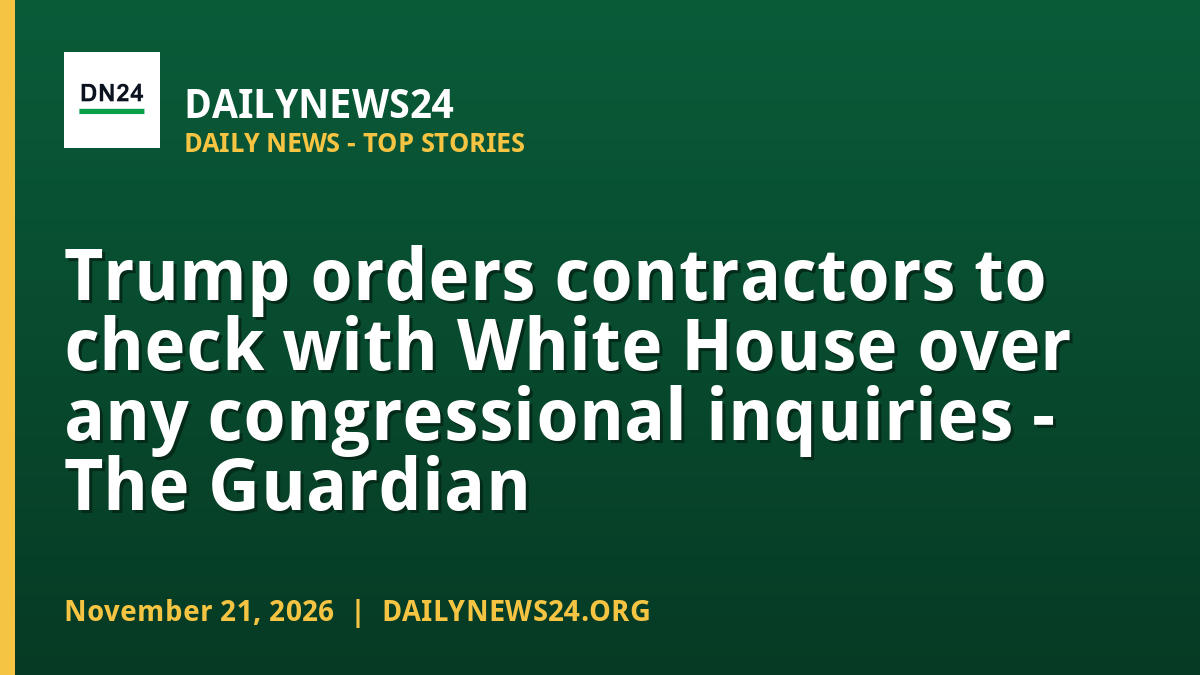
Washington, D.C. — In a move that legal scholars and congressional aides are calling an unprecedented expansion of executive power, the White House has issued a directive requiring federal contractors to obtain prior approval from the administration before responding to any inquiries from Congress. This executive order fundamentally alters the long-standing protocol for government oversight, shifting the burden of compliance from individual agencies to a centralized presidential gatekeeping process. For ordinary citizens, this change does not immediately alter daily life, but it signals a significant tightening of the flow of information between the legislative and executive branches, potentially shielding sensitive contracts and agency operations from legislative scrutiny.
The Mechanics of the New Directive
The core mechanism of the order is deceptively simple but legally complex. It mandates that any federal contractor receiving a subpoena, formal request, or informal inquiry from members of Congress or congressional staff must pause their response process. Instead of consulting their legal teams or agency points of contact to draft a reply, they must now first contact the White House. This creates a bottleneck where the President’s office has the final say on whether information is disclosed, redacted, or withheld entirely. Previously, contractors would coordinate with the specific agency that awarded the contract, but this new protocol inserts the executive branch’s central leadership into every single interaction.
Impact on Communication Channels
This shift effectively centralizes the decision-making process for transparency. By requiring a check with the White House, the administration gains the ability to align all contractor responses with a unified political or strategic narrative. Critics argue this is designed to prevent the release of information that could be politically damaging to the current administration. Supporters, however, contend that it ensures consistency in how the government communicates with Congress, preventing disparate agencies from releasing conflicting or premature data that could confuse the legislative process.
Historical Context and Precedent
While federal contractors have always had obligations to cooperate with oversight bodies, the requirement for explicit presidential approval before responding is a notable departure from historical norms. In past administrations, the delegation of authority to agency heads meant that the White House rarely intervened in the granular details of congressional inquiries unless the matter involved national security secrets or high-level policy disputes. This new order blurs the line between executive privilege and administrative procedure. It suggests a strategy where the executive branch seeks to control the narrative not just through public statements, but through the administrative machinery of the federal government itself.
Competing Perspectives on Oversight
The reaction to this directive has been sharply divided along partisan lines. Democratic lawmakers have characterized the move as an attempt to obstruct their investigations, arguing that it violates the constitutional balance of powers. They contend that Congress has the inherent right to demand information from entities doing business with the government, and that inserting a presidential veto into that process is unconstitutional. On the other hand, administration officials and Republican allies frame the order as a necessary measure to protect national security and classified information. They argue that contractors often lack the context to determine what is sensitive, and that a central review process prevents accidental leaks that could compromise ongoing operations or diplomatic negotiations.
Legal Challenges on the Horizon
Legal experts predict that this executive order will face immediate challenges in federal courts. The core legal question will be whether the President can unilaterally alter the statutory obligations of contractors regarding congressional oversight. Many contracts are governed by specific federal statutes that mandate cooperation with Congress. If the executive order conflicts with these statutes, courts may rule it invalid. Furthermore, the separation of powers doctrine is a robust legal principle, and any attempt by the executive branch to impede legislative oversight is subject to strict judicial scrutiny. The outcome of these potential lawsuits will define the boundaries of presidential authority in the coming years.
Implications for Federal Contractors
For the thousands of companies that hold federal contracts, this new requirement introduces significant operational risk. Compliance with the order means that contractors must now navigate a more complex approval chain. A delay in responding to a congressional inquiry could result in penalties, loss of contract, or legal action for non-compliance. Conversely, providing information without the required White House approval could lead to accusations of violating executive orders. This creates a catch-22 for legal teams, who must now balance their duty to the government client with their obligation to the legislature. Many industry groups have expressed concern that this uncertainty could chill legitimate business interactions and slow down essential government functions that rely on timely information flow.
Financial and Operational Burdens
The administrative burden of this new protocol is not negligible. Contractors will need to establish new internal processes to track and manage these White House consultations. This likely involves additional legal resources and longer turnaround times for all congressional requests. For small and medium-sized businesses that hold federal contracts, this overhead could be particularly burdensome. The potential for delays in responding to oversight queries may also impact the efficiency of government programs, as agencies may struggle to obtain the data they need to monitor contractor performance and ensure accountability.
Why This Matters to the Public
While the immediate effects are felt by contractors and lawmakers, the long-term implications for the public are significant. Congressional oversight is a critical mechanism for ensuring that taxpayer dollars are spent correctly and that federal agencies operate within the law. If this oversight process is hindered or slowed by executive interference, it could lead to less transparency regarding how public funds are used. For voters, this means fewer opportunities to hold both branches of government accountable through their elected representatives. The integrity of the checks and balances system is foundational to democratic governance, and any erosion of this system has far-reaching consequences for public trust in institutions.
What to Watch Next
In the coming weeks, the focus will shift to the legal and political fallout from this executive order. Key indicators to monitor include:
- Court Filings: Look for lawsuits filed by congressional committees or legal advocacy groups challenging the constitutionality of the order.
- Contractor Responses: Observe how major federal contractors handle their first few congressional inquiries under the new protocol. Delays or refusals to respond may become more common.
- Congressional Retaliation: Congress may respond by using its other powers, such as withholding funding or launching new investigative initiatives, to counter the executive branch’s move.
- White House Guidance: Watch for further memos or clarifications from the White House detailing exactly what constitutes an "inquiry" and the scope of the approval process.
This development marks a significant escalation in the ongoing struggle for control between the legislative and executive branches. As the courts weigh in and Congress reacts, the stability of the existing oversight framework will be tested. For now, the directive stands as a clear signal of the administration’s intent to centralize control over government information, setting the stage for a prolonged battle over the limits of presidential power.