The Capture of a High-Profile Fugitive
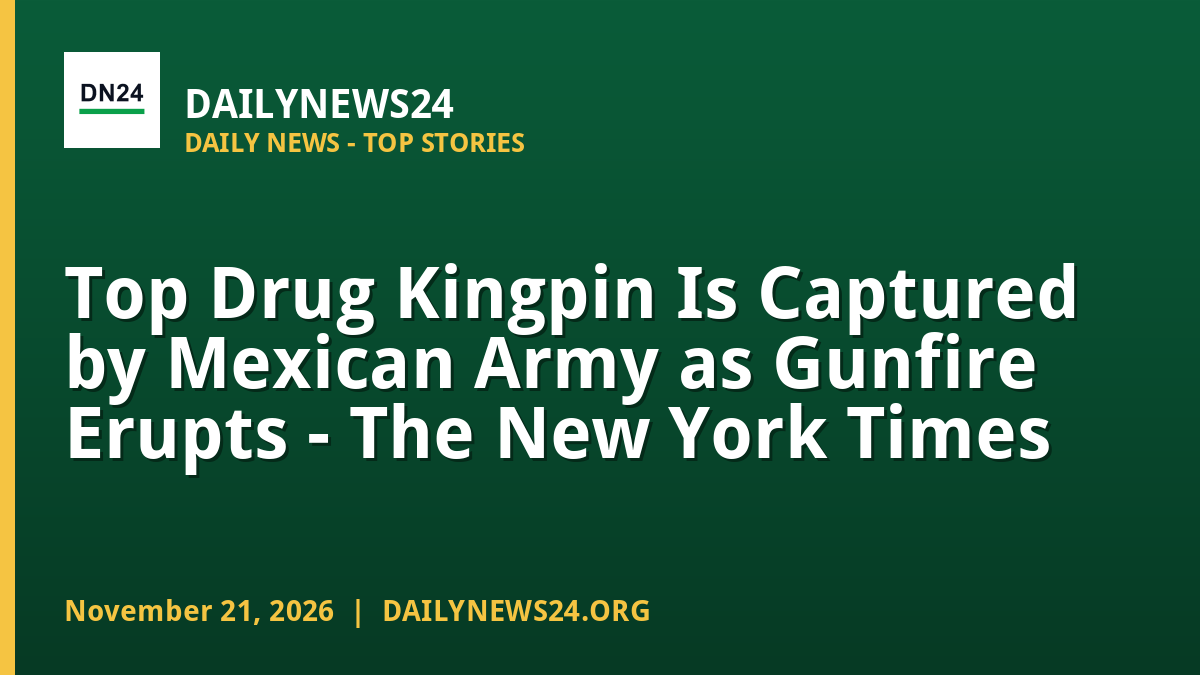
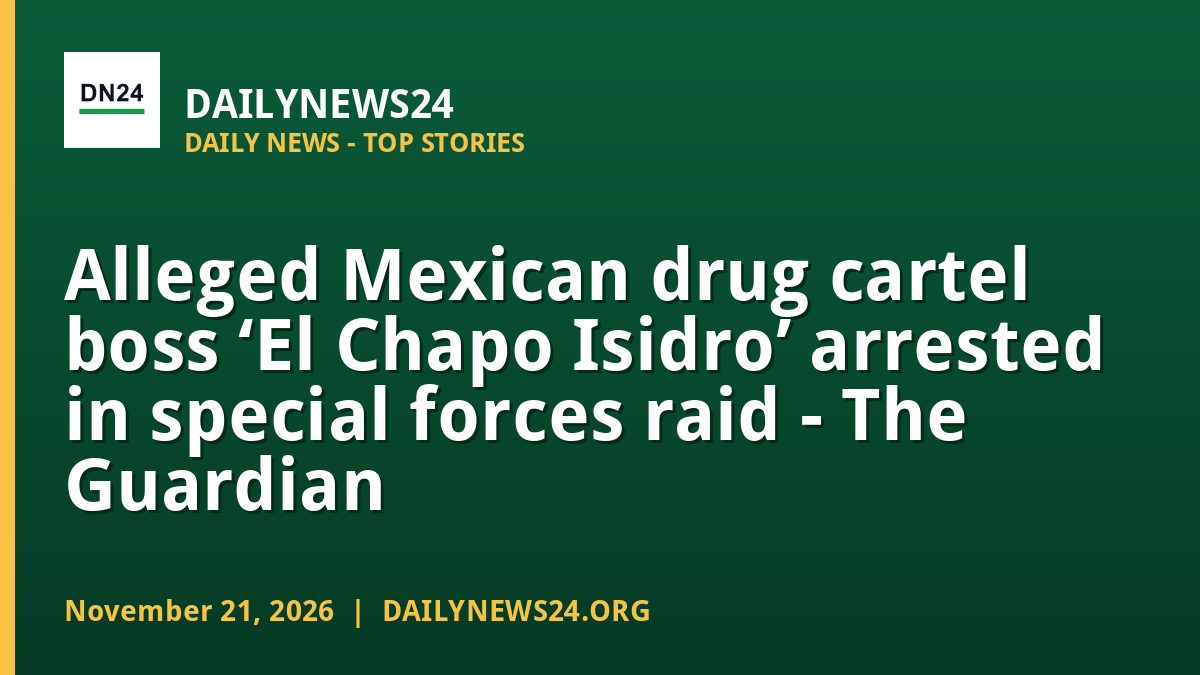
Mexican security forces executed a high-risk operation that resulted in the arrest of Fausto Isidro Meza Flores, widely known by his alias "El Chapo Isidro." The capture represents a significant milestone in the ongoing battle against transnational organized crime in the region. Meza Flores is not a minor figure; he is listed on the FBI’s most wanted list, indicating that his activities have crossed international borders and impacted US national security interests directly. The operation involved special forces units who breached his location under heavy security protocols, marking a shift toward more aggressive tactical engagements by the Mexican military against cartel leadership.
The timing of this arrest is particularly notable given the persistent violence that has plagued several Mexican states in recent years. By targeting a kingpin of this caliber, the authorities aimed to disrupt the command structures of the dominant cartels. However, history suggests that removing a top leader often leaves a power vacuum rather than extinguishing the organization. The immediate aftermath of the raid saw sporadic gunfire and movement of armed groups, signaling that the retaliatory phase of cartel warfare has likely begun.
Who Is Fausto Isidro Meza Flores?
A Legacy of Violence and Logistics
To understand the weight of this arrest, one must examine the scope of Meza Flores’s operation. He is considered a top-level strategist for the Sinaloa Cartel, one of the most powerful drug trafficking organizations in the world. Unlike previous leaders who focused primarily on production, Meza Flores has been described as a logistical mastermind, overseeing the movement of narcotics, weapons, and human smuggling routes. His ability to maintain low visibility while managing billions in illicit revenue makes him a rare and dangerous asset for the cartel.
- Primary Role: Senior lieutenant with authority over major trafficking corridors.
- International Impact: Directly linked to the influx of fentanyl and methamphetamine into the United States.
- Evolving Profile: Has adapted to surveillance technologies by using encrypted communications and safe houses in remote areas.
The Mechanics of the Special Forces Raid
The operational details of the arrest highlight the increasing sophistication of Mexican counter-narcotics tactics. The raid was not a simple police bust but a coordinated special forces mission. Intelligence agencies likely tracked Meza Flores for weeks or months, mapping his movements, identifying his allies, and planning the extraction. The use of armored vehicles and rapid deployment teams suggests that the target was known to be heavily guarded. The swift capture implies that the intelligence on his location was precise, a capability that has improved significantly as Mexican forces have integrated more advanced surveillance tools.
This level of operational security is critical. In previous years, similar raids often ended in failed evacuations or the escape of the target due to leaks within law enforcement or through cartel informants. The success of this raid indicates that the intelligence chain was secure and that the troops involved were prepared for a firefight. The fact that the arrest was announced publicly without immediate confirmation of casualties suggests that the military prioritized the integrity of the operation over immediate media spectacle, a sign of professional military conduct in the face of a high-value target.
Immediate Consequences and Regional Instability
The arrest did not occur in a vacuum. Reports from multiple news outlets confirm that violence erupted in the areas surrounding the raid. Cartel factions are known to use kinetic force to protect their leadership; when a kingpin is taken, the response is often immediate and violent. This recent eruption of gunfire serves as a reminder to ordinary citizens in affected states that the war on drugs is not confined to media reports but has tangible, dangerous consequences for public safety.
- Blockades of major highways to hinder police movement.
- Arson attacks on government buildings or public infrastructure.
- Attempted rescues of the detainee during transport.
These actions are standard procedures for cartel enforcement on the ground. They serve both as a warning to the state and as a practical attempt to free their leader. For residents in these regions, the days following a high-profile arrest are the most dangerous, requiring heightened vigilance and adherence to emergency protocols issued by local authorities.
Competing Perspectives on the Strategic Impact
Law Enforcement vs. Cartel Resilience
Law enforcement officials view the arrest as a decisive blow to the cartel’s operational capacity. They argue that removing a logistical coordinator disrupts the flow of drugs and forces the organization into disarray. This perspective aligns with the US government’s long-standing strategy of pressuring cartels by targeting their leadership and financial networks. The capture of a FBI-listed fugitive also strengthens bilateral relations, demonstrating Mexico’s commitment to shared security goals.
Conversely, critics and security analysts argue that decapitation strategies rarely dismantle large criminal organizations. They point to historical precedents where the death or arrest of a leader led to fragmentation and increased violence as rival factions fought for control. In the case of the Sinaloa Cartel, the organization has shown remarkable resilience, absorbing the loss of several high-profile leaders over the past decade. The theory here is that the cartel’s business model is decentralized enough to survive the loss of any single individual, even one as influential as Meza Flores.
What This Means for Ordinary Readers
For the average person in the United States or Mexico, the primary concern is the continued disruption of supply chains and the potential for increased violence near borders. The arrest of a logistics expert may lead to temporary fluctuations in drug availability, but it is unlikely to halt the flow of narcotics entirely. More importantly, the violence associated with such operations poses a direct risk to community safety. Residents in border states should be aware of increased police presence and the potential for accidental crossfire during cartel mobility operations.
Furthermore, this event underscores the deeply entrenched nature of organized crime in the region. It highlights that despite years of military intervention and diplomatic pressure, these organizations remain powerful enough to challenge the state. Readers should understand that this arrest is a step in a long, complex process, not a final solution. The focus must remain on demand reduction, economic development, and judicial reform to address the root causes of cartel power.
Outlook: What to Watch Next
In the coming weeks, attention will turn to the legal proceedings surrounding Meza Flores. His extradition to the United States is likely, given his presence on the FBI list, but this process can be lengthy and legally complex. Meanwhile, observers will monitor for signs of cartel fragmentation. An increase in violence in specific regions would suggest a power struggle, while a period of calm might indicate a successful consolidation of power by a successor. The international community will also watch for any shifts in diplomatic tone between Mexico and the US, as successful cooperation on high-value targets often leads to increased resource sharing and joint operations.