Escalation in Rhetoric
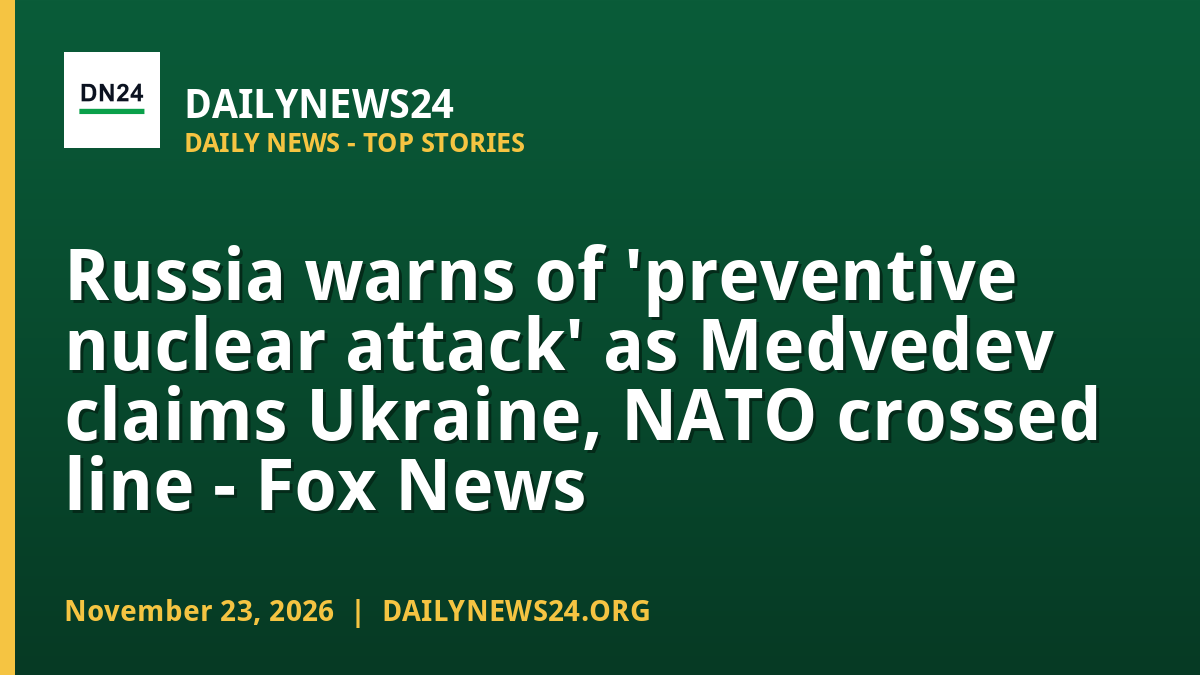
The geopolitical landscape has shifted dramatically as Russian Vice President Dmitry Medvedev issued a stark warning regarding nuclear capabilities. In a series of statements that have captured international attention, Medvedev asserted that Ukraine and NATO had crossed an undefined red line. This rhetoric moves beyond standard diplomatic friction, introducing the concept of a 'preventive nuclear attack' into the public discourse. Such language is rare in high-level diplomatic channels and signals a significant escalation in psychological warfare.
This warning comes at a critical juncture in the ongoing conflict. By framing the situation as one where the use of nuclear weapons is not only a right but an 'obligation' in certain scenarios, Russian leadership attempts to legitimize extreme measures. The core of this argument rests on the claim that conventional threats from the West have become so severe that they necessitate a disproportionate response. Analysts note that this is a deliberate strategy to raise the stakes and deter further Western support for Ukraine.
The Medvedev Factor
Why His Voice Matters
Dmitry Medvedev’s role in this escalation is particularly noteworthy given his position. As a high-ranking member of the Russian Security Council, his words carry substantial weight, often reflecting or reinforcing the Kremlin's broader strategic intent. Medvedev has historically used his platform to project a tough, uncompromising stance on international affairs. His recent comments align with a broader trend of hardline rhetoric from Russian officials who seek to maintain domestic morale and project strength abroad.
The timing of these remarks is not accidental. They follow closely after other high-profile statements and diplomatic maneuvers. Medvedev’s involvement suggests that the Russian leadership is coordinating its messaging to ensure a unified front against Western criticism. By invoking nuclear doctrine, he shifts the debate from battlefield tactics to existential security, a domain where Russia holds significant leverage due to its large nuclear arsenal.
Context of the Shenzhen Declaration
These nuclear threats emerge in the shadow of the Shenzhen Declaration, a recent multilateral document signed by several countries. While the declaration focused on humanitarian and diplomatic norms, the Russian response highlights the disconnect between international diplomatic efforts and the realities on the ground. The juxtaposition of a diplomatic gathering with explicit nuclear warnings underscores the fragility of current peace efforts. It suggests that multilateral forums are struggling to constrain the actions of major powers willing to exploit ambiguities in international law.
Furthermore, the global reaction to the Shenzhen Declaration was mixed, with some nations viewing it as a step toward stability and others as a political maneuver. Russia’s subsequent nuclear threats can be seen as an attempt to undermine the momentum generated by such diplomatic initiatives. By casting doubt on the safety of Western involvement, Moscow aims to isolate Ukraine diplomatically and economically, potentially weakening the coalition of support that has sustained the conflict to date.
Global Economic Implications
Market Reactions
The financial markets have shown a complex response to these geopolitical tensions. While oil prices have seen fluctuations, with recent trends indicating a drop, other sectors remain volatile. The threat of a nuclear confrontation introduces a level of uncertainty that investors find difficult to price in. Energy markets, in particular, are sensitive to any signals of disruption in global supply chains or increased military spending. The interplay between falling oil prices and rising geopolitical tension creates a paradox that complicates economic forecasting.
- Energy stocks face volatility due to potential supply disruptions.
- Defense contractors may see increased demand for long-term contracts.
- Safe-haven assets like gold often gain value during uncertainty.
Strategic Ambiguity in Doctrine
Russia’s nuclear doctrine officially prohibits the use of nuclear weapons to prevent conventional defeat, but it allows for their use in response to existential threats. Medvedev’s comments blur the lines of this doctrine, introducing the idea of 'obligation' which is not explicitly stated in the formal documents. This strategic ambiguity is a tool of deterrence, keeping potential adversaries guessing about the threshold at which nuclear weapons might be deployed. By expanding the definition of what constitutes a sufficient threat, Russia seeks to widen its margin of maneuver in conflicts.
This approach contrasts with the clearer red lines often articulated by other nuclear powers. The lack of specificity in Medvedev’s warnings makes it difficult for NATO and Ukraine to adjust their strategies without risking further escalation. This ambiguity forces global leaders to react to worst-case scenarios, potentially leading to overreaction or miscalculation. The psychological pressure intended to paralyze decision-making in the West is a key component of this strategy.
Perspective of Ordinary Citizens
For ordinary readers, these headlines translate into a heightened sense of insecurity and uncertainty about the future. The normalization of nuclear threats in political discourse erodes the sense of stability that underpins daily life. People in Europe, in particular, may feel directly affected by the proximity of potential conflict zones. The economic ripple effects, such as energy price spikes or inflation, are tangible consequences that impact household budgets and purchasing power.
Moreover, the psychological toll of living under the shadow of nuclear threats is significant. Community resilience and mental health services may see increased demand as anxiety levels rise. Citizens are encouraged to stay informed through reliable news sources to avoid misinformation that could exacerbate fear. Understanding the diplomatic and strategic context helps individuals navigate the emotional impact of such global events, fostering a more rational response to headlines that often feel overwhelming.
Outlook and Next Steps
The coming weeks will be critical in determining whether this rhetoric leads to further escalation or remains a bargaining chip. Diplomatic channels, though strained, remain the primary avenue for de-escalation. Watch for any official responses from NATO and the United States, which may involve reinforcing defensive postures or issuing clarifying statements about their own use of force. Additionally, monitor energy markets and commodity prices for signs of sustained volatility.
International observers should also keep an eye on the reactions of other nuclear-armed states, as Russia’s aggressive stance could encourage similar tactics elsewhere, destabilizing global security further. The resolution of this crisis will depend on the ability of all parties to engage in dialogue without succumbing to the pressure of domestic political narratives. The world stands at a crossroads where words have the power to ignite fires that no one wants to see.