The Legal Pivot That Changes Everything
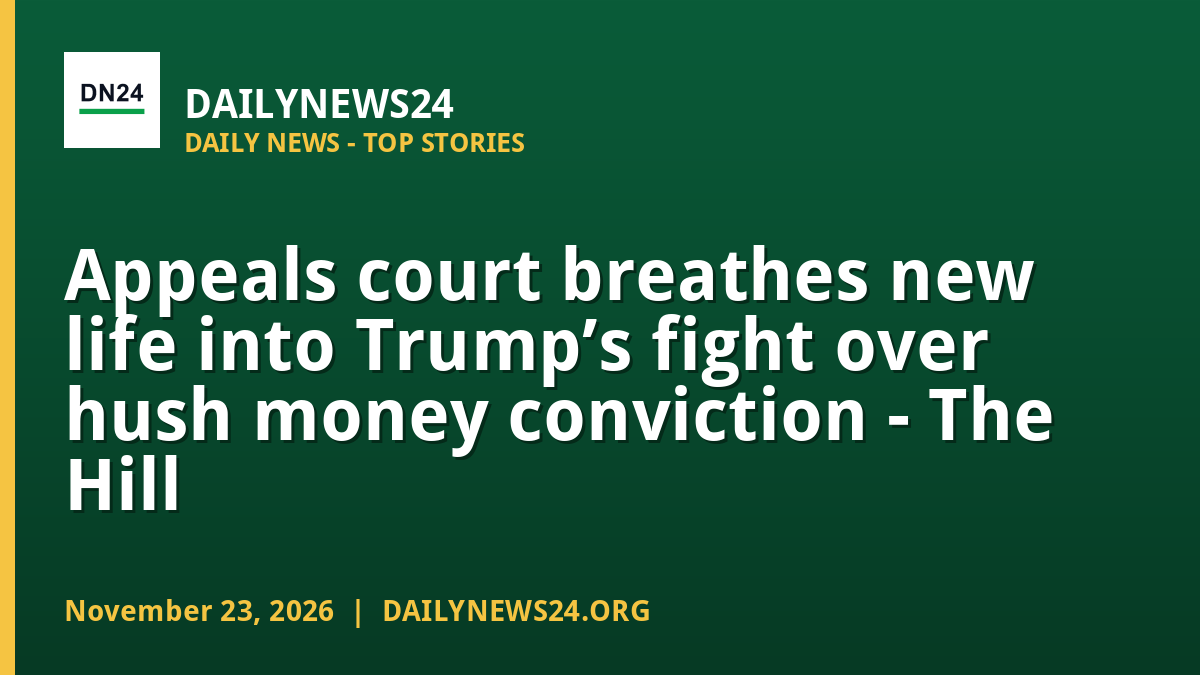
New York prosecutors secured a sweeping jury verdict last year, marking a historic moment in American legal history. Donald Trump was found guilty on all counts related to hush money payments made during the 2016 campaign. However, the legal battle has not ended; it has merely shifted to a higher arena. A federal appeals court has recently issued a ruling that breathes significant new life into the former president’s defense. This decision does not overturn the conviction outright, but it acknowledges specific procedural errors and evidentiary issues that could ultimately lead to a retrial or a reduction of charges. For observers of the American justice system, this turn of events signals that the fight over presidential immunity and state-level prosecution of federal officials is far from settled.
Understanding the Hush Money Verdicts
To grasp the weight of this new development, one must recall the foundational facts of the original trial. The case centered on payments made to adult film star Stormy Daniels, allegedly to prevent her from speaking publicly about a purported affair with Trump. The money was funneled through Trump’s personal attorney, Michael Cohen, who later pleaded guilty and testified against his former boss. The jury found that Trump falsified business records to conceal these payments, a violation of New York state law. While federal law does not explicitly cover this type of record-keeping for political campaigns, state law in New York does.
The conviction carried the threat of up to four years in prison, though imprisonment was unlikely given Trump’s age and health status. The immediate consequence, however, was the loss of voting rights in New York, which barred him from appearing on the 2024 ballot in that crucial electoral state. This procedural hurdle was compounded by the broader political fallout, which polarized the electorate and intensified the narrative surrounding presidential accountability. The recent appeals court action directly challenges the stability of these consequences.
The Role of Federal Imminence and Immunity
Why Timing Matters in Legal Defense
A central pillar of Trump’s legal strategy has been the doctrine of federal preemption. This principle suggests that state governments cannot interfere with the functions of the federal executive branch. Trump’s legal team has argued that prosecuting a sitting or former president for acts related to the presidency violates the principle of separation of powers. The appeals court’s recent scrutiny focuses heavily on whether the New York prosecution improperly attempted to regulate federal political conduct. This is a high-stakes constitutional question that has no simple answer and has divided legal scholars for decades.
Furthermore, the issue of "official acts" versus "personal acts" remains a gray area. The defense contends that the payments were part of a legitimate political strategy to manage celebrity endorsements and mitigate legal threats, thereby constituting official conduct. The prosecution argued these were personal scandals covered up for electoral gain. The appeals process allows judges to weigh these competing interpretations, and the recent ruling suggests that at least some judges find merit in the immunity arguments or the procedural flaws in the original trial. This nuance is critical because it prevents the case from being dismissed entirely, keeping the legal machinery in motion.
Procedural Flaws and Evidentiary Gaps
Beyond the constitutional arguments, the appeals court has examined the day-to-day conduct of the trial. Defense attorneys pointed to potential errors in how evidence was presented and how the jury was instructed. For instance, questions were raised about the admissibility of certain communications and the extent to which the jury was exposed to information that could prejudice their view of the former president’s character rather than his legal liability. In appellate review, judges look for "harmful error," meaning mistakes that might have changed the outcome of the trial. The recent ruling indicates that such errors may have occurred, necessitating a closer look at the trial transcript and record.
- Challenges to jury instructions regarding intent.
Debates over the definition of "falsification" in business records.
Arguments concerning the privilege of attorney-client communications.
These technical issues, while dry to the general public, are the gears that turn the wheels of justice. If the court determines that the evidence was insufficiently clear or that the legal standards were misapplied, it may order a new trial or vacate specific counts. This is not uncommon in high-profile cases, where the complexity of the law often leads to multiple layers of litigation. For Trump’s legal team, even a partial victory here provides leverage and delays the finality of the conviction.
Implications for the 2024 Election and Beyond
The political ramifications of this legal tug-of-war are profound. With the presidential election looming, every legal development is scrutinized for its impact on voter sentiment. A potential retrial or reduction of charges could alleviate some of the legal uncertainty surrounding Trump’s candidacy. Conversely, a definitive rejection of his legal arguments would solidify the precedent that former presidents are not immune to state prosecution for campaign-related conduct. This precedent would have lasting effects on future potential defendants, including other political figures who may face similar charges.
For ordinary readers, this story is about the boundaries of power. It raises the question of whether the executive branch is above the law in matters of state regulation. The outcome will shape our understanding of accountability and the rule of law in a deeply polarized nation. It also affects the credibility of the judicial system, as both sides view the court’s actions through a partisan lens. Supporters of Trump see the appeals process as a necessary correction of bias, while critics view it as an overreach that undermines due process. This divide makes it difficult to achieve a consensus on the merits of the case, turning a legal dispute into a cultural battleground.
What to Watch in the Coming Months
As the appeals process continues, several key milestones will determine the trajectory of this case. First, the court may issue a mandate that specifies exactly what actions must be taken, such as a new trial on specific counts or a modified sentencing hearing. Second, there is the possibility of a petition for certiorari to the United States Supreme Court. If either side believes the appellate court has made a significant error in law, they may seek a final ruling from the nation’s highest court. A Supreme Court decision would provide the ultimate clarity on the issues of immunity and preemption.
Observers should also monitor the response from New York prosecutors. Whether they plan to appeal further or accept a negotiated resolution will influence the speed of the proceedings. The timing is also critical, as any major legal developments coinciding with the election cycle will dominate the news cycle and potentially shift voter priorities. Ultimately, this case serves as a test case for the limits of presidential power. The resolution will not only affect Donald Trump but will also set a precedent that echoes through the corridors of power for generations to come.