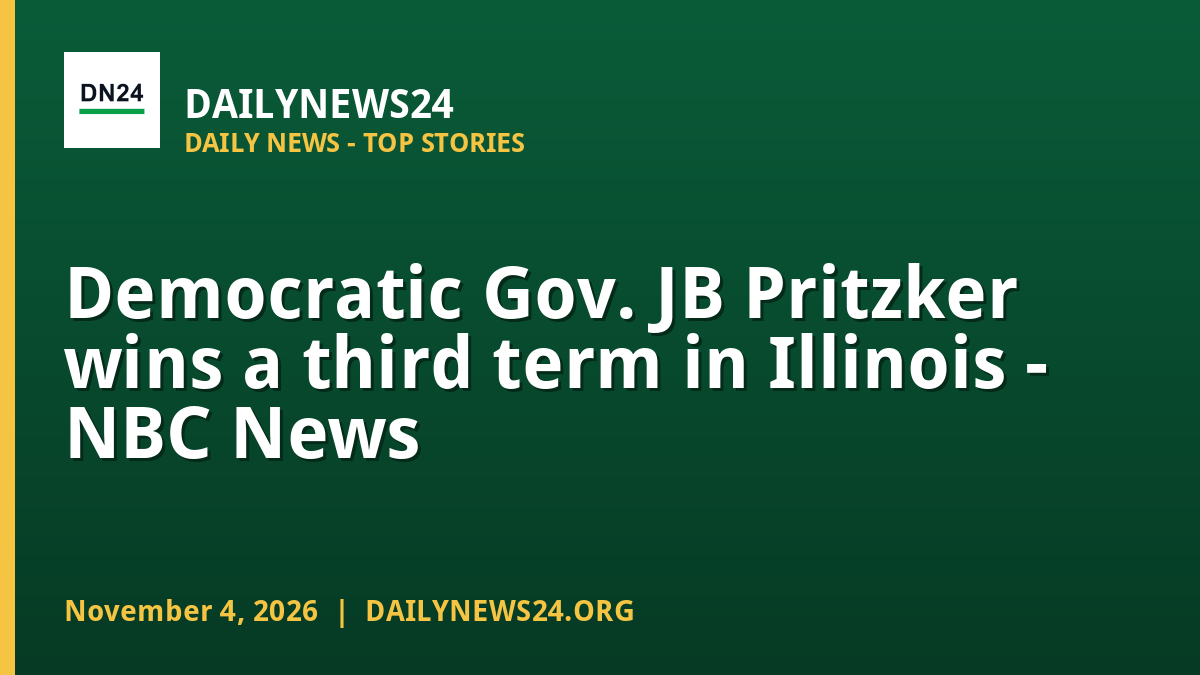
In a decisive outcome for the 2026 midterm cycle, Illinois Governor J.B. Pritzker has secured a third term in office, defeating Republican challenger Darren Bailey in a highly contested rematch. The victory was quickly projected by major news outlets, signaling a significant moment for the Democratic Party as it seeks to maintain its legislative and executive grip on the state. This result underscores the shifting electoral dynamics in the Midwest, where urban cores remain strongholds for Democrats while suburban and rural areas present ongoing challenges for the party’s long-term viability.
The Anatomy of a Rematch
The 2026 election was framed heavily as a continuation of the 2022 contest, with Pritzker and Bailey facing off again after four years of divergent policy approaches. Pritzker, who has served as governor since 2019, entered the race with the advantage of incumbency and a track record of legislative achievements. His ability to control the agenda for the first half of the term allowed him to highlight specific policy wins, including infrastructure investments and healthcare expansions, which resonated with key voter demographics.
Conversely, Bailey positioned himself as a challenger focused on economic revitalization and public safety. His campaign emphasized a critique of Pritzker’s record on crime and tax policy, arguing that the state needed a change in direction. However, the rematch format often favors the incumbent, as voters have had a full term to evaluate the current administration’s performance. The outcome suggests that despite Bailey’s efforts to frame the race as a choice between continuity and change, Pritzker’s legislative successes outweighed the opposition’s narrative.
Political Implications for the Midwest
Shifting Demographics and Voter Turnout
The victory in Illinois carries broader implications for the Midwest political landscape. As demographic shifts continue, with urban areas growing and suburbs becoming more politically competitive, the ability to mobilize diverse coalitions is crucial. Pritzker’s campaign likely benefited from strong turnout in Chicago and its suburbs, where Democratic loyalty remains high. The results also highlight the importance of voter engagement in midterms, where turnout can significantly swing outcomes in close races.
For the Democratic Party, this win reinforces the strategy of focusing on state-level races to build a pipeline for future federal contests. By maintaining control of influential states like Illinois, Democrats can establish policy precedents and test messaging that may have national appeal. The success in Illinois also serves as a counter-narrative to concerns about the party’s declining relevance in traditional swing states.
Key Issues and Policy Focus
Economic Challenges and Infrastructure
Economic issues were central to the campaign, with both candidates addressing concerns about job growth, cost of living, and infrastructure needs. Pritzker’s administration has prioritized large-scale infrastructure projects, aiming to modernize the state’s transportation networks and attract new industries. These initiatives require substantial state funding and have faced scrutiny from budget hawks, but their completion in the latter years of the first term provided tangible benefits for voters.
Meanwhile, Bailey focused on tax policy, arguing that high state taxes were driving businesses and residents out of Illinois. His platform included proposals for tax relief and incentives for small businesses, appealing to voters in the suburbs and rural areas who feel the weight of the state’s fiscal burden. The debate over tax policy reflects a broader national conversation about the role of state governments in economic development and the balance between social services and fiscal responsibility.
Voter Perspectives and Campaign Dynamics
Urban vs. Suburban Divides
The campaign dynamics illustrated the persistent divide between urban and suburban voters in Illinois. In Chicago, Pritzker enjoyed strong support, driven by issues such as housing, education, and public transit. Suburban voters, while generally leaning Democratic, are increasingly sensitive to issues like school funding and local taxation. Rural areas, traditionally leaning Republican, saw lower turnout, which may have limited Bailey’s ability to secure a decisive victory in those regions.
Both campaigns invested heavily in digital outreach and ground operations, recognizing the importance of direct communication with voters. Pritzker’s team leveraged social media to amplify his policy achievements and connect with younger demographics, while Bailey focused on community events and one-on-one conversations to build trust. The effectiveness of these strategies varied by region, with urban areas responding more positively to digital campaigns and suburban voters valuing face-to-face engagement.
Future Outlook and Legislative Priorities
Challenges Ahead for the Third Term
With a third term secured, Governor Pritzker faces several challenges in the next four years. The state’s budget remains a critical issue, with ongoing debates over funding for education, healthcare, and infrastructure. Pritzker will need to navigate these issues while maintaining coalition support among various interest groups. Additionally, the federal political environment may influence state-level policies, particularly in areas like immigration and healthcare, where state and federal jurisdictions often intersect.
The governor’s agenda is likely to focus on sustaining economic growth and addressing long-term structural issues in the state’s economy. This includes efforts to diversify the state’s industrial base and invest in emerging sectors such as technology and renewable energy. The success of these initiatives will depend on bipartisan cooperation, which has been elusive in recent years. Pritzker’s ability to build consensus on key issues will be a defining factor in the effectiveness of his third term.
Conclusion
The 2026 Illinois gubernatorial election marks a significant milestone for the Democratic Party in the Midwest. Pritzker’s victory demonstrates the resilience of the party’s coalition in key states and provides a platform for advancing progressive policies at the state level. As the political landscape continues to evolve, the lessons from this election will be closely watched by politicians and analysts across the country. The coming years will test Pritzker’s ability to deliver on his promises and maintain the momentum built during his campaigns.