A Historic Shift in Florida Politics
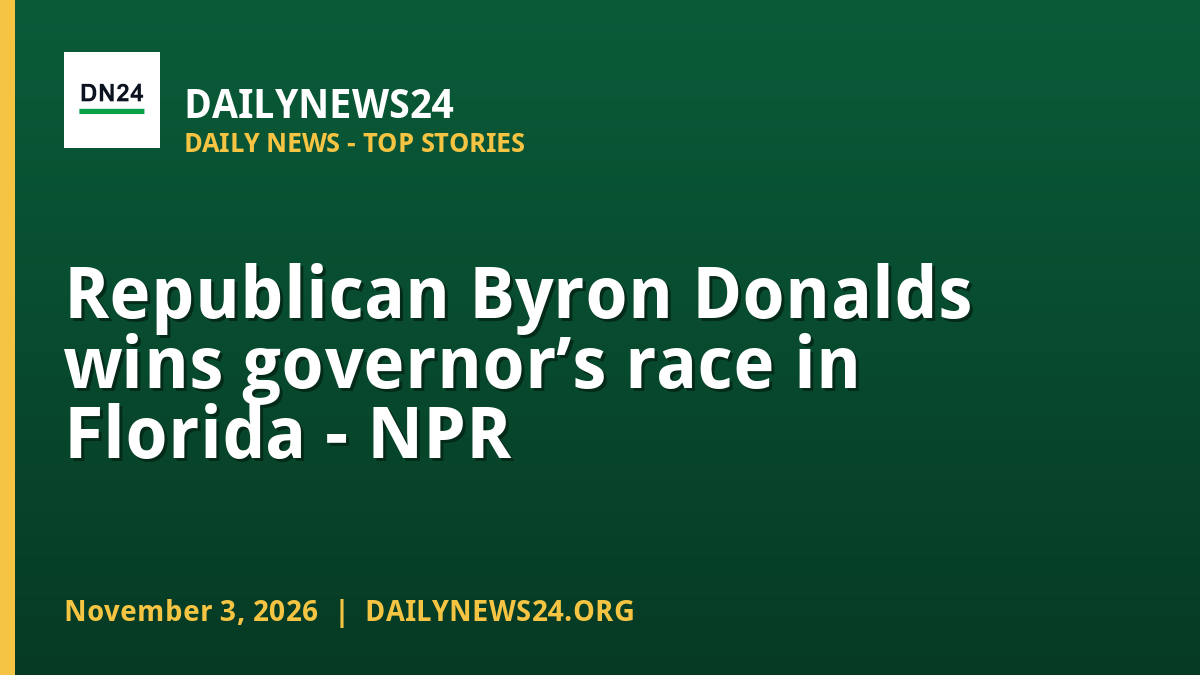
On Tuesday, the political landscape of Florida underwent a seismic transformation as Republican Representative Byron Donalds secured a decisive victory in the race for governor. This win marks a pivotal moment not only for Donalds personally but for the entire state, as he becomes the first Black individual to hold the top executive office in Florida history. The outcome underscores a shifting demographic and political dynamic in a state that has long been considered a bellwether for national elections.
The victory caps a campaign that was intensely focused on both local issues and the broader trajectory of the state’s future. Donalds’ success is a testament to the growing influence of diverse voter bases within the Republican coalition. It signals that the traditional boundaries of political identity are expanding, particularly in the Sun Belt region where demographic changes are reshaping electoral maps.
The Campaign Trail and Key Issues
Throughout the campaign, Donalds positioned himself as a pragmatist who could bridge the gap between conservative fiscal policies and the economic needs of a rapidly growing population. His platform emphasized tax relief, infrastructure development, and education reform, topics that resonated with voters across the state’s diverse communities.
- Economic Growth: Donalds highlighted Florida’s status as a major hub for tourism and technology, promising to streamline business regulations to attract more investment.
- Education: Parent choice and school safety were central to his message, appealing to both suburban and urban voters who prioritize K-12 improvements.
- Infrastructure: With millions of new residents moving to Florida, traffic and housing concerns were top-of-mind issues that Donalds addressed with specific infrastructure plans.
His opponent, while competitive in certain regions, struggled to counter Donalds’ narrative of unity and forward-looking governance. The candidate’s ability to connect with voters outside of traditional party bases was a significant factor in his eventual victory.
Demographic Context and Voter Turnout
Florida’s changing demographics play a critical role in understanding this election’s significance. The state has seen a substantial increase in non-white residents over the past decade, with Black and Hispanic voters becoming increasingly influential in determining election outcomes.
The Rise of the Black Vote
Donalds’ victory suggests a notable shift in the alignment of Black voters in Florida. While the state has historically leaned Democratic in many urban areas, the suburban expansion has created new voting districts where racial diversity and political affiliation overlap in complex ways. Analysts note that Donalds’ appeal to these voters was based on shared economic interests rather than traditional party loyalty.
Turnout numbers were high across the board, indicating a high level of engagement among the electorate. The intensity of the race meant that every vote counted, and ground game efforts were crucial in securing localities where margins were tight.
Competing Perspectives and Reactions
Reactions to the election result have been mixed, reflecting the polarized nature of American politics today. Supporters of Donalds celebrated the win as a triumph for inclusivity and merit within the Republican Party. They argued that the result proves that conservative values resonate with a wide range of voters, regardless of race.
Conversely, some Democratic leaders and civil rights organizations expressed disappointment, noting that the loss of a historic opportunity for a Black Democratic governor was a setback for their platform. They highlighted ongoing challenges regarding voting access and representation in state government. This divergence in perspective underscores the continuing struggle for political dominance in a state that is increasingly pivotal in national politics.
Independent political observers have pointed out that while Donalds’ victory is historic, it does not necessarily signal a permanent realignment. The political environment in Florida remains fluid, with both parties vying to capture the attention of new voters who are moving to the state in large numbers.
Implications for National Politics
Florida’s governor’s race is never just a local affair; it serves as a barometer for national trends. Donalds’ success provides the Republican Party with a narrative of broad appeal that it can leverage in future national campaigns. The win suggests that the party is adapting to demographic changes, potentially expanding its electoral base beyond its traditional strongholds.
For Democrats, the loss serves as a reminder of the need to strengthen their messaging in suburban and newly populated areas. The state’s electoral college votes are crucial in presidential elections, and control of the governor’s office carries significant weight in the balance of power within the state government.
Policy Priorities Going Forward
With the election behind him, Donalds will now focus on implementing his agenda. Key areas of focus are expected to include:
- Expanding trade schools and vocational training to meet labor market demands.
- Investing in solar energy and other renewable sources to reduce energy costs.
- Enhancing cybersecurity measures to protect state government data and infrastructure.
These initiatives will require collaboration with the state legislature, where Donalds will need to build consensus among both Republicans and Democrats to pass meaningful legislation.
What to Watch Next
As Byron Donalds prepares to take office, attention will turn to his ability to deliver on his promises. The coming months will be critical in establishing his working relationship with the legislature and his capacity to address the state’s immediate challenges. Stakeholders, from business leaders to community organizations, will be watching closely to see if this historic win translates into substantive policy changes that benefit all Floridians. The next few years will likely be defined by the execution of this agenda and its impact on the state’s continued growth and prosperity.