The Verdict in Jackson’s Political Crisis
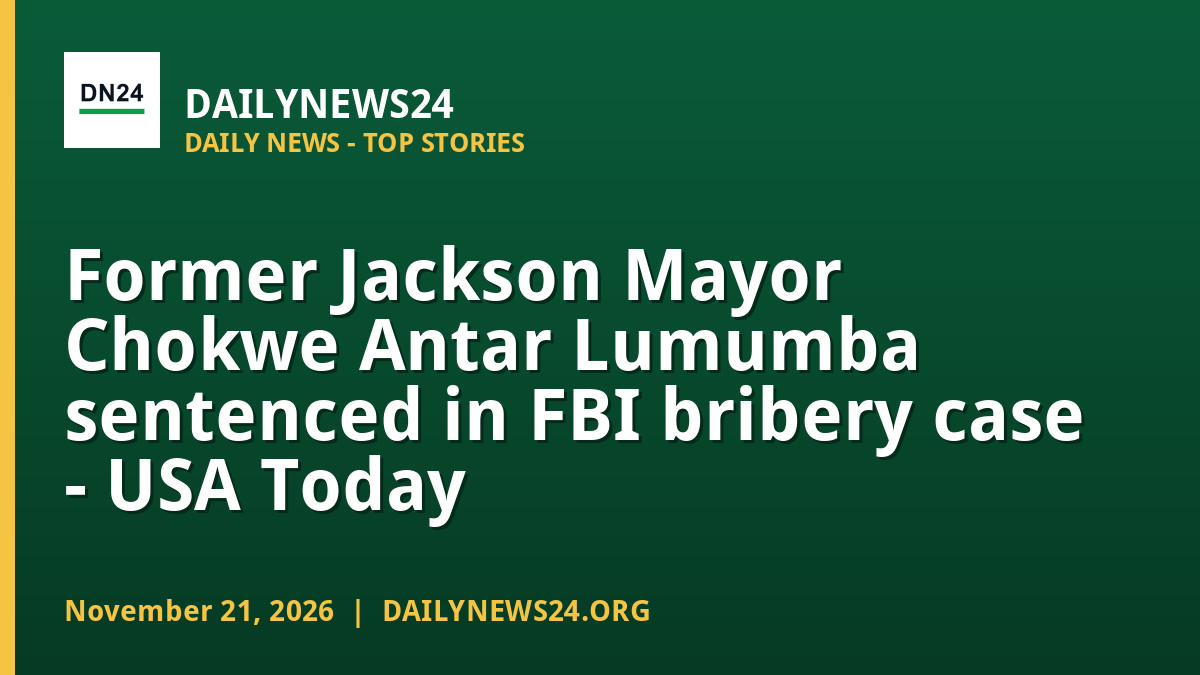
Former Mayor Chokwe Antar Lumumba has been formally sentenced to federal prison following a protracted legal battle that has dominated headlines in Mississippi. The ruling, which resulted in a prison term exceeding three years, marks the culmination of a federal bribery case brought by the FBI and the Department of Justice. This outcome is not merely a personal legal defeat for Lumumba, but a significant juncture in the political history of Jackson, the state’s capital. The sentence underscores the severity with which federal authorities view the corruption of public office, particularly in cities grappling with deep-seated social and economic challenges. For observers of American politics, the case serves as a stark reminder that elected officials, regardless of their populist appeal, remain subject to rigorous legal scrutiny when allegations of financial misconduct arise.
Understanding the Federal Charges
The charges against Lumumba centered on a scheme involving the misuse of his position as mayor for personal gain. Federal prosecutors alleged that he engaged in bribery, accepting unlawful benefits in exchange for official acts and decisions. These allegations were not isolated incidents but part of a broader pattern of alleged misconduct that undermined the integrity of municipal governance in Jackson. The FBI’s investigation revealed that Lumumba allegedly leveraged his authority to secure favorable treatment in local contracts and other administrative matters. The specific legal mechanism of the charge involved the exchange of value for public action, a core component of federal bribery statutes. This legal framework allows for significant prison sentences, reflecting the gravity of betraying public trust. The case highlighted how federal law can intersect with local politics when the conduct in question meets the threshold for federal jurisdiction.
Key Elements of the Prosecution
- Alleged acceptance of bribes in exchange for official acts
- Misuse of mayoral authority for personal financial benefit
- Investigation led by the FBI and federal prosecutors
- Charges that violated federal anti-corruption laws
Background of the Jackson Administration
Chokwe Antar Lumumba first assumed the role of mayor of Jackson in 2013, bringing a charismatic and often controversial presence to the city’s leadership. His administration was characterized by ambitious social programs aimed at addressing poverty, education, and community development. However, his tenure was also marked by allegations of misconduct and legal troubles that began well before his removal from office. Lumumba was removed from his position in 2017 amidst a controversy involving an employee, which led to a legal battle over his involuntary resignation. The subsequent federal criminal case added another layer of complexity to his political legacy. The juxtaposition of his social advocacy with his legal demise has made him a polarizing figure in Mississippi politics. Supporters view him as a victim of political persecution, while critics see his sentencing as a necessary consequence of his actions. This duality has fueled intense debate within the local community and beyond.
The transition of power in Jackson following Lumumba’s removal was turbulent, reflecting the deep divisions within the city’s political landscape. The city has since struggled to maintain stability and effective governance, with subsequent administrations facing their own set of challenges. The legacy of the former mayor continues to cast a long shadow over local politics, influencing voter sentiment and party dynamics. The federal sentencing now provides a definitive legal conclusion to a chapter that has unfolded over several years. It shifts the focus from hypothetical accusations to confirmed legal consequences, altering the historical record of Jackson’s modern political era. This shift is significant for understanding the trajectory of the city’s governance and the accountability of its leaders.
The Role of Federal Intervention
The involvement of the FBI in this case illustrates the increasing role of federal agencies in overseeing local government corruption. Federal bribery laws provide a robust toolkit for prosecuting misconduct that crosses state lines or involves the use of federal funds or authority. In this instance, the federal government stepped in to ensure that the alleged violations were addressed with the appropriate severity. This intervention complicates the relationship between state and local political entities, as federal laws often take precedence in matters of corrupt malfeasance. The sentencing by a federal judge further emphasizes the national interest in upholding the integrity of public office. For taxpayers and citizens, this federal oversight is intended to protect public resources and ensure that elected officials act in the best interest of the community. The case serves as a precedent for how federal authorities may handle similar situations in other municipalities across the country.
Competing Perspectives on the Outcome
Reactions to the sentencing have been sharply divided, reflecting the broader political polarization surrounding Lumumba. Supporters argue that the legal process has been driven by political motives, suggesting that the charges were an attempt to silence a outspoken leader who challenged the status quo. They point to the timing of the investigation and the nature of the allegations as evidence of a biased prosecution. On the other hand, opponents and legal experts maintain that the evidence presented in court was sufficient to support the conviction and the subsequent sentence. They argue that the rule of law must be applied equally to all public officials, regardless of their political affiliation or popularity. This divergence in opinion highlights the challenges of maintaining public trust in legal institutions when the individuals involved are politically prominent figures. The debate is not just about the facts of the case but about the underlying values of accountability and justice in American democracy.
Community Impact and Public Sentiment
- Supporters view the case as politically motivated
- Critics emphasize the importance of legal accountability
- Public trust in local governance remains fragile
- Debate continues over the legacy of the administration
Implications for Local Governance
The sentencing of a former mayor has profound implications for how local governments in Mississippi and beyond approach compliance and ethical standards. It serves as a cautionary tale for current and future officials, who must navigate the complex legal landscape surrounding public office. The case may lead to stricter internal controls and oversight mechanisms within municipal governments to prevent similar occurrences. Additionally, it could influence how local political parties recruit and vet candidates, with a greater emphasis on background checks and ethical training. The economic impact on Jackson is also a consideration, as political instability can hinder investment and development. The city’s ability to recover from this scandal will depend on its capacity to rebuild trust with its residents and partners. The long-term effects on the political culture of the area remain to be seen, but the case has undoubtedly left a lasting mark.
What to Watch Next
As the legal proceedings conclude with the sentencing, attention will now turn to the practical implications of the prison term and any potential appeals. Lumumba’s legal team may seek to challenge the sentence or the underlying convictions, which could extend the legal saga for several years. Meanwhile, the political landscape in Jackson will continue to evolve, with local leaders working to address the underlying issues that allowed the scandal to unfold. Monitoring the response of state lawmakers and federal agencies to this case will be crucial for understanding broader trends in political accountability. The community’s reaction to the sentencing will also be a key indicator of the city’s readiness to move forward. Ultimately, the case will be remembered not just for its legal outcome but for what it reveals about the state of democracy and governance in a major American city. The next chapters will be written by the actions of both the legal system and the public, as they strive to restore integrity to public life.