The geopolitical landscape in the Middle East has shifted dramatically in recent days, marking a sharp increase in tension between the United States and Iran. As the conflict intensifies, Iranian leadership has issued stern warnings regarding their capacity to respond to perceived economic and military threats. The core of this dispute centers on maritime security and the broader implications for global energy markets. This escalation is not merely a diplomatic spat but a strategic maneuver that could have far-reaching consequences for international trade and regional stability.
The Immediate Crisis: Naval Standoff
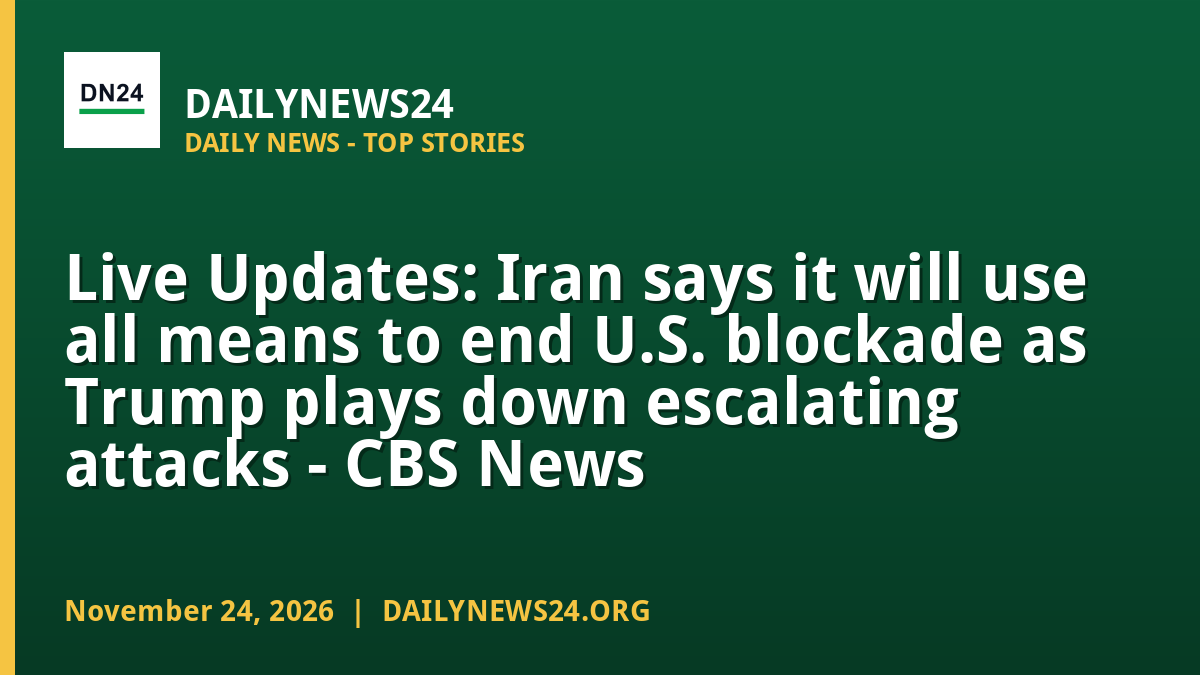
Recent reports indicate that the United States has implemented what Iranian officials describe as a naval blockade, a characterization that has drawn immediate ire from Tehran. The Strait of Hormuz, a narrow waterway where approximately a fifth of the world's oil supply passes, has become the focal point of this confrontation. Iranian media and state-aligned sources have reported that several oil tankers have encountered mine-like incidents in these waters, suggesting a deliberate or accidental escalation in hostilities.
These incidents have complicated the narrative around the blockade. While the U.S. government maintains that its presence is for security and enforcement of sanctions, Iran views these actions as an existential threat to its sovereignty and economic lifeline. The physical presence of naval assets in such a critical chokepoint creates a fragile environment where miscalculation can lead to catastrophic outcomes for both nations and the global economy.
Iran's Strategic Response
Iranian Foreign Minister Seyed Abbas Araghchi has been vocal in rejecting the premise of a "land blockade," labeling such a scenario as impossible due to the complex logistical realities of the region. However, the rhetoric has shifted toward a commitment to use "all means" to counter the naval restrictions. This language suggests a willingness to engage in asymmetric warfare, which may include the use of non-state proxies, cyber attacks, or direct naval engagements.
- Navial Minimization: Iran is likely to focus on disrupting shipping routes through low-cost, high-impact tactics.
- Diplomatic Isolation: Tehran is working to frame the U.S. actions as aggressive overreach to gain international sympathy.
- Internal Mobilization: The regime is preparing its domestic population for the possibility of prolonged conflict.
This multifaceted approach allows Iran to maintain plausible deniability while still exerting significant pressure on U.S. interests. By refusing to admit to direct involvement in every incident, Tehran can keep the tension high without necessarily triggering a full-scale conventional war that it may not be able to sustain against a superior military force.
The White House Perspective
President Donald Trump has adopted a different tone in addressing the escalation, often playing down the severity of the attacks while simultaneously signaling strength. His administration has emphasized that the U.S. is committed to protecting freedom of navigation and preventing Iran from becoming a dominant power in the region. The discrepancy in narratives between Washington and Tehran highlights a broader communication gap that complicates de-escalation efforts.
Trump's approach appears to rely on economic pressure and military deterrence rather than direct diplomatic engagement. By minimizing the impact of the tanker incidents, the administration aims to project confidence and discourage further escalation. However, this strategy carries risks, as it may be interpreted by Iranian hardliners as weakness, encouraging them to test U.S. redlines more aggressively.
Implications for Global Energy Markets
The global oil market is acutely sensitive to events in the Strait of Hormuz. Any disruption to the flow of oil from the Persian Gulf can cause immediate spikes in crude prices, affecting everything from gasoline costs in the United States to manufacturing inputs in Europe and Asia. Investors are closely monitoring news from the region, with volatility in energy stocks serving as a barometer for geopolitical risk.
As Iran's leverage over oil exports weakens due to existing sanctions and the current crisis, there is a paradoxical effect: the threat of total closure becomes more dangerous. If Iran believes its economic position is deteriorating, it may be more inclined to escalate hostilities to force the U.S. to the negotiating table. This dynamic creates a dangerous feedback loop where economic pressure leads to military brinkmanship.
Regional Alliances and Proxy Dynamics
The conflict is not confined to the U.S. and Iran; it involves a web of regional alliances and proxy groups. Hezbollah in Lebanon, the Houthis in Yemen, and various militias in Iraq and Syria all play roles in the broader confrontation. These groups can extend the reach of Iranian influence and create multiple fronts of pressure against U.S. interests and its allies in the region.
For example, the Houthis have been conducting drone and missile attacks on shipping in the Red Sea, adding another layer of complexity to global trade routes. These coordinated actions suggest a unified strategy to challenge Western maritime dominance. Understanding these proxy dynamics is crucial for analyzing the full scope of the crisis and predicting future developments.
What Comes Next: Outlook and Uncertainty
Looking ahead, the situation remains highly fluid and unpredictable. Key stakeholders are likely to continue engaging in a game of chicken, with each side testing the other's limits. The coming weeks will be critical in determining whether diplomatic channels can be re-established or if the region slides into a more prolonged conflict. International actors, including the European Union and China, are expected to push for de-escalation, but their influence is limited compared to the direct confrontation between Washington and Tehran.
Ordinary readers should be aware that this geopolitical instability has real-world consequences, from higher energy costs to increased global uncertainty. Staying informed about the shifting narratives from both sides will be essential in understanding the trajectory of this crisis. The world watches as the Strait of Hormuz becomes a flashpoint for a potential global power struggle.