The Unsealing of Critical Legal Documents
In a significant development that has intensified scrutiny on the federal government’s investigative methods, federal court records detailing the search of Representative Ilhan Omar’s Washington, D.C. residence have been made public. These heavily redacted documents provide a rare glimpse into the internal deliberations and strategic maneuvering that occurred prior to the raid. The unsealing of these files marks a pivotal moment in the ongoing legal battles surrounding the Minnesota congresswoman, offering concrete evidence of the procedural disputes between executive and legislative branch leadership.
The release of these records was not immediate. For months, the details of the operation remained shrouded in secrecy, with only fragments of information emerging through press inquiries and initial court filings. However, the recent judicial decision to unseal the pertinent portions has allowed for a clearer understanding of the timeline and the specific approvals sought. This transparency move, while limited by necessary redactions to protect unrelated sensitive information, does much to clarify the constitutional arguments that judges and prosecutors debated.
Conflict Over House Counsel Involvement
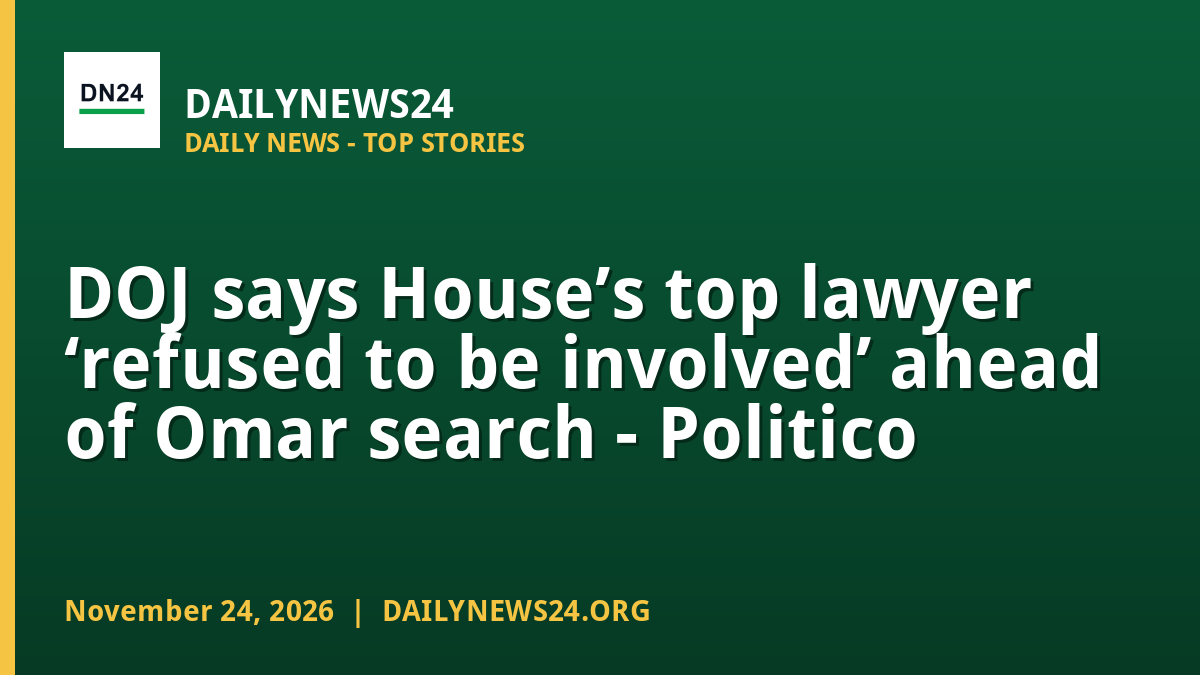
One of the most striking revelations contained within the documents is the alleged reluctance of the House of Representatives’ top legal counsel to participate in the authorization process. According to the Department of Justice (DOJ), the individual in charge of legal affairs for the chamber explicitly refused to be involved in the preliminary stages of planning the search warrant. This refusal has become a central point of contention, as it challenges the standard expectation that legislative counsel should be consulted or at least informed when a member of Congress is targeted by federal investigators.
The Significance of Legal Counsel
The role of House counsel in such matters is traditionally one of advisory support, ensuring that the rights of the member and the dignity of the institution are maintained. When this figure declines involvement, it raises questions about the procedural safeguards intended to protect members from arbitrary executive action. The DOJ’s characterization of this refusal suggests that they proceeded without that specific layer of legislative validation, potentially complicating any future challenges to the warrant’s validity in court. It indicates a departure from collaborative norms between the two branches of government.
Constitutional Implications and Judicial Scrutiny
Central to the unsealed documents are the debates held between government attorneys and the presiding judge regarding the constitutional implications of searching a sitting member of Congress's home. The concept of legislative immunity, while primarily protecting members from being arrested or detained for speech and debate, does not extend to shielding their private residences from valid search warrants. However, the threshold for obtaining such warrants in this context is significantly higher, requiring probable cause that is meticulously documented and court-approved.
Records show that the judge engaged in a thorough review of the affidavit, questioning the scope of the search and the potential impact on the representative’s official duties. This judicial scrutiny highlights the delicate balance courts must strike between enforcing federal law and respecting the separation of powers. The outcome of these debates was critical, as any perceived overreach could have set a dangerous precedent for future investigations into congressional members. The careful wording of the final warrant reflects this careful calibration of legal authority and executive power.
Scope of the Investigation
The documents also shed light on the breadth of the investigation itself. Reports indicate that the probe covers a wide array of activities, described in some analyses as covering most of the representative's professional and personal life. This expansive scope suggests that the DOJ is not limiting its inquiry to a single incident but is examining a pattern of behavior or financial transactions over a considerable period. Such a comprehensive approach often signals a sophisticated legal strategy aimed at building a case that withstands rigorous appellate review.
- Financial Transactions: Scrutiny of foreign aid funds and personal financial benefits.
- Official Duties: Examination of how official resources were utilized.
- Personal Life: Review of private communications and movements.
This multi-faceted approach underscores the seriousness with which the federal government is treating the allegations. It is not a routine matter but a complex inquiry that requires detailed forensic analysis and legal interpretation. The inclusion of personal life elements in the scope of a federal investigation is particularly sensitive, as it blurs the lines between public accountability and private privacy, a line that is constantly negotiated in high-profile legal cases.
Competing Perspectives and Political Fallout
The unsealing of these files has naturally triggered a fierce political response. Supporters of Representative Omar argue that the investigation is politically motivated, pointing to the timing and the intensity of the raid as evidence of partisan overreach. They contend that the decision to seek such an invasive search was driven by ideological opposition rather than objective legal merit. From this viewpoint, the refusal of House counsel to be involved is seen as a procedural error that undermines the legitimacy of the entire process.
Conversely, critics and allies of the DOJ maintain that the administration’s obligation to enforce the law supersedes political considerations. They argue that the search warrant was obtained through proper legal channels with sufficient probable cause, and that the involvement or refusal of House counsel is a technicality that does not invalidate the evidence gathered. This perspective emphasizes the rule of law and the necessity of holding public officials accountable for their actions, regardless of their political stance. The debate remains polarized, with little middle ground visible in the current public discourse.
What This Means for Ordinary Readers
For the average citizen, this case is more than a political squabble; it is a test of the stability of constitutional norms. The ability of the executive branch to investigate members of the legislative branch without clear consultation or oversight mechanisms raises fundamental questions about the system of checks and balances. If the standards for searching a congressman’s home are lowered, or if procedural safeguards are ignored, it sets a precedent that could affect all future investigations of public officials. Readers should pay close attention to how these legal boundaries are defined, as they directly impact the protection of civil liberties and the integrity of democratic institutions.
Moreover, the extensive scope of the investigation highlights the risks faced by public figures in an era of heightened surveillance and data collection. The blending of personal and professional life in digital spaces makes it difficult to delineate clear boundaries for federal investigations. This case serves as a cautionary tale about the importance of maintaining robust legal protections for privacy and political speech, ensuring that accountability does not devolve into persecution.
Outlook and Future Developments
As the case moves forward, attention will shift to how the evidence gathered during the search is utilized in subsequent legal proceedings. The defense is expected to challenge the admissibility of any items seized, citing the procedural disputes and constitutional concerns outlined in the unsealed documents. The next phase will involve complex motions in federal court, where judges will have to make definitive rulings on the scope of executive power versus legislative privilege.
Observers should watch for any further unsealing of documents, which could reveal more details about the internal communications within the DOJ and the House. Additionally, the reaction of the broader political establishment will be telling, as other members of Congress may seek to establish new protocols for handling similar situations. The ultimate outcome of this case will likely have far-reaching implications for the relationship between the executive and legislative branches in the years to come.