The Sudden Retreat of Russian Naval Forces
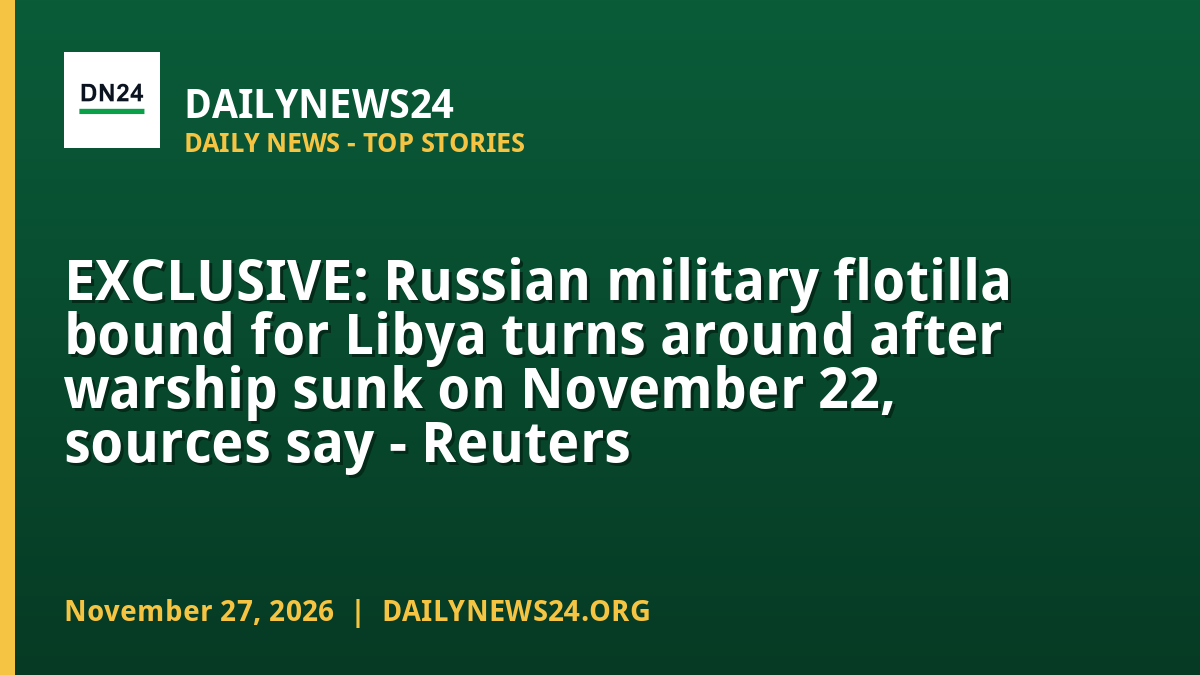
In a significant development that has rippled through Mediterranean security circles, a Russian military flotilla originally destined for the Libyan coast has executed a sharp turn around, abandoning its planned deployment. According to multiple diplomatic and military sources, this abrupt change in trajectory was directly triggered by the loss of a Russian warship, which was sunk on November 22. The incident marks a rare instance where operational setbacks in a remote theater immediately alter high-level strategic calculations in Eastern Europe and North Africa.
The decision to withdraw these specific naval assets suggests a recalibration of Russia's posture in the Mediterranean. For weeks, analysts had tracked increased Russian naval activity in the region, interpreting it as a show of force intended to support political allies in the Libyan conflict. However, the sudden disappearance of these ships from tracking data indicates a defensive rather than offensive intent. The flotilla’s retreat is not merely a logistical adjustment; it is a signal of heightened caution following a tangible, high-cost loss.
Implications for Naval Presence
The presence of Russian vessels in the Mediterranean has historically served multiple purposes, including diplomatic signaling, potential military support, and asset protection. By pulling back, Moscow is effectively reducing its visible military footprint in the immediate vicinity of Libya at a critical moment. This reduction in force projection may embolden opposing factions or shift the balance of power in the ongoing Libyan civil war, where external backers have played decisive roles. The absence of this flotilla leaves a vacuum that other regional powers, including European navies, may be poised to fill.
The Diplomatic Fallout in Rome
The military maneuvering has been complicated by a sharp diplomatic rift between Italy and Ukraine. Italian Prime Minister Giorgia Meloni has publicly expressed frustration with Kyiv, citing a lack of prior notification regarding operations that impacted Russian assets near the Libyan coast. For Rome, which has historically balanced its NATO commitments with distinct economic and security ties to both Russia and the Middle East, such surprises are viewed as a breach of strategic courtesy. The Italian government feels that it was not adequately consulted before actions were taken that could escalate regional tensions or affect its own sovereign interests.
Meloni’s comments reflect a broader concern among European leaders about the unpredictability of modern naval warfare in congested waterways. The Mediterranean is a high-traffic zone for commercial shipping, energy transports, and tourism. When military strikes occur in this area, the ripple effects are immediate and tangible. Italy, with its long coastline and deep involvement in Mediterranean security, finds itself in a precarious position. It must support its NATO allies while managing the fallout from incidents that occur beyond the traditional European theater. This diplomatic friction highlights the straining of relationships that were previously considered stable.
The Importance of Communication Channels
Effective crisis management relies on robust communication channels between allied nations. The lack of warning, as perceived by Rome, suggests that these channels may have been bypassed or overwhelmed by the speed of recent developments. For ordinary citizens, this lack of coordination can manifest as increased security measures, travel advisories, or economic volatility. The diplomatic spat is not just about protocol; it is about the future framework for managing conflicts that spill over into shared maritime spaces. If allies cannot agree on basic notification procedures, the risk of accidental escalation rises significantly.
Context: The Sinking of November 22
The catalyst for this diplomatic and military shuffle was the sinking of a Russian warship on November 22. While details of the specific attack remain shrouded in operational secrecy, the event is widely regarded as a significant blow to Russian naval prestige in the Mediterranean. Warships are not only military assets but also symbols of national power and deterrence. Their loss incurs a high financial cost, but more importantly, it carries a political message. It signals to adversaries that Russian naval dominance is not absolute and that risks can be imposed even in waters where Russia has traditionally operated with relative freedom.
Analysts note that the timing of the incident is critical. With elections and political transitions occurring across the region, any destabilizing event risks being exploited by various actors. The sinking likely prompted an immediate internal review within the Russian Ministry of Defense. The decision to turn the flotilla around rather than press forward suggests that the Russian command assessed the current environment as too hostile or unpredictable for continued operations. This is a pragmatic, risk-averse move that prioritizes the safety of remaining assets over maintaining a continuous presence. It underscores a shift from an offensive posture to one of consolidation and security.
Operational Security and Hiding
In the aftermath, reports indicate that other Russian vessels in the region have gone into hiding, cloaking their tracking signals and reducing their visibility. This tactic, known as operational security or OPSEC, is standard in high-threat environments. By going dark, the Russian Navy aims to preserve the lives of its crew and the integrity of its remaining ships. This concealment makes it difficult for monitoring agencies to track their movements, adding a layer of uncertainty to an already volatile situation. For maritime security experts, this invisibility is a warning sign. It means that potential threats are no longer visible, making the assessment of risks more complex and difficult. The Mediterranean, once a relatively transparent zone for naval monitoring, is becoming a blind spot.
Why This Matters for Ordinary Readers
While the details of naval maneuvers may seem distant to the average person, the implications are deeply local. The Mediterranean is a vital artery for global trade. Disruptions in the region can lead to increased shipping costs, which are passed on to consumers in the form of higher prices for imported goods. Furthermore, increased military activity raises the risk of accidents, such as oil spills or collisions with civilian vessels. These incidents have environmental and economic consequences that last for years. For travelers, the heightened tension may result in stricter security checks at ports of entry in countries like Italy, Greece, and Malta. Tourists may find their itineraries affected by temporary closures or increased police presence in coastal areas.
There is also a broader geopolitical dimension that affects daily life. Instability in North Africa often correlates with increased migration pressures on European shores. If the conflict in Libya or the diplomatic tensions between Europe and Russia lead to further destabilization, the humanitarian consequences could be severe. Ordinary citizens may see shifts in public policy regarding border control, social services, and international aid. Understanding these connections is crucial for making informed decisions about travel, investment, and civic engagement. The story is not just about ships and war; it is about the cascading effects of distant conflicts on local economies and security.
Competing Perspectives and Strategic Goals
Russia views its naval presence in the Mediterranean as essential for protecting its interests and supporting allies. From its perspective, the retreat is a calculated tactical withdrawal, not a strategic defeat. The goal is to preserve combat power for future operations and avoid further losses in an environment where the rules of engagement are unclear. Western nations, conversely, view the Russian presence as a destabilizing factor that threatens the sovereignty of local states and the security of the region. They see the recent incidents as an opportunity to reinforce their own naval deployments and assert control over key sea lanes. This divergence in strategic goals ensures that competition in the Mediterranean will continue, even if the visible intensity fluctuates.
Italy finds itself navigating a complex web of interests. As a major NATO member, it must align with Western positions. However, it also maintains significant economic relationships with Russia and North African nations that are affected by the conflict. This dual commitment creates a delicate balancing act. Rome seeks to manage tensions without provoking a wider clash, but the lack of coordination with Ukraine complicates this effort. The Italian government is likely to push for stronger diplomatic mechanisms to prevent similar incidents in the future, emphasizing the need for clear communication and de-escalation. This diplomatic push will be a key element to watch in the coming weeks.
Outlook: What to Watch Next
In the coming days, attention will turn to whether the Russian flotilla reappears or remains in a state of concealment. The resumption of visible operations would signal a return to normalcy, while continued absence might indicate a longer-term retrenchment. Diplomatic channels between Rome, Kyiv, and Moscow will be closely monitored for signs of repair or further deterioration. Any public statements from these capitals will provide clues about the underlying intent. Furthermore, the movements of other naval forces, including those from the United States and France, will be tracked to assess the broader security environment. The next few weeks will be critical in determining the new equilibrium in the Mediterranean. For now, the silence of the sea is louder than the noise of the headlines, carrying with it the weight of unresolved tensions and shifting alliances. The outcome will shape the region's stability for years to come, affecting everything from trade routes to diplomatic relations. Staying informed is not just an academic exercise; it is a practical necessity in an interconnected world.