The Escalating Naval Standoff in the Gulf
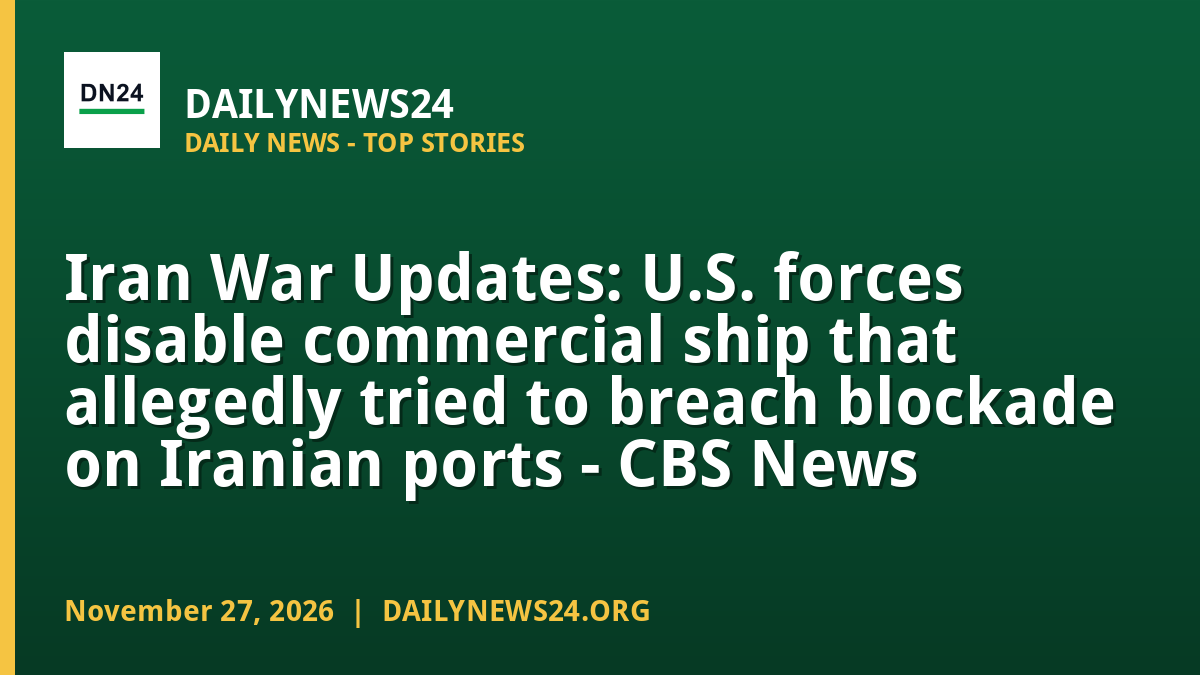
The latest development in the simmering conflict between the United States and Iran involves a direct military intervention against commercial maritime traffic. U.S. military forces have announced that they successfully disabled a commercial ship that was allegedly attempting to break through a naval blockade imposed on Iranian ports. This action marks a significant intensification of the stand off, moving beyond mere diplomatic warnings or passive monitoring to active kinetic engagements. The incident occurred in the strategic waters of the Gulf of Oman, a critical artery for global energy supplies and commercial trade. For ordinary readers and global markets, this shift signals that the risk of collateral damage in international shipping lanes is now higher than at any point in recent memory.
This is not an isolated incident. It is the latest in a series of confrontations that have characterized the relationship between the two nations over the past several months. The blockade itself was established to enforce economic and strategic pressure on the region, aiming to restrict the flow of goods and materials that could support Iran's military infrastructure or broader geopolitical ambitions. By disabling the vessel, the U.S. military demonstrated its commitment to enforcing these restrictions regardless of the commercial status of the ships involved. The choice to target a commercial vessel rather than a military asset underscores the complexity of modern hybrid warfare, where the line between civilian and military objectives can become blurred.
Background of the Naval Blockade
To understand the gravity of this specific event, it is essential to look at the broader context of the blockade. The U.S. Navy deployed significant assets to the region following a series of provocations and strategic shifts that heightened security concerns. The blockade was designed to sever specific supply lines that were deemed critical to the opposing faction's capabilities. While the initial implementation was met with diplomatic protests and cautious observation, the situation has gradually deteriorated into a state of active enforcement.
The decision to enforce the blockade with such vigor reflects a calculated risk assessment by U.S. policymakers. They have concluded that passive deterrence is no longer sufficient to maintain stability or achieve strategic objectives. Instead, they have opted for a posture of active denial, where any attempt to penetrate the cordon is met with immediate force. This approach has significant implications for the legal and operational frameworks governing naval operations in the region. It sets a precedent that commercial vessels cannot safely navigate these waters if they are perceived as violating the blockade's terms.
Details of the Incident in the Gulf of Oman
The specific incident involving the disabled commercial ship took place in the Gulf of Oman, a busy waterway that connects the Persian Gulf to the Arabian Sea. U.S. military jets were involved in the operation, indicating that the response was swift and decisive. The vessel was reportedly identified as attempting to breach the blockade line, prompting the military to take action to neutralize its ability to proceed. The term "disable" suggests that the ship was rendered inoperable or unable to continue its course, rather than being sunk or destroyed outright. This distinction is crucial, as it implies an intent to capture or halt the vessel rather than inflict maximum destruction.
The use of air power to disable a surface vessel highlights the technological advantage held by the U.S. Navy in this theater. Precision strikes or non-kinetic measures that render a ship inoperable allow for a controlled response that minimizes the risk of drawing in third parties or causing catastrophic environmental disasters. However, the presence of a commercial ship in a blocked zone raises questions about the intelligence and navigational awareness of the vessel's operators. Was it a deliberate attempt to test the limits of the blockade, or a case of poor navigation? The U.S. military has characterized it as an attempted breach, suggesting an intent to violate the restrictions.
Competing Perspectives and Diplomatic Fallout
The reaction to this event has been swift and polarized. From the U.S. perspective, the action is a necessary measure to uphold the rule of law and ensure that the blockade is not rendered ineffective by determined violators. Officials have emphasized that the safety of the region and the integrity of international norms require firm enforcement. They argue that allowing such breaches would encourage further challenges to the blockade, potentially leading to a breakdown in security. The message is clear: the U.S. is prepared to use force to maintain the status quo it has established.
Conversely, critics and opposing voices view the disabling of a commercial vessel as an act of aggression that threatens global trade stability. They argue that targeting commercial ships, regardless of their alleged intentions, sets a dangerous precedent that could embolden other states to engage in similar actions against civilian assets. This perspective highlights the vulnerability of the global supply chain to geopolitical conflicts. For trading nations and shipping companies, the incident serves as a stark warning that risk premiums for Gulf routes will remain elevated. The diplomatic fallout is likely to be significant, with calls for de-escalation clashing against demands for strict adherence to security protocols.
Impact on Global Shipping and Energy Markets
The immediate impact of this incident is felt in the shipping industry and energy markets. Insurance premiums for vessels transiting the Gulf of Oman are expected to rise, reflecting the increased perception of risk. Shipping companies may reroute their cargo to avoid the contested waters, leading to longer transit times and higher fuel costs. These changes ripple through the global economy, affecting the price of goods that rely on these maritime routes. Energy traders are also watching closely, as any disruption to the flow of oil and gas from the region can have immediate consequences for global supply and demand.
For ordinary consumers, the implications may be subtle but real. Higher shipping costs can translate into higher prices for imported goods. Additionally, the broader instability in the region can affect global market sentiment, leading to volatility in financial markets. The incident underscores the interconnectedness of modern geopolitics and daily life. A naval confrontation in the Gulf of Oman is not just a military story; it is an economic story that affects the cost of living for millions of people worldwide. The ability of the U.S. to project power in this region is a key factor in maintaining the stability of global trade networks.
What Changed and Why It Matters
What has changed most recently is the threshold of engagement. Previously, the U.S. might have opted for board and search operations or diplomatic protests when a vessel approached the blockade line. The decision to disable the ship represents a shift toward a more aggressive enforcement strategy. This change likely stems from a perceived increase in the frequency or aggressiveness of blockade-running attempts. By raising the stakes, the U.S. aims to deter future attempts through the threat of force. This is a classic escalation ladder move, where the response to a provocation is increased in intensity to signal resolve.
This shift matters because it signals a longer-term commitment to the blockade. It suggests that the U.S. is prepared to sustain a high-intensity military posture in the region for an extended period. This has implications for resource allocation, diplomatic negotiations, and the potential for further escalation. If the other side perceives this as a bluff, they may continue to test the limits, leading to a cycle of increasing tensions. The key now is to determine whether this incident is an isolated event or the beginning of a new phase in the conflict.
Outlook: What to Watch Next
Looking ahead, several factors will determine the trajectory of this conflict. First, the reaction of the Iranian leadership and their proxies will be critical. Will they accept the increased risk, or will they respond with retaliatory actions? Second, the position of third-party states, including China and Russia, will influence the diplomatic landscape. Their support or condemnation of the U.S. actions will shape the international response. Third, the internal dynamics within the U.S. government will play a role. Congressional oversight and public opinion can influence the administration's willingness to continue this aggressive posture.
For readers, the key takeaway is that the risk of conflict in the Middle East remains high. The disabling of the commercial ship is a clear indicator that the U.S. is willing to take significant risks to enforce its strategic objectives. It is a reminder that geopolitical tensions can have immediate and tangible impacts on global trade and security. As the situation evolves, it will be important to monitor official statements, market reactions, and any further incidents in the region. The next move by either side will likely define the scope and duration of this standoff.