A Growing Flashpoint in the City of Brotherly Love
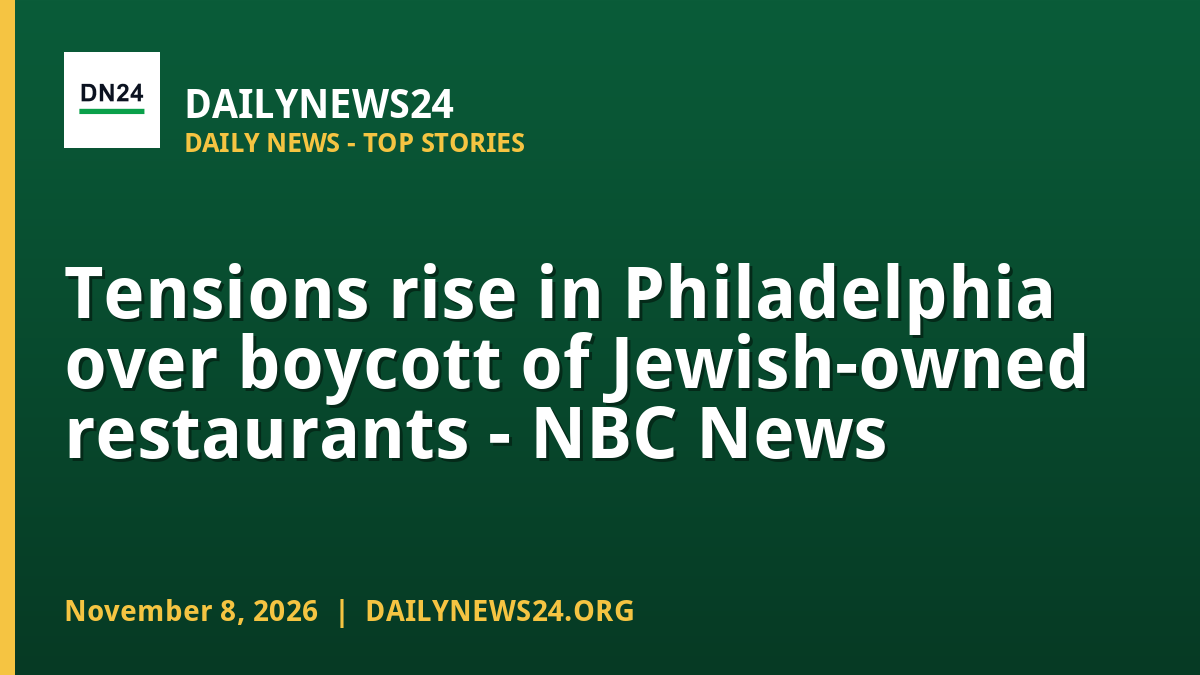
Philadelphia, a city long celebrated for its multicultural fabric and resilience, is currently grappling with a sharp social divide centered on the restaurant industry. What began as isolated complaints online has metastasized into a coordinated campaign targeting specific Jewish-owned establishments. This development marks a significant departure from typical consumer feedback, shifting the narrative from service quality to identity-based exclusion. For local business owners, the stakes are no longer just about revenue but about physical safety and community standing. The situation has drawn immediate attention from civil rights groups, local politicians, and residents who are increasingly alarmed by the rhetoric accompanying the boycott.
The core of the controversy lies in the explicit nature of the calls to avoid these businesses. Unlike standard dining reviews that critique food, price, or ambiance, this movement focuses exclusively on the religious identity of the proprietors. This distinction is critical because it transforms a commercial dispute into a potential hate crime vector. While free speech protections in the United States are robust, they do not shield individuals from credible threats or harassment. As tensions rise, the line between protected expression and unlawful intimidation becomes dangerously thin, leaving many community members uneasy about the direction of public discourse in the city.
Understanding the Mechanisms of the Boycott
To understand the impact, one must look at how the boycott operates across digital platforms. Social media algorithms have amplified the reach of these campaigns, creating echo chambers where negative sentiment is reinforced and shared without context. Users are encouraged to post negative reviews, share a specific list of restaurants, and publicly shame customers who are seen entering these venues. This digital pressure translates into real-world consequences. Foot traffic to targeted businesses has reportedly dropped, forcing some owners to consider closing forextended periods or implementing heightened security measures. The economic strain is compounded by the emotional toll of dehumanizing messages received by staff and owners daily.
- Online Coordination: Specific hashtags and groups are used to organize and publicize list of targeted establishments.
- Public Shaming: Customers are sometimes photographed outside venues, with posts implying moral judgment based on their choice of dining location.
- Economic Impact: A measurable decline in sales has been reported by owners, leading to inventory waste and staff uncertainty.
This structured approach demonstrates a level of organization that goes beyond spontaneous outrage. It suggests a deliberate strategy to inflict economic harm based on identity. For ordinary readers, this highlights how digital tools can be weaponized to bypass traditional norms of civility and commercial fairness. The speed at which information spreads online can outpace the ability of local authorities to intervene effectively, creating a vacuum where harassment thrives.
Historical Context and Community Response
Philadelphia has a complex history with ethnic and religious communities, including a significant Jewish population with deep roots in the city. In recent years, there has been a nationwide uptick in anti-Semitic incidents, as documented by various civil rights monitoring groups. This local flare-up is part of that broader national trend, where identity-based animosity is increasingly expressed through economic and social means rather than purely physical violence. Community leaders, including representatives from the Jewish Federation of Greater Philadelphia and local clergy, have issued statements condemning the boycott. They emphasize that such actions are not only wrong but also erode the social contract that allows diverse groups to coexist peacefully.
The Role of Civic Leadership
Local officials have been urged to take a more active role in addressing the rising hostility. While they cannot ban speech, they can provide additional police presence in high-risk areas and coordinate with business owners to ensure safety. Some city council members have called for educational campaigns to counter misinformation that fuels such boycotts. The response from the broader civic community has been mixed, with some groups expressing solidarity through visible acts of support, such as dining at targeted restaurants to show they are unafraid. These gestures of defiance serve as a powerful counter-narrative to the fear-based messaging of the boycotters, reinforcing the idea that diversity is a strength, not a liability.
Legal and Ethical Boundaries
The legal landscape surrounding this issue is nuanced. In the United States, the First Amendment protects the right to hold and express views, including unpopular or offensive ones. However, this protection does not extend to threats, intimidation, or incitement to violence. If the boycott escalates to include threats against staff or owners, legal recourse becomes available. Law enforcement agencies have stated that they are monitoring the situation closely and will intervene if any activities cross the threshold into criminal behavior. It is important for the public to understand this distinction: while one has the right to dislike a certain group, one does not have the right to harass individuals based on their membership in that group. This legal framework is crucial for maintaining order and protecting civil rights.
Economic Implications for Local Businesses
For the restaurant owners directly affected, the financial implications are severe. Restaurants operate on thin margins, and a sudden drop in customer traffic can quickly lead to insolvency. Beyond direct losses, there are secondary effects such as damage to reputation and long-term brand erosion. Staff members, many of whom are immigrants or from diverse backgrounds, face psychological stress and fear for their livelihoods. This creates a chilling effect on the local labor market, where workers may feel unsafe or unwelcome in certain environments. For the wider economy, this instability undermines consumer confidence and discourages investment in the city’s service sector. It serves as a cautionary tale about how social unrest can have tangible economic costs that ripple through the community.
Perspectives from Within the Community
Those living and working in Philadelphia offer varied perspectives on the unfolding crisis. Some residents express frustration that the city, known for its progressivism, is housing such overt prejudice. Others, however, acknowledge the complexity of the issues at play, noting that the boycotters often cite unrelated geopolitical events as justification for their actions. This conflation of international politics with local commercial life is a common tactic in such disputes. However, most community members agree that taking out frustration on local business owners is both unjust and counterproductive. The dialogue within the community is increasingly focused on how to de-escalate the situation and foster understanding, rather than further division.
Path Forward and Future Outlook
Looking ahead, the resolution of this crisis will depend on a combination of legal intervention, community solidarity, and media responsibility. Law enforcement must continue to monitor for any signs of escalation, ensuring that the rule of law is upheld. Community organizations should continue to provide support and resources to affected businesses, helping them navigate the challenges posed by harassment. Meanwhile, media outlets must play a careful role in reporting on these events, avoiding amplification of hateful rhetoric while still holding all parties accountable for their actions. The long-term impact on Philadelphia’s reputation as a welcoming city for diverse communities will hinge on how effectively these stakeholders collaborate to restore peace and trust. For ordinary readers, the lesson is clear: civic engagement and empathy are essential tools in combating exclusion and promoting a inclusive society.