The Capture of a High-Profile Fugitive
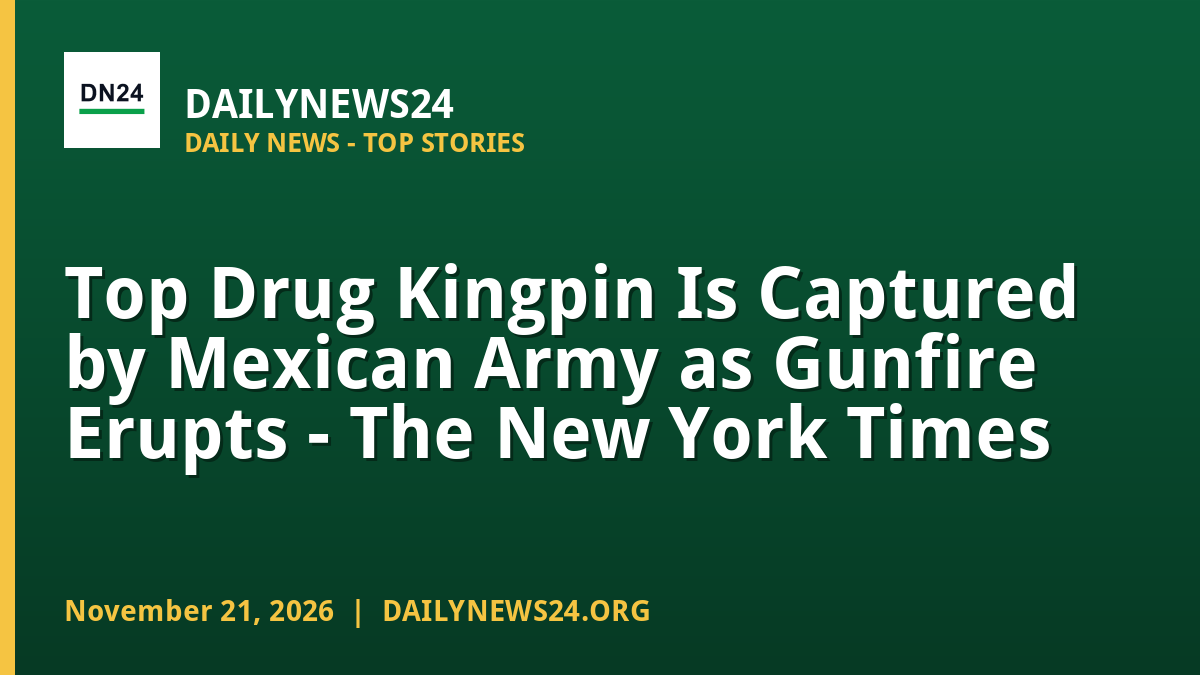
In a development that has sent shockwaves through international security circles, Mexican federal forces have successfully detained Fausto Isidro Meza Flores, a senior figure in the Sinaloa Cartel. Known by his alias "El Chapo Isidro," Meza Flores has long been one of the most sought-after individuals in the country. His arrest marks a significant tactical victory for the Mexican government, demonstrating their willingness and capability to target high-value suspects directly within contested territories. The operation was not a quiet intelligence-led abduction but a high-intensity engagement where gunfire erupted before the suspect was secured.
The capture underscores the persistent threat posed by transnational organized crime organizations in North America. For years, the Sinaloa Cartel has operated with a degree of autonomy that challenged state authority. By taking down one of its architects, Mexican security forces aim to disrupt the internal hierarchy and logistics of the group. This move is part of a broader strategy to dismantle the infrastructure that allows these cartels to flourish, moving beyond purely reactive policing to proactive interdiction of leadership elements.
Who Is Fausto Isidro Meza Flores?
Meza Flores is not a peripheral associate but a cornerstone of the Sinaloa organization. His designation on the FBI’s Ten Most Wanted Fugitives list highlights the severity of the charges against him and the cross-border impact of his activities. Being listed by the U.S. Federal Bureau of Investigation signifies that his actions have direct implications for American national security and law enforcement priorities. It is a status reserved for individuals whose capture is considered critical to curbing illicit trade and violence.
As a lieutenent, he played a pivotal role in managing the cartel’s operations, specifically in the trafficking of narcotics and other illicit goods across the border. His removal from the field creates a power vacuum within the organization’s upper echelons. In the hierarchical structure of the Sinaloa Cartel, such figures often act as bridge-builders between local distributors and international buyers. Their absence can disrupt established routes and communication channels, potentially leading to short-term chaos within the organization as rivals vie for influence.
- Named on the FBI’s Ten Most Wanted Fugitives list.
- Identified as a senior leader in the Sinaloa Cartel.
- Credited with overseeing significant logistics and financial operations.
The Dynamics of the Military Operation
The arrest was carried out by the Mexican Army in a dramatic confrontation that involved active gunfire. Reports indicate that the operation took place in a heavily guarded area, requiring significant military resources to neutralize the threat. The presence of armed resistance suggests that Meza Flores was aware of his precarious position and had prepared for a potential standoff. This level of engagement is characteristic of operations targeting top-tier cartel bosses, who typically travel with large, well-armed escort teams.
The use of the Army, rather than local police, reflects the magnitude of the threat and the need for overwhelming force. Mexican military units are often deployed in such scenarios due to their specialized training in counter-insurgency and high-risk tactical operations. The successful capture amidst gunfire highlights the efficiency of these units in executing complex plans under pressure. It also serves as a psychological blow to the cartel, signaling that no amount of armed protection can guarantee immunity from the state’s reach.
Regional Implications and Violence in Sinaloa
Sinaloa state has historically been the heartland of the powerful cartel, making it a volatile region for such operations. The eruption of violence during the arrest is not unexpected in this context. Cartel members often respond to the capture of their leaders with retaliatory attacks on security forces or infrastructure to assert dominance. This cycle of violence poses significant risks to civilians in the region, who frequently find themselves caught in the crossfire of these power struggles. The recent spike in incidents suggests a heightened state of alert among local communities.
The stability of the region is closely tied to the internal dynamics of the Sinaloa Cartel. A major arrest can trigger internal power struggles, as factions within the organization compete for control of routes and territories. This fragmentation can lead to increased violence as groups attempt to consolidate power. For ordinary residents, this often translates to heightened security measures, travel restrictions, and a pervasive sense of insecurity. The government’s ability to maintain control in the aftermath of such operations is crucial for restoring normalcy.
International Repercussions and Cooperation
The capture of an FBI most-wanted fugitive is a testament to the ongoing cooperation between Mexican and U.S. law enforcement agencies. Intelligence sharing has been a cornerstone of this partnership, allowing authorities to track the movements of high-profile targets. The successful execution of this operation likely involved extensive coordination, with U.S. agencies providing critical data that helped pinpoint the suspect’s location. This collaborative effort reinforces the bilateral commitment to combating transnational crime and enhancing security for both nations.
However, the success of this single operation does not signal the end of the conflict. The Sinaloa Cartel remains one of the most resilient and adaptable criminal organizations in the world. New leaders will emerge, and the infrastructure for trafficking will likely be rebuilt. The international community must remain vigilant and continue to support Mexico’s efforts in this long-term struggle. The focus must shift from episodic arrests to sustained strategies that address the root causes and networks enabling these organizations to operate.
What This Means for Ordinary Readers
For readers in the United States and Mexico, this event underscores the tangible connection between criminal activities abroad and domestic security. The flow of illicit drugs and weapons is directly linked to the stability of these criminal networks. Disrupting their leadership can have a ripple effect, potentially reducing the volume of contraband that reaches local markets. It is a reminder that efforts to combat organized crime are not abstract political issues but have real-world consequences for community safety and economic stability.
Moreover, the incident highlights the human cost of the drug war. Families of the fallen soldiers and cartel members, as well as civilians caught in the violence, bear the heaviest burden. Understanding the complexity of these operations helps foster a more informed public discourse on security policies. It encourages a nuanced view that acknowledges the achievements of law enforcement while recognizing the ongoing challenges posed by entrenched criminal structures. Keeping informed about these developments is essential for understanding the broader geopolitical landscape.
Outlook: What to Watch Next
In the coming weeks, attention will turn to the judicial proceedings against Meza Flores. His trial will be a focal point for both Mexican and American legal systems, potentially yielding further insights into the cartel’s operations. Analysts will also monitor the internal reactions within the Sinaloa Cartel. Any signs of infighting or a change in leadership strategy will be closely scrutinized for their impact on regional stability.
Furthermore, the Mexican government is expected to use this victory to bolster its security narrative. There may be increased publicity around ongoing operations and greater resource allocation to border enforcement. For the international community, the key metric will be whether this arrest leads to a sustained reduction in violence and trafficking. The road ahead remains fraught with challenges, but this capture represents a significant step in the ongoing effort to reclaim state authority from criminal syndicates.