The Sudden Pause in Federal Health Policy
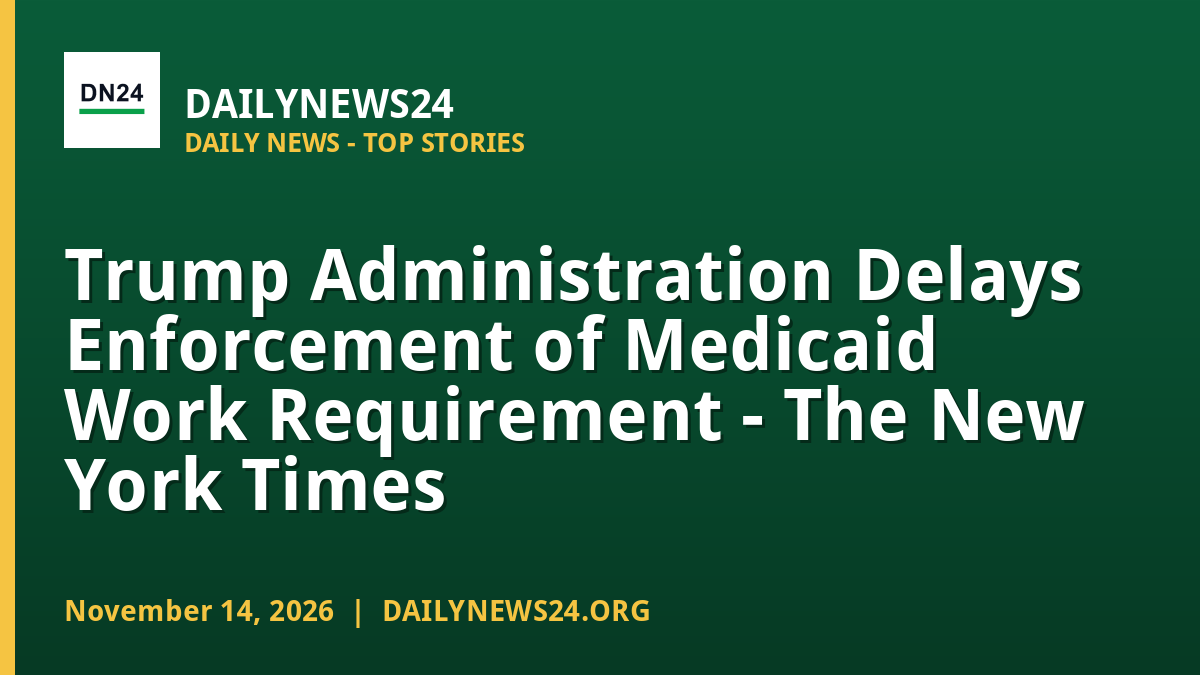
The trajectory of healthcare policy in the United States often moves with the swing of political momentum, but the recent decision by the current administration to delay the enforcement of new Medicaid work requirements marks a significant and unexpected pivot. This move injects a fresh layer of uncertainty into a system that already balances complex federal mandates with state-level implementation. For millions of Americans who depend on Medicaid for access to doctors, hospitals, and prescription medications, this pause is not merely a bureaucratic footnote; it is a critical reprieve that alters the immediate landscape of their benefits.
This development comes at a time when health coverage remains a top-tier concern for households across the nation. The delay signals a recognition that the administrative machinery required to enforce such stringent new rules may not be fully prepared, or that the political and legal friction surrounding the policy has become too intense to ignore. As a result, the status quo is being preserved, at least for the moment, allowing state agencies to continue operating under their existing frameworks without the added pressure of immediate federal compliance.
Understanding the Regulatory Background
To grasp the significance of this delay, it is necessary to understand what the original proposal entailed. The concept of tying Medicaid eligibility to work requirements has been a subject of long-standing debate in Washington. The core idea is straightforward: recipients of public health insurance must engage in a certain number of hours of work, volunteering, or job training each month to maintain their coverage. Proponents argue that this encourages economic self-sufficiency, while opponents contend that it creates barriers for those who are unable to work due to disability, caregiving responsibilities, or a lack of local job opportunities.
The regulatory framework for Medicaid is intricate, involving a partnership between the federal government, which provides the majority of funding, and state governments, which manage the day-to-day operations. Historically, the federal government has granted states varying degrees of flexibility in how they define eligibility. However, the recent shift toward mandating specific work criteria represents a departure from that flexibility. By delaying enforcement, the administration is effectively freezing this shift, allowing states to breathe and continue serving their populations without the immediate need to restructure their eligibility verification systems.
Impact on State Implementation
For state Medicaid agencies, the delay provides a necessary window of stability. Implementing new work requirements is a logistical challenge of immense scale. It requires updating information technology systems to track hours worked, establishing new verification protocols with employers, and creating robust appeal processes for those who may be inadvertently disqualified. Many state officials had expressed concerns that the timeline for compliance was unrealistic, given the complexity of the task and the limited resources available in many rural and underfunded healthcare departments.
This pause allows these agencies to reassess their strategies. Instead of rushing to build new infrastructure under the pressure of an imminent deadline, they can take a more measured approach. Some states may choose to explore their own specific versions of work-support programs, potentially tailored to local labor market conditions. Others may use this time to strengthen their existing safety nets, ensuring that vulnerable populations are not left behind during any future transition. The delay, therefore, acts as a buffer against potential chaos in state healthcare delivery.
The Human Element: Recipients and Providers
Beyond the policy mechanics, the story is deeply human. Millions of low-income individuals, including single parents, caregivers, and seniors, rely on Medicaid for their basic healthcare needs. The announcement of the delay has brought a sense of relief to these groups, who feared that strict hour-tracking requirements might cut off their access to essential medical care. For these individuals, a lapse in coverage can have devastating consequences, leading to delayed treatments, higher out-of-pocket costs, and worsening health outcomes.
Healthcare providers, including small clinics and hospitals serving low-income communities, have also benefited from the pause. These institutions often serve as the front line for Medicaid patients, and any disruption in eligibility can lead to immediate cash flow problems and administrative burdens. By maintaining the current status quo, the administration is helping to prevent a wave of potential service disruptions that could have crippled these critical community health resources.
Political and Legal Dynamics
The decision to delay enforcement is not purely administrative; it is also a political maneuver. Work requirements for social programs are deeply polarizing issues. Various legal challenges and legislative debates have surrounded the feasibility and constitutionality of such mandates. The administration’s move can be seen as an attempt to mitigate legal risks and manage public reaction. By pausing enforcement, federal leaders may be buying time to refine the policy or to allow the political dust to settle before proceeding with a more robust implementation.
Furthermore, this delay highlights the tensions within the broader conservative movement. While some factions advocate for strict spending cuts and individual responsibility, others worry about the social fallout of cutting healthcare access. Balancing these internal priorities with the reality of on-the-ground administration is a constant challenge for political leaders. The delay serves as a compromise, acknowledging the difficult realities of enforcing such rules while maintaining the long-term goal of the policy.
What This Means for Ordinary Readers
For ordinary readers and taxpayers, this development has concrete implications. First, it means that millions of Americans who currently have Medicaid coverage will not face immediate changes to their benefits due to work-hour tracking. This stability is crucial for financial planning, particularly for families living paycheck to paycheck who rely on predictable health insurance costs. Second, it underscores the importance of staying informed about federal policy changes, as these shifts can happen quickly and have significant personal impacts.
It also serves as a reminder of the interconnectedness of federal and state policies. Changes in Washington do not happen in a vacuum; they ripple out to affect local clinics, state budgets, and individual households. Understanding the background of such policies helps citizens engage more effectively with their local representatives and advocate for solutions that work for their specific communities.
Outlook: What to Watch Next
As the months progress, several key developments will determine the future trajectory of Medicaid work requirements. State legislatures will likely begin debating their own approaches to work-support activities, potentially creating a patchwork of different state-level rules. This could lead to significant variations in how beneficiaries are treated across different regions of the country.
Additionally, legal challenges are likely to continue, with advocacy groups and state attorneys general potentially testing the limits of federal authority in this area. The outcome of these court battles will play a crucial role in shaping the ultimate implementation of any work requirements. For now, the delay provides a breathing space, but the underlying debate about the balance between individual responsibility and social safety nets remains unresolved. Staying attuned to these evolving trends will be essential for anyone relying on public health insurance in the coming years.