The Sudden Escalation in the Gulf
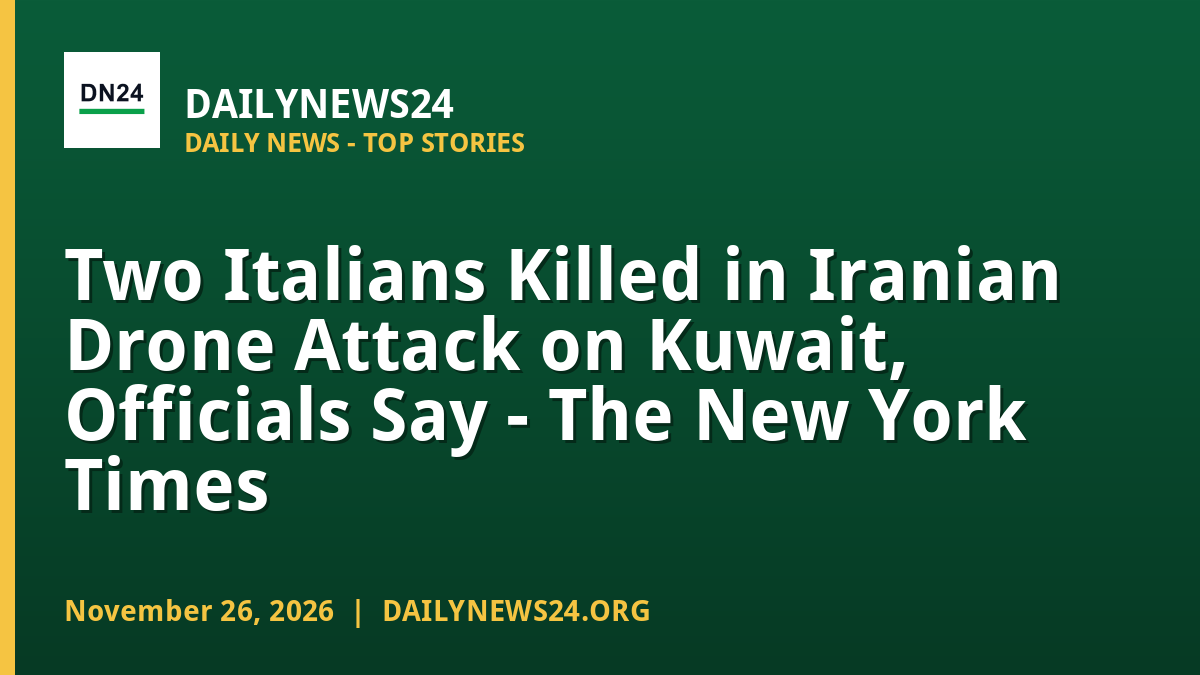
The security landscape in the Persian Gulf has shifted dramatically following a devastating drone strike in Kuwait. Two Italian nationals lost their lives in the attack, marking one of the most significant diplomatic and military incidents in recent memory. The incident has immediately drawn the attention of global powers, with accusations flying rapidly between Tehran and the Western alliance. For ordinary citizens around the world, this event signals a tangible rise in risk that extends far beyond the immediate conflict zone, affecting diplomatic relations and regional stability.
Authorities in Kuwait confirmed the casualties shortly after the strike, identifying the victims as Italian citizens. The precision and lethality of the attack have raised serious questions about the capabilities of the drone systems employed. While the immediate aftermath focused on rescue and recovery efforts, the geopolitical ramifications began unfolding within hours. The death of foreign nationals, particularly from a NATO member state, introduces a new layer of complexity to an already volatile situation.
Accusations and Denials
Iran has been the primary target of accusations from Western officials and Kuwaiti authorities. The United States and several European nations have pointed to intelligence suggesting that the drone originated from Iranian territory or was operated by Iranian-backed groups. However, Tehran has firmly denied any involvement, labeling the allegations as baseless and politically motivated. This pattern of denial is consistent with previous incidents in the region, where attribution remains a central point of contention.
Adding to the confusion, Iranian officials have suggested that the attack might be a "false flag" operation. They have specifically accused Ukrainian President Volodymyr Zelenskyy of orchestrating the strike to draw attention from Western leaders, particularly U.S. President Donald Trump. This counter-narrative attempts to shift the blame away from Tehran and onto a third party, further complicating the diplomatic landscape. Such claims, while unverified, highlight the deep mistrust and information warfare that characterizes modern geopolitical conflicts.
The European Response
European Union leaders have reacted swiftly to the incident, calling for a unified response to the aggression. The EU has emphasized the need to step up pressure on Tehran, potentially through additional sanctions or diplomatic isolation. This move reflects a broader trend in European foreign policy, where consensus is being built around a harder line against Iranian activities in the region. For Italy, the loss of two citizens has intensified the call for accountability and protection of its nationals abroad.
The European response is not merely symbolic; it carries significant economic and political weight. Sanctions can impact Iran's ability to fund its military programs and support proxy groups across the Middle East. However, the effectiveness of such measures depends on consistent enforcement and international cooperation. The EU's stance also signals to other nations that attacks on foreign citizens will not go unanswered, potentially deterring future incidents. Yet, the risk of further escalation remains high, as any punitive action could provoke a retaliatory response from Tehran.
Implications for Regional Stability
The drone attack in Kuwait has repercussions that extend well beyond the immediate area. The Gulf states, including Kuwait, Saudi Arabia, and the United Arab Emirates, are increasingly concerned about their security in the face of Iranian aggression. These nations have been working to strengthen their air defense systems and military capabilities, but the incident highlights the limitations of current defenses against advanced drone technology. The threat of further attacks looms large, forcing regional leaders to reassess their security strategies.
Moreover, the incident has the potential to draw in other global powers. The United States, with its significant military presence in the region, is likely to increase its support for Gulf allies. This could lead to a more direct confrontation between the U.S. and Iran, a scenario that many analysts fear could spiral into a wider war. The involvement of other nations, such as Russia and China, adds another layer of complexity, as they may seek to exploit the situation to advance their own strategic interests.
What It Means for Ordinary Readers
For readers outside the Middle East, the immediate impact may seem distant, but the implications are profound. The escalation in the Gulf could affect global energy markets, as the region is a critical hub for oil and gas production. Disruptions to supply chains or increased security measures could lead to higher fuel prices, impacting transportation costs and inflation worldwide. Additionally, the incident underscores the fragility of international peace and the ease with which localized conflicts can escalate into broader crises.
Individuals with connections to the region, whether through family, business, or travel, should be aware of the heightened risks. Travel advisories may be updated, and safety precautions should be taken when visiting or residing in affected areas. The incident also serves as a reminder of the importance of staying informed about global events, as they can have direct and indirect effects on daily life. Understanding the dynamics of the conflict helps readers make more informed decisions and appreciate the complexities of international relations.
Outlook: What to Watch Next
In the coming days, the focus will be on the investigation into the source of the drone. International forensic experts may be brought in to analyze the technology used and determine its origin. The results of this investigation will be crucial in assigning blame and determining the appropriate response. Meanwhile, diplomatic channels will be active, with attempts to de-escalate the situation and prevent further incidents. The reaction of the United Nations and other international bodies will also be closely monitored.
Furthermore, the political response in Iran will be a key indicator of how the situation develops. If Tehran escalates its rhetoric or takes military action, the risk of a broader conflict increases. Conversely, if it seeks to engage in dialogue, there may be opportunities for de-escalation. The coming week will be critical in determining the trajectory of the crisis. For now, the world watches with bated breath, hoping for a peaceful resolution to a situation that has the potential to destabilize an entire region.