A New Threshold in Legislative Conflict
The political standoff between the executive and legislative branches of the United States government has intensified dramatically in recent weeks. What began as a series of routine inquiries and information requests from congressional committees has evolved into a high-stakes confrontation over the boundaries of official oversight. The White House has moved beyond standard bureaucratic pushback, issuing stark warnings that suggest active investigations into executive actions could constitute illegal acts. This shift marks a significant departure from historical norms, where disputes over subpoena power and document production, while contentious, rarely involved explicit threats of criminal liability for members of Congress.
At the center of this dispute is a subtle but profound redefinition of what constitutes lawful legislative oversight. Traditionally, the power to investigate is a core function of Congress, designed to ensure accountability for the executive branch. However, administration officials have now framed certain aggressive investigative tactics not merely as politically motivated, but as potentially unlawful. This framing is designed to chill the oversight process by introducing the fear of personal legal consequences for lawmakers, a tactic that critics argue undermines the constitutional balance of power.
The "Blatant Criminality" Accusation
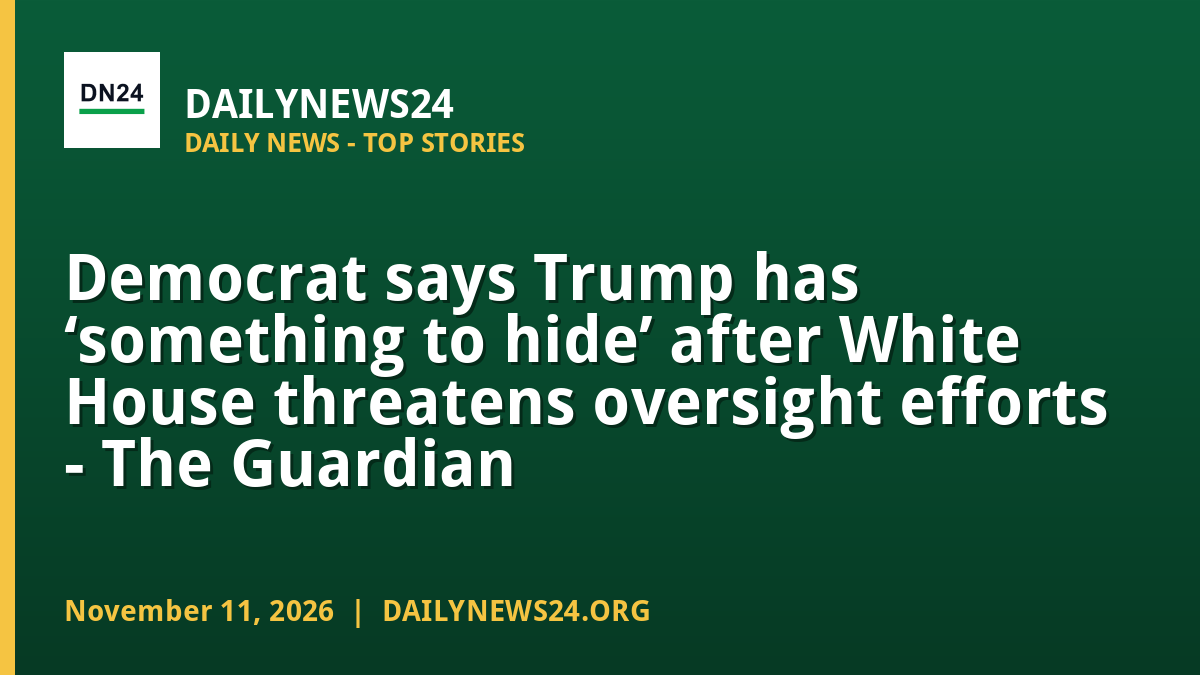
Recent communications from the White House have used strikingly strong language to describe the actions of congressional Democrats. Officials have characterized planned probes into executive conduct as instances of "blatant criminality." This specific phrasing is significant because it moves the debate from the realm of policy disagreement to the realm of legal ethics. By labeling oversight efforts as criminal, the administration is attempting to delegitimize the very purpose of congressional investigations.
This rhetorical strategy serves a dual purpose. First, it galvanizes the administration's base by portraying Congress as an adversarial force bent on unfair persecution. Second, it provides a legal shield, or at least the appearance of one, for the executive branch. If investigations are framed as crimes, the administration can argue that its resistance is a defense of the rule of law rather than an act of obstruction. This narrative allows the White House to cast itself as the protector of legal order while engaging in what critics view as obstructive behavior.
Democratic Response: Hiding Something
Democratic leaders have reacted with immediate and sharp criticism, arguing that the White House's threats reveal a deep-seated fear of exposure. Prominent Democrats have publicly stated that such warnings indicate that the administration has "something to hide." This accusation strikes at the heart of the oversight debate, suggesting that the intensity of the White House's reaction is disproportionate to the nature of the inquiries.
The argument is that if the executive branch were operating within standard legal and ethical bounds, it would not need to threaten members of the legislature with criminal prosecution for doing their jobs. Instead, the administration would simply respond to requests for information or challenge the scope of inquiries through established legal channels. The reluctance to engage in normal procedural battles, combined with the introduction of criminal threats, is being interpreted by opposition leaders as evidence of problematic actions that the administration wishes to keep out of the public eye.
The Role of Public Opinion
This conflict is not occurring in a vacuum; it is taking place against a backdrop of heightened public scrutiny. Citizens are increasingly aware of the details of executive actions and the methods used by Congress to hold officials accountable. The White House's aggressive stance risks alienating moderate voters who view congressional oversight as a necessary check on power. By framing oversight as criminal, the administration may find itself isolated from a broader segment of the electorate that values institutional integrity.
Historical Precedents and Legal Tests
To understand the gravity of the current situation, it is necessary to look at historical precedents. While conflicts between Congress and the White House are common, the use of explicit criminal threats against lawmakers is rare. Past administrations have used executive privilege to withhold information, but they have generally avoided directly accusing members of Congress of committing crimes for exercising their statutory duties.
This current episode may test legal boundaries that have not been clearly defined in recent decades. If the administration can successfully argue that certain oversight efforts are illegal, it could set a precedent that significantly limits the investigative power of Congress in the future. Legal scholars are closely monitoring the situation, noting that the outcome could have lasting implications for the separation of powers. The courts may eventually be called upon to decide where the line is drawn between legitimate oversight and unlawful harassment.
Implications for Congressional Investigative Power
The proposed probes that have triggered this response are expected to cover a range of executive activities. While the specific details vary by committee, the general focus is on ensuring that executive actions comply with existing laws and regulations. The White House's reaction suggests that these inquiries are touching on sensitive areas that the administration is unwilling to subject to external review.
If the threats succeed in chilling these investigations, the impact on democratic accountability could be profound. Members of Congress may become hesitant to pursue difficult lines of inquiry, fearing that their actions could be construed as illegal. This self-censorship would weaken the legislative branch's ability to check executive power, potentially leading to a concentration of authority in the White House. The long-term effect could be a shift in the balance of power that favors the executive branch, altering the fundamental dynamics of American governance.
Strategic Calculations of Both Sides
Both sides in this conflict are making strategic calculations that go beyond the immediate issues at hand. For the White House, the goal is to establish a precedent that discourages future oversight efforts. By associating investigation with criminality, the administration hopes to create a deterrent effect. For Democrats, the goal is to expose what they perceive as overreach and to rally public support for the importance of congressional investigations.
The political stakes are high for both parties. The administration risks being seen as authoritarian if it continues to threaten lawmakers with criminal prosecution. Conversely, Democrats risk being portrayed as engaging in partisan witch hunts if they persist with aggressive tactics. The public will likely judge both sides based on their ability to maintain institutional norms while pursuing their political objectives. The coming weeks will be critical in determining how this conflict is perceived by the American public.
Outlook: What to Watch Next
In the immediate future, several key developments will shape the trajectory of this dispute. First, watch for any formal legal challenges filed by the administration to block specific subpoenas or inquiries. If the White House moves to the courts, it will signal a shift from rhetorical threats to legal action. Second, monitor the response of centrist members of Congress. If they begin to distance themselves from the more aggressive oversight efforts, it could indicate that the White House's strategy is having the intended chilling effect.
Additionally, pay attention to the media coverage and public polling data. If public opinion turns against the administration's tactics, political pressure may force a de-escalation. Conversely, if support for the administration remains solid, it may embolden them to continue their aggressive stance. The outcome of this conflict will have significant implications for the health of American democracy, making it a story that ordinary readers should follow closely. The balance of power between the branches of government is at stake, and the decisions made in the coming weeks could set the tone for years to come.