The Break in Rhetoric
In a significant departure from the administration's usual unified messaging, Vice President JD Vance has publicly attributed the Republican Party's underperformance in the 2026 midterm elections to the ongoing conflict with Iran. This shift marks a rare instance where a senior White House official explicitly distances himself from the President's foreign policy decisions, specifically citing the war as a primary driver of voter discontent. The statement, delivered during a campaign stop in Ohio, signals a strategic pivot within the GOP leadership as they attempt to assess the political fallout from recent geopolitical escalations.
The timing of this comment is critical. Just days after the midterm results were finalized, showing narrow Democratic gains in several key swing states, Vance’s remarks suggest an internal reevaluation of priorities. By pinning the blame on the war, Vance is effectively arguing that the administration's focus on international security has come at the expense of domestic economic concerns, which were the top priority for voters this cycle. This narrative clashes with President Trump’s recent assertions that the midterms were a mandate for continued strength on the world stage.
Shifting the Blame to Foreign Policy
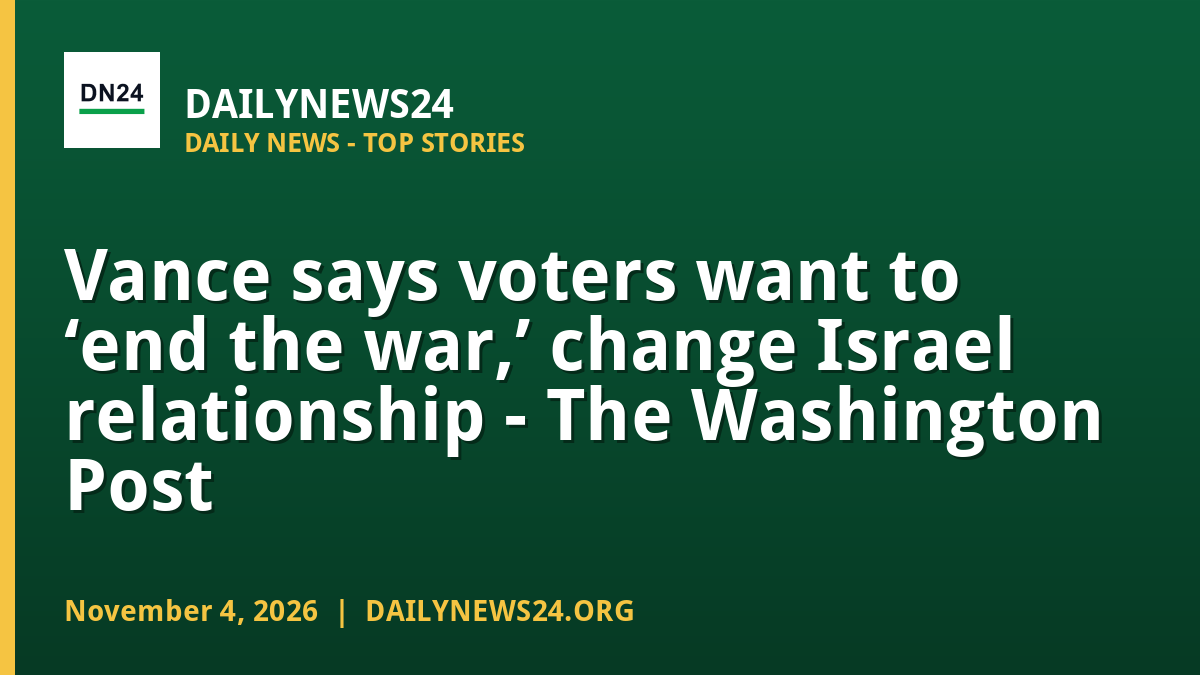
Vance’s argument centers on the idea that the American electorate has grown weary of foreign entanglements. He suggested that many voters felt the war with Iran was unnecessary and that the resources expended on military operations detracted from attention to inflation and cost of living. This perspective aligns with polling data from recent weeks, which indicated a drop in approval ratings for the President's foreign policy among suburban and rural voters alike. The Vice President emphasized that the relationship with Israel has become a politically toxic issue for the current administration.
- Vance stated that the public desires an end to active military hostilities.
- He noted that changing the diplomatic approach to Israel is now a voter priority.
- This stance contrasts sharply with the pro-Israel hawks within the party who remain silent.
By framing the war as a mistake, Vance is attempting to reclaim the high ground on foreign policy, positioning himself as the more thoughtful and pragmatic choice for the party's future. This move is seen by political analysts as a defensive maneuver, intended to insulate his own political brand from the potential long-term liabilities of the conflict. It is a calculated risk that could either redefine his 2028 prospects or alienate the party base that remains firmly supportive of the President's approach.
The Midterm Context and Voter Sentiment
The 2026 midterms were characterized by a fragmented electorate, with voters dividing along lines that did not strictly follow traditional party loyalties. While Republicans retained the House, they lost key seats in the Senate and failed to achieve the supermajority they had hoped for. The economic anxiety stemming from the war's indirect effects on oil prices and supply chains played a major role in this outcome. In states like Pennsylvania and Wisconsin, the swing voters who decided close races cited the war as a primary reason for their change in voting behavior.
Vance’s comments reflect a growing consensus within the party that the administration lost touch with the average American voter. The war was not just a geopolitical event but a domestic economic one, impacting energy costs and national security perceptions. By highlighting this, Vance is tapping into a broader populist sentiment that favors isolationism or at least a more cautious foreign policy stance. This is a significant shift for the GOP, which has traditionally leaned toward interventionism under certain circumstances, particularly regarding Israel and the Middle East.
Internal Party Divisions
The reaction to Vance’s remarks has been mixed, revealing deep fractures within the Republican Party. Hardline supporters of President Trump have criticized the Vice President for undermining the administration's unity and lacking loyalty. Social media posts from conservative influencers have rallied around Trump, arguing that the war is necessary to project strength and that Vance is yielding to Democratic pressure. This internal conflict threatens to destabilize the party's cohesion just as it seeks to regroup for the 2028 cycle.
The Baseline vs. The Breakaway
On the other hand, moderate Republicans and pragmatists have praised Vance for acknowledging the reality of voter sentiment. They argue that ignoring the public's desire for peace and economic stability is a recipe for continued electoral defeat. This divide highlights the tension between ideological purity and electoral viability. The party now faces the challenge of reconciling these two factions, with Vance emerging as a potential leader for the pragmatic wing. His ability to navigate this tension will determine his influence in the coming years.
Implications for the Israel Relationship
Central to Vance’s argument is the claim that voters want a change in the relationship with Israel. He suggested that the current administration’s approach has been too one-sided, failing to adequately address American interests while uncritically supporting Israeli actions. This is a delicate topic, given the strong pro-Israel establishment within the GOP. However, Vance’s remarks indicate a willingness to reconsider the diplomatic and military support provided to Israel, potentially signaling a shift toward a more balanced or conditional approach. This could have significant ramifications for future foreign policy decisions.
The statement also hints at a broader reassessment of alliances and partnerships. By suggesting that the relationship needs to change, Vance is opening the door for negotiations that prioritize American national interests over ideological alignment. This approach could appeal to voters who feel that the administration has been too focused on regional players at the expense of domestic priorities. It is a move that could reshape the GOP's foreign policy platform for the next decade, potentially distancing the party from its traditional alliances in the Middle East.
Outlook for 2028
Vance’s remarks are widely interpreted as a bid to keep his 2028 presidential hopes alive. By positioning himself as the voice of reason and pragmatism, he is differentiating himself from Trump, who remains a dominant but polarizing figure within the party. If the war continues to be a source of political liability, Vance’s stance could resonate with a broader base of voters who are tired of conflict. This positions him as a viable candidate for the 2028 nomination, appealing to both moderates and conservatives who are concerned about the party's direction.
However, the path forward is uncertain. The war is still ongoing, and any military developments could quickly shift public opinion. If the conflict de-escalates, the political liability may diminish, potentially undermining Vance’s argument. Conversely, if the war intensifies, his stance may gain further traction, but it could also lead to more severe internal party conflicts. The coming months will be crucial in determining whether Vance’s break with the administration’s narrative is a temporary tactical move or a permanent shift in his political identity.