A Rare Admission of Error
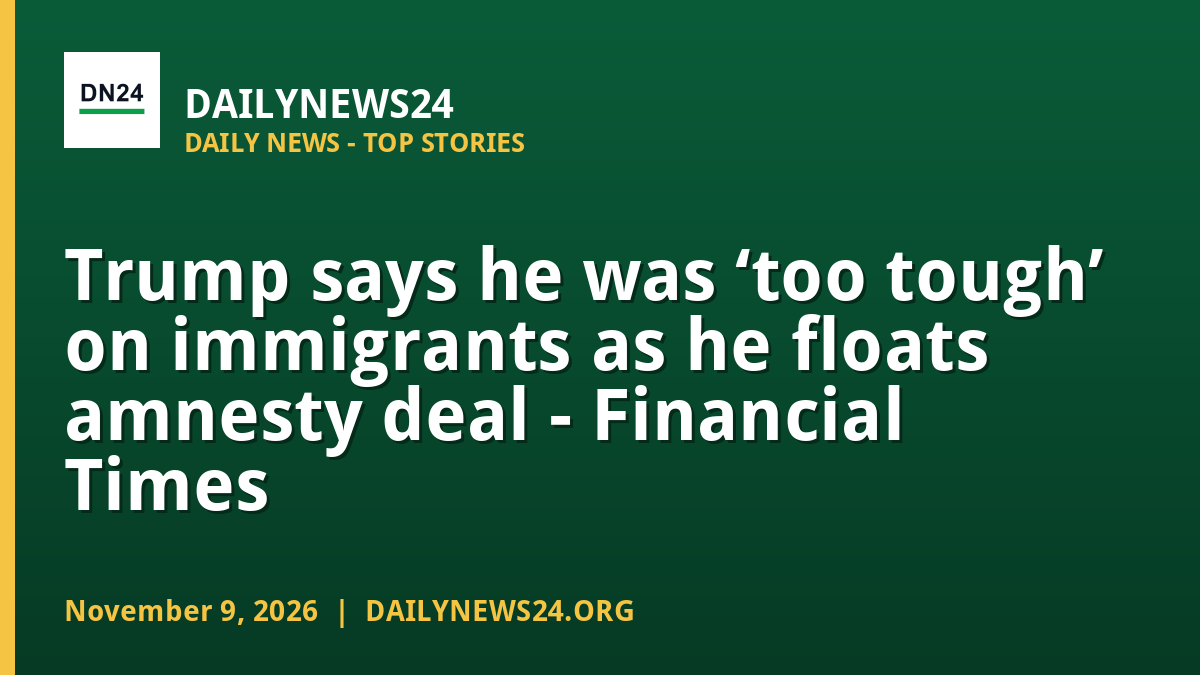
In a striking departure from his long-standing rhetorical posture, President Donald Trump has acknowledged that his administration's aggressive approach to immigration enforcement may have been excessive. Speaking in a recent high-profile television interview, the President candidly admitted that the intensity of the crackdown might have been "too tough." This admission marks a significant pivot in a presidency historically defined by hardline stances on border security and deportation expansion.
The remarks, which surfaced across major news outlets including the Financial Times, CNN, and The New York Times, have sent ripples through political circles. For years, Trump positioned himself as the most unwavering advocate for strict immigration controls. To now suggest that these measures may have caused more political harm than good is a strategic recalibration that observers are rapidly dissecting for its implications on future policy and the party's trajectory.
The Context of Midterm Disappointments
This shift in tone does not occur in a vacuum. It follows a period of underperformance for Republican candidates in recent midterm elections. Multiple analysts and party insiders have pointed to the immigration crackdown as a potential liability, arguing that it alienated moderate voters and stirred deep resentment among Hispanic communities and rural areas with significant immigrant populations.
Trump’s comments directly address this feedback loop. By suggesting that the enforcement strategies might have "hurt" Republicans in these elections, he is implicitly conceding that the policy’s political cost outweighed its perceived benefits. This recognition is crucial because it signals a willingness to adapt. The President appears to be weighing the long-term viability of his base against the immediate results of voter apathy or backlash in key swing districts.
Political Calculus and Voter Sentiment
- Economic Impact: Critics argued that mass deportations disrupted labor markets, particularly in agriculture and construction, leading to consumer price pressures that affected everyday Americans.
- Cultural Backlash: The aggressive rhetoric and visible enforcement actions polarized the electorate, turning once-undecided voters against the party.
- Strategic Retreat: The President’s comments suggest a strategic retreat from maximalist enforcement to preserve the party’s electoral coalition.
The Float of an Amnesty Deal
Perhaps the most controversial aspect of Trump’s recent statements is his open discussion of a potential amnesty deal. While the term "amnesty" was previously a subject of intense mockery from his base, the President has now floated the idea as a practical solution to the bureaucratic backlog and the humanitarian concerns arising from the current system.
Such a proposal would represent a massive policy reversal. An amnesty framework typically involves granting legal status to undocumented immigrants who meet certain criteria, such as length of residency and lack of criminal history. By bringing this topic back into the mainstream discourse, Trump is challenging the ideological purity of the conservative right, which has long opposed any form of path to citizenship.
This move suggests a pragmatic approach to governance, prioritizing systemic resolution over symbolic toughness. It indicates that the administration is looking for ways to normalize the presence of millions of undocumented workers in the US economy, potentially through a structured legal process that provides regulatory oversight and economic contribution.
Internal Party Tensions and Reactions
The reaction within the Republican Party has been mixed, reflecting deep ideological fractures. Hardline conservatives and immigration restrictionists have expressed alarm, viewing the suggestion of amnesty as a betrayal of the platform on which Trump was elected. They argue that any concession on immigration undermines the core appeal of his brand to the base.
However, other voices within the party, particularly those focused on economic growth and suburban outreach, have welcomed the nuance. They argue that the previous approach was not only politically unsustainable but also logistically flawed. These moderates see the potential amnesty deal as an opportunity to rebrand the party as pragmatic and forward-looking, rather than purely adversarial.
The tension is further complicated by the arrival of new leadership figures. As Susan Rice, or in this specific context, the mention of Miller starting a chief-of-staff role in some reporting, suggests a recalibration of the White House staff. Key appointments often signal policy shifts, and the presence of advisors who advocate for a more balanced approach may be influencing the President’s public statements.
The Role of Key Leadership
- Chief of Staff Influence: New leadership in the White House often brings fresh perspectives on policy execution and political messaging.
- Base Management: The administration must carefully manage the reaction from its conservative base to avoid a primary challenge or internal revolt.
- Legislative Strategy: Any amnesty deal would require congressional cooperation, making the political timing critical.
Implications for Ordinary Americans
For everyday readers, the implications of these policy shifts are tangible. If an amnesty deal progresses, it could lead to a significant increase in the number of legal workers, potentially stabilizing labor shortages in key sectors like healthcare, food service, and manufacturing. This could translate to lower prices for goods and services, as businesses gain access to a more stable workforce.
Conversely, the uncertainty surrounding this shift creates anxiety for those who depend on the current enforcement regime. Community leaders in immigrant-heavy towns are closely watching for signs of a crackdown continuation or a genuine pivot. The emotional toll of years of separation and fear cannot be erased by a press release, and the trust deficit remains a significant hurdle for any new policy initiative.
Families who have been separated by previous enforcement actions may see this as a moment of hope, though the legal complexities of reunification remain daunting. The broader societal impact includes a potential reduction in the shadow economy, as workers who gain legal status can participate more fully in the formal banking and housing systems, contributing to local economic resilience.
Outlook: What to Watch Next
The coming weeks will be critical in determining whether these comments are merely rhetorical smoke or the precursor to concrete legislative action. Key indicators to watch include formal proposals from the Department of Homeland Security, reactions from bipartisan congressional leaders, and the response from major labor unions and business associations.
Observers should also monitor the primary campaign season, where immigration remains a central battleground. If Trump’s base views the amnesty float as a disqualifier, we may see a surge of challengers attacking his record on border security. Conversely, if the policy shift gains traction among moderates, it could reshape the midterm narrative entirely.
Ultimately, this evolution reflects a broader trend in American politics: the tension between ideological purity and pragmatic governance. As the administration seeks to balance its core constituencies with the realities of the national economy, the path forward will likely be fraught with compromise. For now, the message is clear: the era of unchecked aggression on immigration is giving way to a more nuanced, albeit contentious, debate on the future of the American workforce.