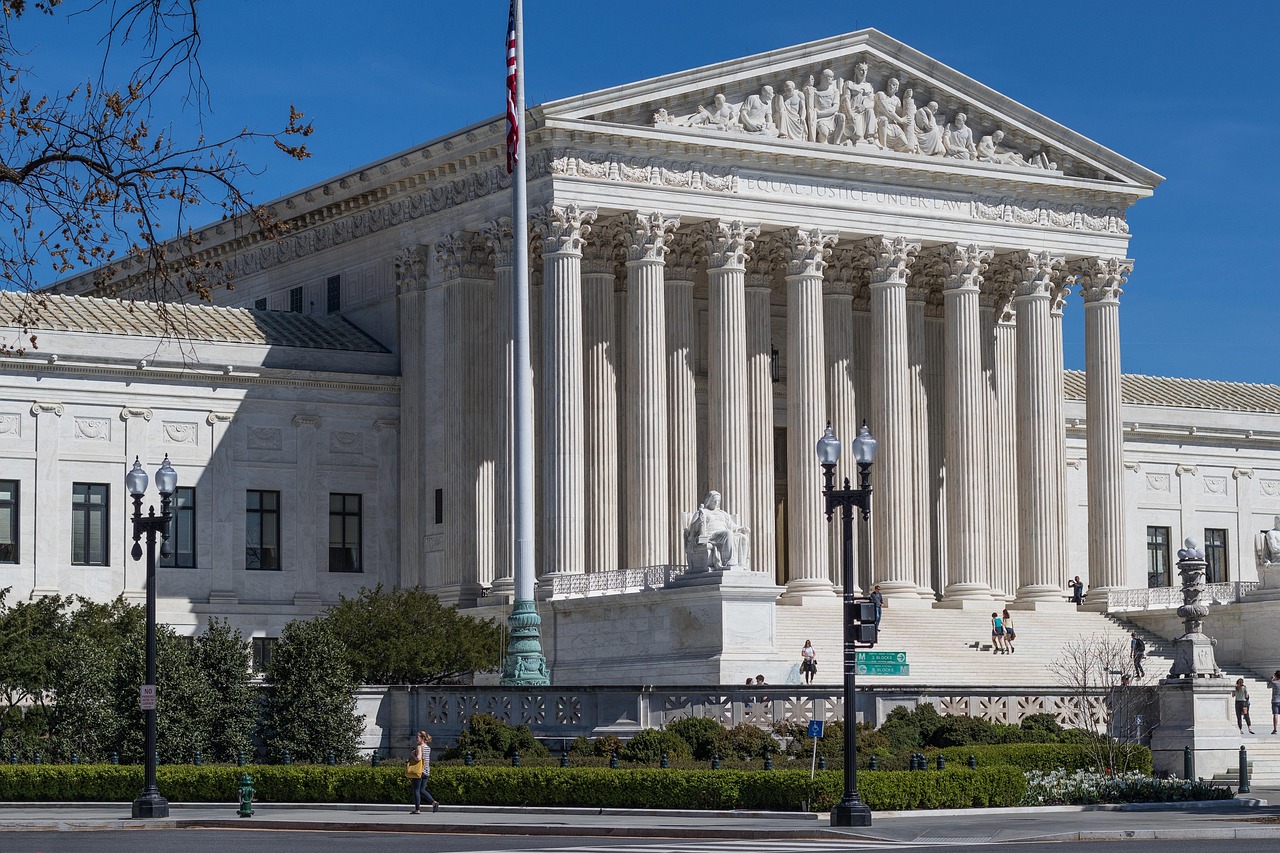
Washington, D.C. — The United States Supreme Court is currently grappling with one of the most consequential questions in modern administrative law: to what extent do federal law enforcement officers enjoy legal immunity from civil suits? As public scrutiny regarding immigration enforcement intensifies, the Court’s decision in this pending case could fundamentally reshape the landscape of federal accountability. The stakes are high, potentially determining whether citizens have a judicial remedy when they believe their constitutional rights have been violated by agents of the federal government.
The Rise in Legal Challenges
In recent years, there has been a noticeable surge in civil rights complaints filed against federal agencies, particularly the Immigration and Customs Enforcement (ICE). These lawsuits often allege misconduct ranging from unlawful detention to excessive force and violations of due process. For years, these cases have proceeded through the federal district and circuit courts, serving as a primary mechanism for citizens to seek redress. However, the legal framework governing these claims has become increasingly fragmented, with different federal circuits offering varying interpretations of when and how agents can be held personally liable. This inconsistency has created a patchwork of rights, where a citizen’s ability to sue depends largely on their geographic location.
Fragmentation in Circuit Courts
The lack of a unified standard has led to significant legal uncertainty. In some districts, courts have been more willing to allow cases to proceed if there is evidence of bad faith or deliberate misconduct. In others, judges have dismissed claims at an early stage, citing broad interpretations of sovereign immunity or qualified immunity. This disparity means that two individuals with nearly identical experiences of federal enforcement could face entirely different legal outcomes based solely on where they reside. The Supreme Court has taken up the case to resolve this divergence, aiming to establish a clear, national standard for federal official liability.
Understanding the Legal Framework
To understand the gravity of this decision, it is necessary to examine the legal doctrines at play. The primary defense used by federal officials is qualified immunity, a judicial doctrine that shields government officials from civil liability for conduct that does not violate clearly established statutory or constitutional rights of which a reasonable person would have known. Unlike absolute immunity, which protects officials in all circumstances, qualified immunity is a conditional shield. It is designed to balance two competing interests: the need to deter official misconduct and the need to protect officials from the chilling effect of constant litigation. Critics argue that this doctrine has been expanded over time to provide near-total protection, effectively removing the threat of financial liability for most actions, even those that are egregious.
Competing Perspectives on Accountability
Supporters of the current immunity framework argue that it is essential for effective law enforcement. They contend that officers must be able to make split-second decisions in high-stakes environments without the fear of personal financial ruin from frivolous lawsuits. From this viewpoint, the threat of litigation could paralyze agents, causing them to hesitate in situations that require immediate action, such as executing arrest warrants or managing border security. They argue that internal disciplinary processes and criminal prosecutions are sufficient mechanisms for addressing truly wrongful behavior, making civil suits unnecessary and disruptive.
The Case for Judicial Oversight
Conversely, civil rights advocates and legal scholars argue that qualified immunity has become a shield for abuse rather than a tool for protection. They maintain that without the threat of a civil judgment, there is insufficient incentive for officials to adhere to constitutional standards. For many victims of alleged misconduct, the civil suit is the only viable path to justice, as criminal prosecution is rare and often fails to provide the financial compensation needed to cover legal fees, medical costs, and lost wages. These advocates warn that further limiting the ability to sue will create a class of federal agents who are functionally unaccountable to the public, eroding trust in the rule of law.
Recent Developments and Implications
Recent arguments before the Supreme Court have highlighted the tension between these two perspectives. The oral arguments suggested that the Justices are deeply divided on the scope of the immunity. Some justices appeared concerned about the practical implications of allowing more lawsuits to proceed, fearing a flood of litigation that could burden the federal judiciary. Others emphasized the fundamental importance of individual rights, noting that the Constitution is not merely aspirational but enforceable through the courts. The outcome of this case will likely turn on how the Court defines "clearly established" law. If the bar is set too high, requiring that a similar case have been decided in the exact same factual context, immunity will remain robust. If the bar is lowered, allowing for broader interpretations of constitutional boundaries, officials will face greater liability.
Impact on Ordinary Citizens
For ordinary readers, this is not just an abstract legal debate. It directly impacts the recourse available to anyone who interacts with federal law enforcement. If the Court rules in favor of broad immunity, citizens who believe they have been subjected to unlawful search, seizure, or detention may find their claims dismissed before trial. This could lead to a chilling effect, where individuals are reluctant to report rights violations, knowing that the legal system offers them little hope of compensation. Conversely, if the Court narrows the scope of immunity, it could empower victims to seek justice and signal to federal agencies that strict adherence to constitutional protocols is mandatory, not optional.
What to Watch Next
As the Court prepares to issue its ruling, legal experts are closely watching the composition of the majority opinion. The specific language used will determine how lower courts apply the new standard in the coming years. We can expect immediate reactions from federal agencies, who will likely issue new internal guidance to their agents regarding their legal exposure. Furthermore, state and local governments may reconsider their own liability policies in light of the federal precedent. The next few months will be critical. If the ruling is expansive in its limitation of suits, we may see a rise in legislative efforts at the state level to create alternative compensation funds or independent oversight bodies. If the ruling preserves access to courts, we may anticipate an increase in civil rights litigation as citizens test the new boundaries. Regardless of the outcome, this case will define the relationship between the federal state and its citizens for a generation.