A Pivotal Moment for European Stability
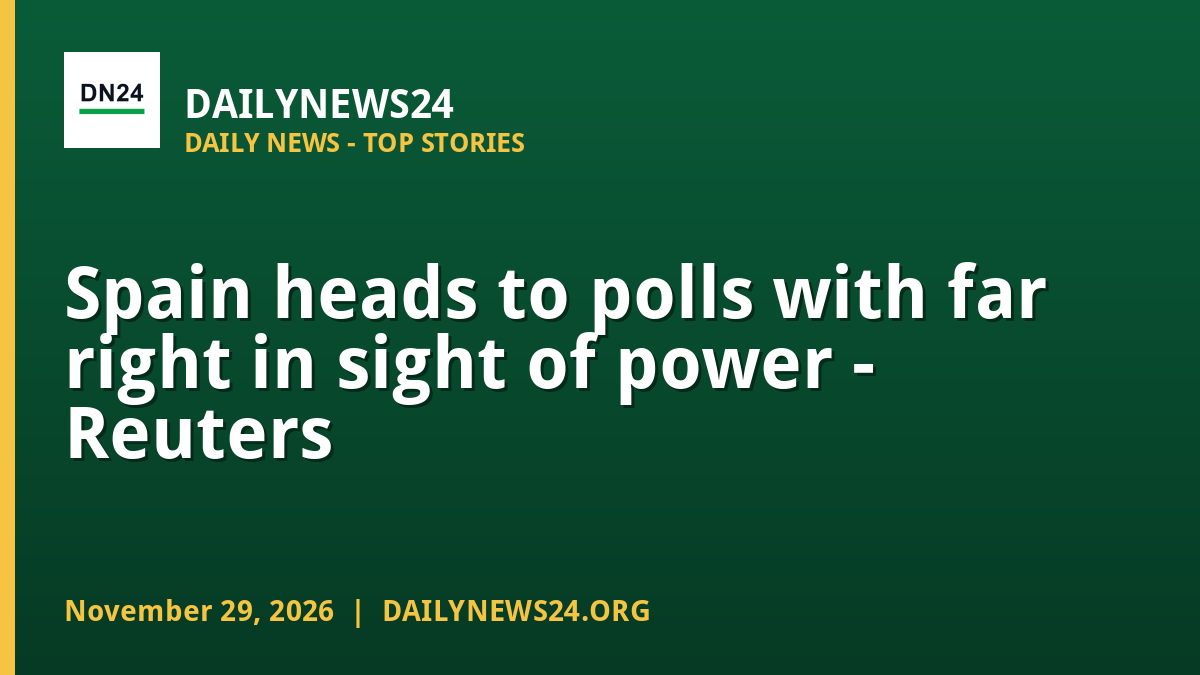
As Spain prepares for another early election, the political stakes have never been higher. This is not merely a domestic contest between familiar parties; it is a bellwether event that could redefine the ideological center of gravity across Western Europe. The surge of the far-right Vox party has transformed what was once a stable two-party dynamic into a volatile three-way struggle, leaving Prime Minister Pedro Sánchez in a precarious position. For voters and international observers alike, the outcome will signal whether the center-left can hold its ground against rising populist pressures or if a new era of right-leaning governance is underway in the Iberian Peninsula.
The context is critical: Spain has faced a period of significant internal turbulence, exacerbated by global economic shifts and a fragmented central government. Sánchez’s administration has struggled to pass key legislative agendas due to a lack of a clear parliamentary majority, often relying on delicate alliances with regional parties. This legislative bottleneck has fueled public frustration, creating an opening for anti-establishment voices to gain momentum. The election is therefore viewed as a referendum not just on policy, but on the stability of the Spanish democratic model itself.
The Rise of Vox and the Far-Right Wave
Vox, once a fringe organization, has emerged as a serious political force, consistently polling in the double digits and, in some recent surveys, approaching second-place finishers. This rise is part of a broader European trend where parties on the right, emphasizing border control, national identity, and skepticism of supranational institutions, have gained significant traction. In Spain, Vox has successfully consolidated a base among conservative voters who feel alienated by the traditional center-right People’s Party (PP), which they view as too compromise-prone with the left.
The political implications of a stronger Vox are profound. Unlike traditional right-wing parties, Vox is explicitly committed to blocking certain policies related to regional autonomy, particularly in Catalonia and the Basque Country. This stance complicates any potential coalition between the PP and Vox, forcing both parties to navigate a complex landscape where unity on the right is fractured by ideological rigidity. For ordinary readers, this means that even if the right wins a plurality, the formation of a stable government becomes significantly more difficult, potentially leading to continued political paralysis.
Pressure on Prime Minister Sánchez
Pedro Sánchez, who has led the Socialist Workers’ Party (PSOE) for over a decade, faces a daunting challenge. His approval ratings have dwindled, weighed down by perceived slow progress on social reforms and economic management. Critics argue that his reliance on small regional parties to maintain power has diluted his original progressive agenda, alienating some of his core left-wing base. Meanwhile, the left-wing coalition Podemos has struggled to maintain its relevance, failing to prevent a splintering of the progressive vote that could inadvertently benefit the right.
Sánchez has attempted to pivot his campaign, focusing on the threat of a right-wing blockade and positioning himself as the bulwark of democracy against radicalism. However, this strategy carries risks. By framing the election as a binary choice between stability and radical change, he may fail to address the specific economic anxieties of voters facing high housing costs and energy prices. The gap between his rhetorical positioning and the lived experiences of many Spaniards remains a significant hurdle for his reelection bid.
The Center-Right Dilemma
Albiom, the leader of the People’s Party (PP), finds himself in a difficult strategic position. He must appeal to traditional conservative voters while simultaneously trying to outflank Vox on issues of security and national identity. However, his past attempts to form a coalition with Vox have been met with resistance from both parties, with Vox demanding a more aggressive policy stance and the PP worrying about alienating moderate voters. This internal tension within the right-wing camp could split the vote, potentially allowing Sánchez to remain in power by achieving a plurality, even if he does not secure a majority.
Furthermore, the PP has faced its own challenges, including internal party disputes and scandals that have tarnished its image. The failure to present a united front against the left has been a major criticism from within the party. As the election day approaches, the race between the PP and Vox for the second-place finish is intense. The party that secures this position will have significant leverage in any post-election negotiations, making this intra-right competition a decisive factor in the final outcome.
Economic and Regional Implications
- Housing Crisis: A key driver of voter dissatisfaction is the soaring cost of housing, particularly in major cities like Madrid and Barcelona. Both left and right parties have proposed various measures, but voters are skeptical of the feasibility and speed of these solutions.
- Tourism Dependence: Spain’s economy remains heavily reliant on tourism. Political instability can deter foreign investment and tourism, which are vital for economic growth. Voters are increasingly aware of this link between political chaos and their personal financial well-being.
- Regional Autonomy: The issue of regional independence remains a flashpoint. Vox’s hardline stance against autonomy has drawn sharp opposition from nationalist parties in Catalonia and the Basque Country, creating a rigid divide that may hinder any broad coalition-building.
What It Means for Europe
The outcome of the Spanish election will send strong signals to other European nations. If the far right continues to gain ground, it could empower similar movements in France, Italy, and Germany, shifting the entire European policy landscape toward stricter immigration controls and a more nationalist foreign policy. Conversely, if Sánchez manages to hold the center, it would demonstrate that established democratic parties can still compete effectively against populist surges, provided they address substantive economic concerns.
For the European Union, a stable right-leaning government in Spain might align more closely with other right-wing governments in the bloc, potentially facilitating a shift in EU policy priorities. However, a continued fragmented government in Madrid would add to the list of European capitals struggling with legislative gridlock, complicating the coordination of unified European responses to global challenges such as climate change and energy security.
Outlook and Key Watchpoints
As the polls close, several factors will determine the final result. The turnout rate is crucial; if historically disengaged young voters stay home, the older, more conservative electorate could disproportionately influence the outcome. Additionally, the performance of smaller parties, such as the Basque Nationalist Party (PNV) and Junts per Catalunya, will be vital. These regional parties often hold the balance of power in a parliament so fragmented that no single party can govern alone.
In the coming days, the focus will shift to coalition talks. The willingness of the PP and Vox to cooperate, or the ability of Sánchez to forge new alliances with regional parties, will define the next chapter of Spanish politics. Regardless of the winner, the era of easy consensus in Spanish politics appears to be over. Voters are being asked to choose not just a government, but the direction of their country in an increasingly complex global environment. The dust from this election will likely settle slowly, with the true political consequences unfolding over the coming months of intense negotiation.