The Deadline Pressure Cooker
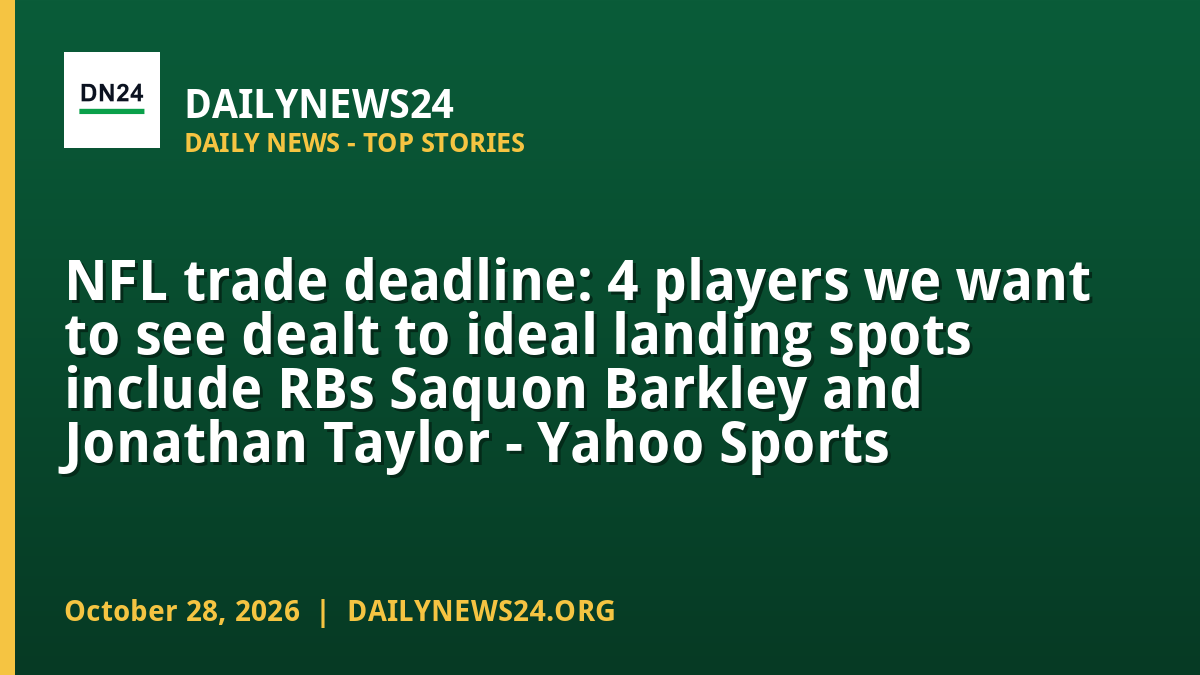
The NFL trade deadline serves as one of the most volatile periods in professional sports, a timeframe where the strategic calculus shifts from long-term cultivation to immediate competitive necessity. For teams currently struggling to maintain playoff relevance, the pressure to secure impactful upgrades is immense. This season, no position commands more attention than the running back, a role that has become increasingly crucial in modern offensive schemes. The market is thick with talent, but the movement of elite players like Saquon Barkley and Jonathan Taylor would represent seismic shifts in the league's power dynamics.
While the concept of trading such high-profile assets is often viewed as a long shot, the financial and roster implications make it a plausible scenario for several franchises. The deadline is not merely a transactional line on the calendar; it is a strategic checkpoint where general managers must evaluate whether their current rosters can realistically compete for a Super Bowl or if they need to make painful short-term sacrifices for future flexibility. The speculation surrounding Barkley and Taylor highlights the high stakes involved in these final weeks of the regular season.
Saquon Barkley: The Powerhouse Dilemma
Saquon Barkley remains one of the most dominant force runners in the National Football League. His ability to break tackles and gain significant yardage in single carries makes him a game-changer in specific offensive contexts. However, the New York Giants' overall offensive consistency has often failed to maximize his value, leading to discussions about whether a change of scenery would yield better results for all parties involved. The idea of moving Barkley is rarely top-of-mind for casual fans, but for team executives, it represents a complex valuation of present performance versus future assets.
Why a Trade Makes Sense for Some
For a team with a weak passing game but a solid defense, acquiring Barkley could be the missing piece to establish a balanced attack. Conversely, for the Giants, sending Barkley could provide the high draft capital or young talent needed to rebuild other positions that are currently underperforming. It is a classic trade-off: sacrificing a proven star who may be past his peak for the potential to secure multiple high-end prospects. This type of transaction requires a perfect alignment of needs and valuations, which is rare but not unheard of in the NFL.
Jonathan Taylor: The Speed and Versatility Factor
Jonathan Taylor offers a different but equally compelling profile. Known for his explosive speed and versatility, Taylor can function as both a primary ball carrier and a threat in the passing game. The Indianapolis Colts have relied heavily on him, but the team's struggles in other areas of the roster have raised questions about whether retaining his full contract value is the most efficient use of resources. A trade involving Taylor would likely involve a different set of strategic calculations compared to Barkley, focusing more on offensive explosiveness and scoring potential.
The Ideal Landing Spots
Several teams are positioned to be ideal landing spots for Taylor, particularly those looking to boost their offensive output without addressing defensive deficiencies. Teams with strong quarterback play but lacking in the run game could benefit immensely from Taylor's presence. The synergy between a reliable passer and a dynamic runner like Taylor can unlock a level of offensive unpredictability that opponents struggle to defend. This dynamic is a key factor in why he remains a target for teams desiring a quick offensive upgrade.
The Economics of Elite Talent
The financial implications of trading a running back of this caliber are substantial. Both Barkley and Taylor are under contract, which means any team acquiring them would be absorbing significant salary cap space. This creates a barrier for many contenders who may be cap-constrained. Conversely, the team receiving the player must be willing to commit to a long-term financial obligation that may not yield immediate returns if the supporting cast is not in place. The cap management aspect is often the deciding factor in whether a blockbuster trade materializes.
Risk Versus Reward
There is inherent risk in acquiring an aging or injury-prone asset at the deadline. While both players are currently healthy and performing well, the injury history of running backs is a well-documented concern. Teams must weigh the immediate impact against the potential for long-term liability. A successful trade requires not only the right player but also the right context. If the receiving team's offensive line cannot protect the runner or the coaching staff cannot integrate him into the scheme, the investment may prove futile. This risk-reward analysis is central to the negotiations leading up to the deadline.
Competing Perspectives in the League
Opinions on the viability of these trades are divided among analysts and insiders. Some argue that the value of these players is too high to give up, advocating for retention regardless of the current roster composition. Others believe that the opportunity cost of holding onto these contracts is too great, especially if the team's overall trajectory is stagnating. The debate often centers on the definition of success: is it winning now or building for the future? These competing philosophies drive the back-and-forth negotiations and create the uncertainty that defines the trade deadline period.
What This Means for Ordinary Fans
For the average fan, the potential movement of these stars offers a narrative twist to the remaining games. It introduces new storylines and shifts the focus from individual performances to team dynamics. Watching a star player integrate into a new system can be just as captivating as watching them excel in their original context. It also highlights the pragmatic nature of professional sports, where loyalty is secondary to competitive advantage. Fans of teams not involved in these trades may also see changes in their opponents, altering the landscape of their own division races.
The Human Element of Roster Moves
Beyond the statistics and salary cap numbers, there is a human element to these transactions. Players are often uprooted from familiar environments, and the psychological impact of a mid-season trade cannot be understated. How a player adapts to a new city, fan base, and coaching staff can significantly influence their on-field performance. This aspect is often overlooked in purely analytical discussions but is crucial for understanding the long-term success of such a move. The ability to bounce back and perform under new circumstances is a testament to the player's professionalism and resilience.
Outlook: What to Watch Next
As the trade deadline approaches, the market will provide clearer signals on which teams are willing to make bold moves. The next few weeks will be critical for monitoring rumors, injury reports, and performance trends. Any slip-up in the regular season could tip the scales in favor of a trade, while sustained excellence might solidify the player's status as a franchise cornerstone. Fans and analysts alike should keep a close eye on the financial aspects and the strategic needs of the top contenders. The final weeks of the season will determine whether these speculated trades become reality or remain just that—speculation. The outcome will have lasting implications for the playoff picture and the competitive balance of the league for years to come.