The High-Stakes Confirmation Hearing
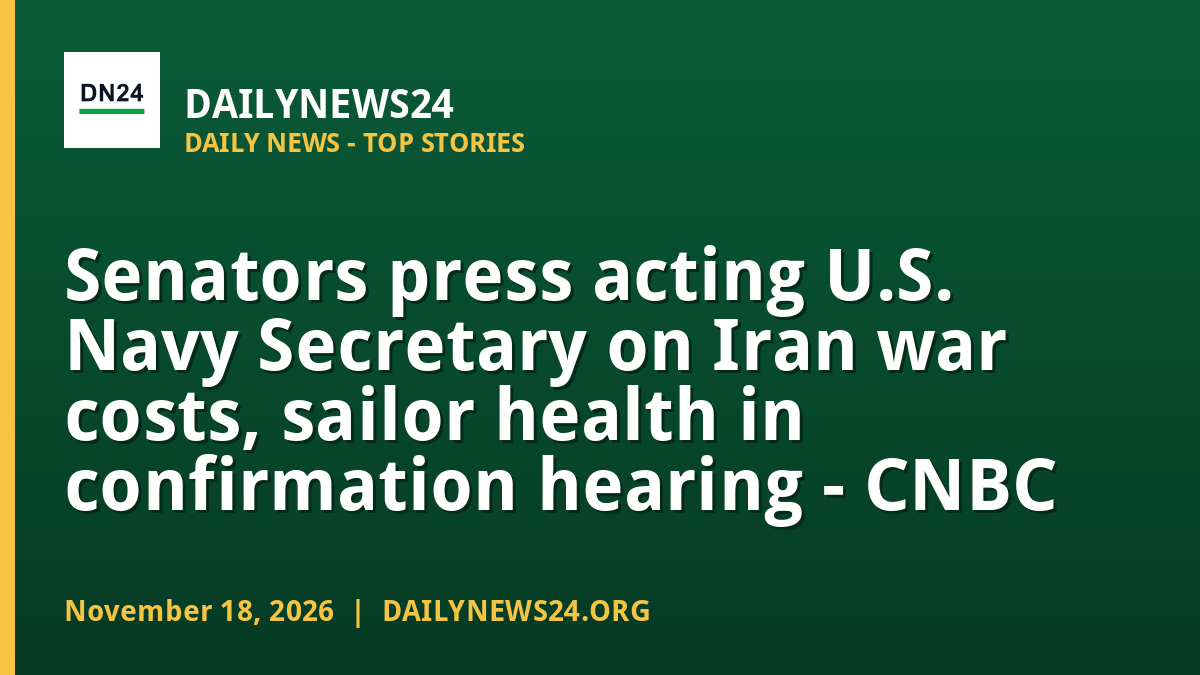
The nomination process for the United States Navy Secretary has evolved into a focal point for debate regarding national security priorities and military welfare. Hung Cao, the acting Navy Secretary and President Donald Trump's nominee for the position, recently appeared before the Senate Armed Services Committee for a confirmation hearing that quickly shifted from routine procedural questions to a contentious discussion of operational readiness.
Senators from both parties pressed Cao on the tangible impacts of ongoing geopolitical tensions, specifically the conflict with Iran, on the Department of the Navy's logistics and personnel. The hearing highlighted a growing disconnect between high-level strategic directives and the day-to-day realities faced by sailors and shipyards. For everyday Americans following national defense, these hearings offer a rare, transparent look into how federal resources are allocated during times of international crisis.
Straining Resources Amidst Conflict
A central theme of the inquiry was the financial and material burden placed on the Navy by the escalation of hostilities with Iran. Cao acknowledged that the current conflict is significantly straining military resources, a admission that drew immediate follow-up questions regarding budget sufficiency. The Navy operates some of the most complex and expensive machinery in the world, and maintaining operational status during active combat scenarios requires a level of funding that often exceeds baseline estimates.
The costs associated with projecting power, sustaining naval fleets, and supporting allied partners in the Middle East have surged. Senators sought to understand whether the current appropriations are sufficient to cover these unexpected expenditures or if future shortfalls will force difficult choices between modernization and operational deployment. This economic pressure is not abstract; it directly influences the maintenance schedules of warships and the availability of critical spare parts, which in turn affects the safety of the sailors manning them.
Specific Questions on Portsmouth Naval Shipyard
The $65 Million Shortfall
One of the most specific and pointed lines of questioning came from Senator Susan Collins, a Republican from Maine, who focused on the Portsmouth Naval Shipyard. She cited a specific budgetary shortfall of approximately $65 million at the facility, raising concerns about the yard's ability to continue its vital work in maintaining nuclear-powered submarine fleets. The Portsmouth Naval Shipyard is a unique facility, responsible for essential repairs and refits that are central to the U.S. nuclear deterrent.
The senator questioned how the Navy intended to resolve this deficit without compromising the vessel maintenance schedules. A delay in submarine repairs can have cascading effects on fleet readiness, potentially forcing the Navy to redeploy ships elsewhere or leave gaps in undersea surveillance capabilities. This specific figure of $65 million serves as a concrete example of the broader resource strain mentioned earlier, grounding the high-level strategic debate in a tangible financial reality for a key military installation.
Health and Welfare on Board Ship
Food Shortages and Safety Concerns
Equally pressing, if not more so for the immediate well-being of service members, were questions regarding the health and living conditions of sailors. Senator Patty Murray, a Democrat from Washington, raised alarms about recurring issues with food shortages and the quality of provisions aboard Navy vessels. She challenged an analogy made by Cao during the hearing, suggesting that the comparison used to downplay the severity of food supply issues was misleading and disconnected from the actual experiences of the crew.
The debate extended beyond mere meal plans to broader health concerns, including access to medical care and the psychological toll of prolonged deployments. Senators emphasized that a well-fed and well-cared-for crew is a more effective and safer crew. The mention of food shortages is particularly sensitive, as it touches directly on the basic human needs of the individuals risking their lives in service to the country. Critics argue that such logistics failures can erode morale and trust in the chain of command, potentially leading to higher rates of stress-related health issues and even safety incidents due to fatigue or distraction.
Competing Perspectives on Preparedness
The hearing revealed a distinct divided perspective on the state of the Navy's preparedness. On one side, supporters of the administration argued that the Navy is adapting to new threats and that resource constraints are being managed through efficient prioritization. They contended that the Iran conflict, while costly, is necessary for regional stability and that the Navy's performance has remained robust despite the strains.
On the other side, Democratic senators and some concerned Republicans argued that the current trajectory indicates a system under stress. They pointed to the budget shortfalls, the logistical challenges in food and supply, and the health concerns as evidence that the Navy is being asked to do more with less. This perspective suggests that without significant new funding or strategic adjustments, the quality of life for sailors and the long-term capability of the fleet are at risk. The tension between these views reflects a broader national debate on how to balance military ambition with fiscal responsibility and human welfare.
Implications for Ordinary Citizens
While the terms of a Navy Secretary confirmation hearing may seem distant to the average voter, the outcomes have direct implications for national security and tax allocation. The decisions made in this role influence the safety of the entire military infrastructure and the effectiveness of the U.S. in global conflicts. If the Navy is unable to maintain its ships or properly care for its people, the cost is paid by the service members themselves and, ultimately, by the taxpayers who fund the department.
Furthermore, the health and welfare issues raised in the hearing serve as a reminder of the human cost of military service. The public attention to sailors' food and health needs helps hold the institution accountable, ensuring that the brave men and women of the Navy are supported not just as strategic assets, but as people. This transparency in the confirmation process is essential for maintaining public trust in the military establishment and ensuring that policy decisions are grounded in the realities faced on the water.
Outlook and Future Developments
As the confirmation process moves forward, several key developments will be watched closely. The Pentagon and the Navy are expected to release updated budget justifications that address the shortfalls highlighted by senators, particularly regarding the Portsmouth Naval Shipyard and operational costs in the Middle East. Additionally, internal Navy reviews may be conducted to assess the logistics of food supply and medical care, potentially leading to new policies or increased funding for welfare programs.
The final vote on Cao's confirmation will likely be influenced by the administration's response to these concerns. If the Navy can demonstrate a credible plan to address the resource strains and improve working conditions, the nomination stands a strong chance of passing. However, if the issues are left unaddressed, the hearing could become a precedent for future scrutiny of military leadership. For now, the focus remains on how the Navy will balance the immediate demands of the Iran conflict with the long-term need for a healthy, well-maintained, and highly effective fleet.