Escalation in the Gulf Reaches Critical Mass
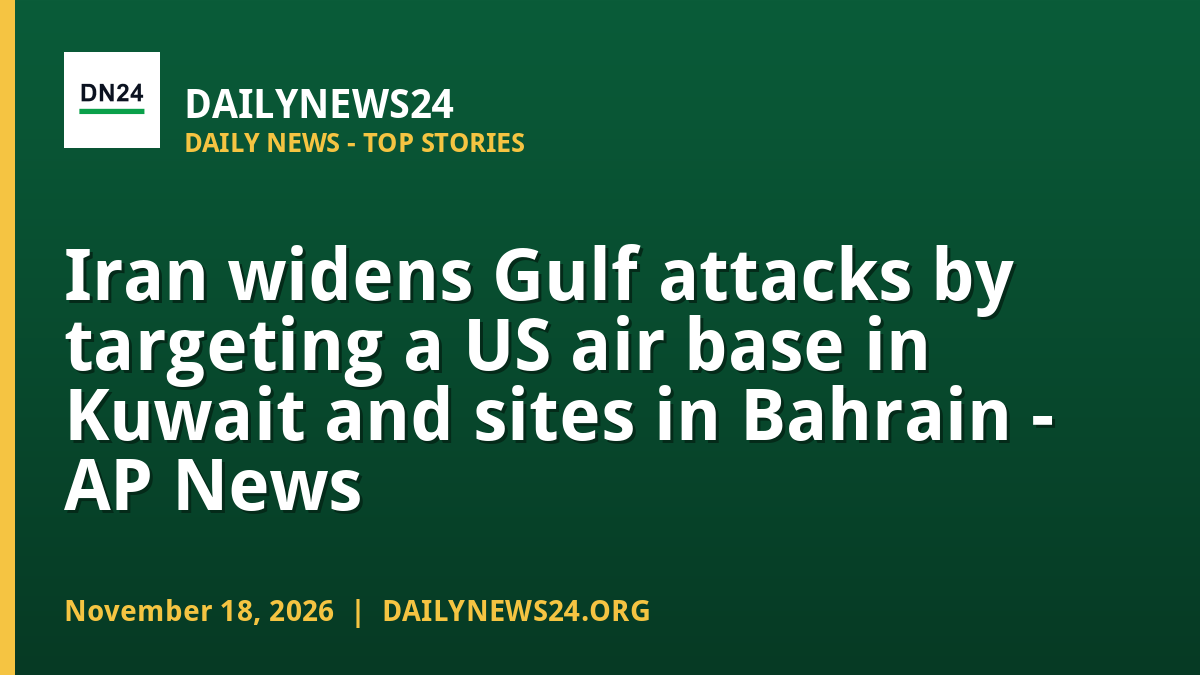
The geopolitical landscape of the Persian Gulf has shifted dramatically as Iran expanded its military campaigns beyond traditional maritime boundaries. Recent actions have seen Iranian forces targeting United States military installations in Kuwait and Bahrain, marking a significant departure from previous tactics that primarily focused on shipping lanes and proxy engagements. This widening of the conflict zone signals a new phase in the ongoing tensions between Tehran and Washington, one that directly implicates the security of key regional allies and the stability of global energy markets.
For ordinary readers and market investors alike, the implications are profound. The Strait of Hormuz, through which a significant portion of the world's oil supply passes, remains the central theater of this dispute. However, the shift toward striking fixed military infrastructure in sovereign nations represents a calculated risk by Iran, aiming to deter further US aggression while testing the defensive capabilities of Gulf states. This move complicates diplomatic efforts and raises the stakes for any potential ceasefire negotiations.
Targeting US Military Infrastructure
The specific targets of these recent attacks include a US air base in Kuwait and various military sites in Bahrain. These locations are not merely symbolic; they serve as critical logistical hubs and forward operating bases for US forces in the region. By placing these sites under fire, Iran is attempting to demonstrate its reach and precision, challenging the narrative that US air defenses can provide complete protection for its regional presence.
Strategic Significance of Kuwait and Bahrain
Kuwait and Bahrain have historically served as safe havens for US military assets, allowing for rapid deployment and sustained operations in the Gulf. The decision to target these locations suggests that Iran views these nations as integral parts of the US military footprint rather than neutral parties. This shift forces Kuwait and Bahrain to navigate a delicate diplomatic path, balancing their security alliance with the United States against the immediate threat posed by their neighbor. The attacks have prompted these nations to ramp up their own air defense systems and coordinate more closely with US command structures to mitigate further risks.
Context of the Tit-for-Tat Exchanges
This escalation does not occur in a vacuum but is part of a broader cycle of retaliatory strikes that has intensified in recent weeks. The immediate trigger for the latest wave of Iranian attacks appears to be US strikes on an Iranian missile launch site. This pattern of action and reaction has created a dangerous feedback loop, where each side’s defensive or offensive measure is perceived as an aggression requiring a proportional or greater response.
Analysts note that the frequency and intensity of these exchanges have increased, moving from sporadic incidents to a sustained campaign of mutual pressure. The involvement of tankers and other commercial vessels in the crossfire further underscores the volatility of the situation. As the US and Iran ramp up their tit-for-tat strikes, the risk of accidental escalation grows, with each side operating under heightened alert levels and reduced margins for error.
Impact on Global Energy Markets
The energy sector is acutely sensitive to developments in the Gulf, and the recent widening of the conflict has sent ripples through global oil prices. Investors are closely monitoring the situation, fearing that sustained attacks on infrastructure or shipping could disrupt supply chains. The Strait of Hormuz remains a chokepoint of immense importance, and any threat to its navigability has immediate consequences for global energy security.
- Oil prices have shown increased volatility in response to news of strikes on US bases.
- Insurance premiums for vessels transiting the Gulf have risen, affecting shipping costs.
- Energy companies are reassessing their operational risks in the region, potentially delaying projects.
For consumers, these market dynamics can translate into higher fuel prices and increased costs for goods that rely on maritime transport. The uncertainty surrounding the duration and scope of the conflict makes long-term planning difficult for businesses and governments alike, contributing to broader economic instability.
Competing Perspectives and Diplomatic Stances
Washington views the Iranian attacks as violations of international law and direct threats to American personnel and allies. The US response has been focused on protecting its forces and deterring further aggression, with military strikes continuing to play a central role in this strategy. Officials emphasize the need for a robust defense posture to reassure Gulf partners and demonstrate resolve.
Tehran, on the other hand, frames its actions as legitimate self-defense against US provocations and a necessary measure to protect its national security. Iranian leadership argues that the US military presence in the Gulf is an illegitimate occupation and that their strikes are a proportional response to attacks on their soil. This narrative is aimed at garnering domestic support and seeking international sympathy, portraying Iran as the victim of unprovoked aggression.
Regional Reactions and Security Implications
Gulf states, including Kuwait and Bahrain, have condemned the attacks and reaffirmed their commitment to their security alliances. However, they are also acutely aware of the need to avoid becoming a primary battlefield. These nations are working to enhance their civil defense capabilities and coordinate with regional partners to create a more resilient security architecture.
The situation has also prompted calls for broader regional cooperation to de-escalate tensions. Some voices advocate for a multilateral approach involving regional powers to mediate between the US and Iran, reducing the risk of a larger war. However, the deep-seated mistrust between the key actors makes such initiatives challenging to implement quickly.
Outlook: What to Watch Next
As the conflict enters this new phase, several factors will determine its trajectory. The US response to the strikes on Kuwait and Bahrain will be crucial, as any significant escalation could draw in more regional actors. Conversely, a measured response might create space for diplomatic backchannels to operate.
Watch for the following indicators in the coming days:
- Further military strikes by either side, particularly targeting high-value assets.
- Statements from Kuwaiti and Bahraini leadership regarding their security posture.
- Movements in oil prices and shipping insurance rates as market indicators of perceived risk.
- Diplomatic efforts by regional mediators to establish a ceasefire or de-escalation protocol.
The situation remains fluid, with the potential for both rapid escalation and sudden de-escalation. For now, the focus remains on protecting personnel and assets while navigating the complex diplomatic landscape of the Gulf.