A Dramatic Pivot in Political Identity
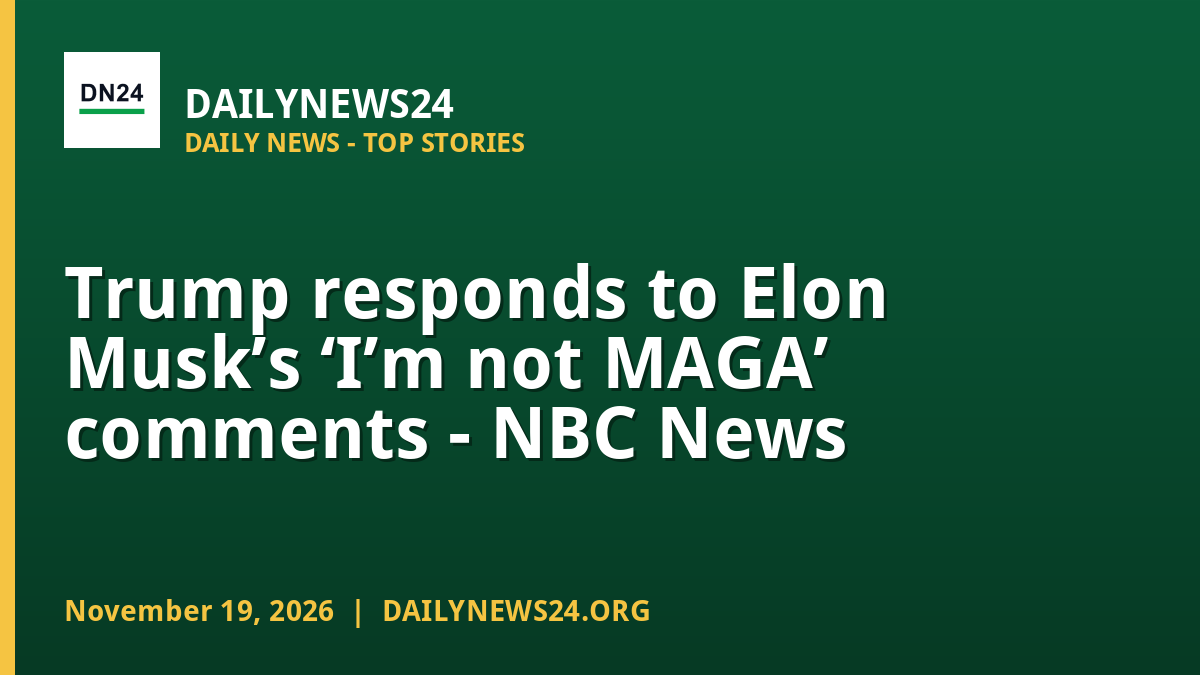
One of the most significant shifts in modern American political discourse occurred when Elon Musk, a figure who had previously aligned himself closely with the populist right, publicly distanced himself from the "Make America Great Again" (MAGA) movement. This declaration represents a stark departure from his earlier rhetoric, where he frequently endorsed Trump-aligned candidates and amplified messages associated with the movement. The timing of this shift, coinciding with high-profile industry events and ongoing political tensions, has sent ripples through both Washington and Silicon Valley, forcing analysts to reassess the cohesion of the Republican base.
Musk's comments, made during a prominent business summit, signaled a deliberate rebranding toward a more moderate, technocratic stance. By explicitly stating that he is "not MAGA," he attempted to decouple his personal brand from the ideological fervor that has defined the right wing in recent years. This move is not merely semantic; it reflects a strategic calculation by a billionaire who seeks to maintain broad appeal across the political spectrum, particularly in a global economy where polarization can hinder international business relations.
The Context of the Break
From Ally to Critic
To understand the magnitude of this turn, one must look at the trajectory of Musk and Trump’s relationship. For several years, Musk operated as a key supporter of the MAGA ethos, utilizing his vast social media platform to promote its narratives. However, as his business empire expanded into space, electric vehicles, and AI, the constraints of partisan politics began to clash with his corporate goals. The recent comments were not an isolated incident but the culmination of growing friction between the ideological purity of the movement and the pragmatic needs of a multinational conglomerate.
This shift also occurs against a backdrop of increasing scrutiny on Musk's influence in politics. Critics on the left have long argued that his support for the movement amplified divisive rhetoric, while critics on the right began to question his loyalty as he pivoted toward centrist positions. The explicit rejection of the MAGA label serves as a clear signal to both camps that he no longer wishes to be tethered to a single political tribe, aiming instead for a position of political agnosticism that favors innovation and deregulation.
Trump’s Reaction and the Power Dynamic
Donald Trump’s response to Musk’s declaration was notably measured, reflecting the complex nature of their relationship. Rather than issuing a blistering attack, which would have been expected in the past, Trump’s reaction suggested a recognition of Musk’s unique leverage. Trump, ever the shrewd political operator, appears to understand that publicly alienating the world’s most prominent entrepreneur could be detrimental to his own brand and future ambitions. This restraint highlights the shifting power dynamics, where wealth and media influence now significantly constrain traditional political rhetoric.
The interplay between these two figures has always been transactional. Musk gains access and protection through political alignment, while Trump gains a powerful megaphone and financial backing. By stepping back from the MAGA identity, Musk is effectively renegotiating this transaction. He is signaling that his support is conditional and that he will not be a pawn in partisan battles. This has forced Trump and his allies to recalibrate their messaging, avoiding direct attacks that could spook other wealthy donors and business leaders who are watching the fallout closely.
Implications for the Business World
Market Sentiment and Investor Confidence
The business world reacted to Musk’s comments with a mixture of relief and caution. For years, investors have worried that the intense political polarization in the United States would create an unstable environment for long-term planning. Musk’s pivot toward a more moderate stance is viewed positively by many institutional investors, who prefer stability and predictability over ideological extremism. This shift may bolster confidence in companies associated with Musk, as it suggests a more balanced approach to regulatory engagement and public relations.
- Regulatory Relations: A less partisan stance may open doors for more constructive dialogue with regulators, potentially easing some of the legal pressures faced by his companies.
- Talent Acquisition: Tech employees, particularly in the AI and engineering sectors, often prefer employers that are not deeply entangled in polarizing political causes. Musk’s rebranding may help in recruiting top talent who are wary of political controversy.
- Global Markets: Many international partners, particularly in Europe and Asia, have expressed discomfort with the rise of populist nationalism. Musk’s moderation aligns better with their diplomatic and economic preferences, facilitating smoother cross-border collaborations.
The Erosion of Political Tribes
Musk’s rejection of the MAGA label is part of a broader trend where traditional political identities are becoming less rigid. The era of strict party loyalty is giving way to a more fluid landscape where individuals, especially those with significant resources, prioritize specific policy outcomes over ideological purity. This trend is evident among other tech leaders and wealthy donors who are increasingly willing to support candidates from both parties based on their stance on issues like taxes, trade, and innovation.
For the Republican Party, this presents a challenge. The MAGA base has been the engine of the party’s resurgence in recent years, but it is not the only constituency. By embracing a more moderate voice, Musk highlights the existence of a large segment of the electorate that is skeptical of the movement’s rhetoric. The party must now determine how to appeal to these moderates without alienating its core supporters, a balancing act that has historically been difficult to manage.
What Comes Next: The Path Forward
Looking ahead, the consequences of Musk’s political rebranding will likely unfold over the coming months. We can expect a more nuanced conversation within the Republican Party about the role of big tech and the boundaries of free speech. Musk will likely continue to use his platforms to advocate for policies that benefit his businesses, such as deregulation and investment in infrastructure, but he will do so without the explicit banner of MAGA. This will test the resilience of the movement’s narrative and its ability to maintain unity in the face of prominent defections.
For ordinary readers, this shift underscores the increasing importance of economic and technological issues in political discourse. The debate is no longer just about cultural issues or identity politics; it is about the future of innovation, job creation, and global competitiveness. Musk’s move serves as a reminder that the line between business and politics is blurring, and that the decisions made in corporate boardrooms are having profound implications for the political landscape. As the election cycle progresses, the alignment of major economic players will be a critical factor to watch, potentially shaping the outcome in ways that transcend traditional party lines.