A Political Flashpoint at the Airport
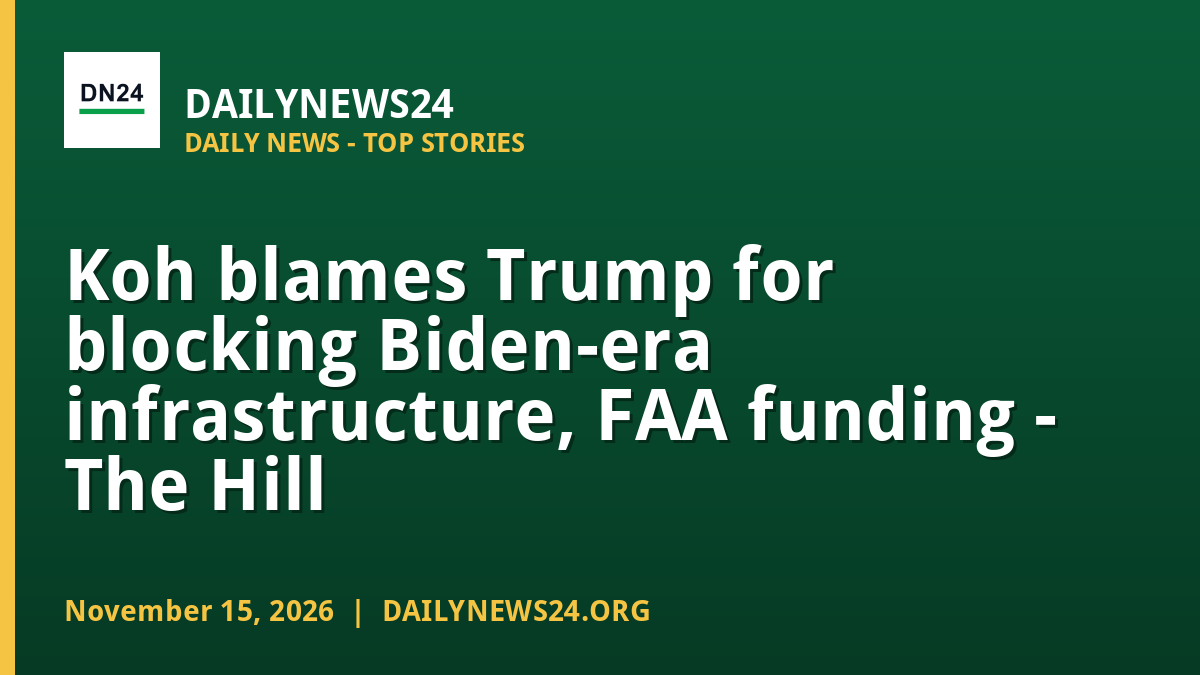
The skies over American cities have seen unusual turbulence, not just in the air, but in the halls of Congress. Representative Steve Koh has publicly shifted the blame for recent aviation disruptions to the current administration, arguing that their actions have directly contributed to the nationwide FAA ground stop. This accusation lands in a climate of heightened partisan friction, where infrastructure reliability has become a central battleground for voter confidence. The situation has moved beyond routine bureaucratic hiccups to become a significant political issue, with both sides trading sharp rhetoric about responsibility for the chaos that has left millions of travelers stranded.
Koh’s intervention is notable because it frames the recent operational failures not as isolated incidents, but as symptoms of a broader administrative mismanagement. By linking the FAA’s decisions to the leadership of the White House, Koh is attempting to hold the executive branch accountable for the tangible impacts on the public. This narrative contrasts sharply with previous administration-era criticisms, where the focus was often on regulatory gridlock rather than active operational disruption. The shift in blame suggests a changing dynamic in how political actors view federal agency performance during periods of national stress.
Background on the FAA Ground Stop
To understand the weight of Koh’s accusations, it is necessary to examine the mechanics of the recent FAA ground stop. When the Federal Aviation Administration issues such an order, it effectively halts all flight operations across the country. This is a drastic measure, usually reserved for severe weather events, major technical failures, or critical safety threats. In recent weeks, the scope and duration of these stoppages have raised eyebrows among industry experts and passengers alike. The decision was not made in a vacuum but was driven by a perceived inability to maintain safe operational standards.
The decision to implement the ground stop was framed by aviation officials as a necessary safety precaution, prioritizing the well-being of passengers and crew over schedule adherence. However, the timing has been criticized by some lawmakers who feel the warning signs were ignored. The stagnation of flights has created a logistical nightmare, with cascading delays affecting everything from commercial air travel to private charter services. For regular commuters and business travelers, this means missed meetings, broken trip itineraries, and significant financial losses. The human cost of these administrative decisions is becoming increasingly difficult to ignore.
The Infrastructure Funding Dispute
Beyond the immediate aviation crisis, Koh has drawn attention to the fate of infrastructure projects that were championed during the previous administration. He argues that current leadership has actively worked to block or delay funding that was already in motion for these initiatives. This includes projects aimed at upgrading airports, roads, and bridges, which are critical components of the nation’s economic backbone. Koh contends that by interfering with these funds, the administration is not only hindering progress but also wasting money that has already been appropriated by Congress.
- Airport modernization projects are facing stalls, leaving facilities unable to handle increased traffic.
- Road maintenance programs are seeing delayed allocations, impacting local economies and supply chains.
- Bridge inspections and repairs are being pushed back, raising long-term safety concerns.
The dispute over these funds highlights a deeper disagreement about the role of the executive branch in spending federal money. While Congress appropriates funds, the administration executes the spending. Koh’s position is that this execution should not be sabotaged by political motives. He suggests that the current administration’s approach is driven by a desire to undo the previous administration’s legacy, rather than by a genuine concern for fiscal responsibility. This perspective resonates with many voters who are frustrated by perceived inefficiencies in the federal government.
Competing Perspectives on Responsibility
The administration, for its part, has broken its silence on the matter, pointing the finger back at the Biden-era policies that they argue created the conditions for the current crisis. Officials in Congress have echoed this sentiment, suggesting that the previous administration’s management of funds was flawed. They argue that the current leadership is merely dealing with the aftermath of poor planning and misallocation of resources. This counter-narrative paints the administration as a caretaker, forced to clean up a mess that was left behind by their predecessors.
The New York Times and other major outlets have noted that the President has largely stayed out of the spotlight during the height of the FAA crisis, allowing subordinates to manage the public relations fallout. This strategic decision may be an attempt to shield the top of the administration from direct criticism. However, it has also led to speculation about the level of presidential involvement in these operational decisions. For critics like Koh, this distance from the problem further implicates the leadership, suggesting a lack of engagement with the serious consequences of their policies. The debate has thus expanded from a specific operational failure to a broader question of executive accountability.
Impact on Ordinary Americans
For the average citizen, the political infighting may seem distant, but the practical implications are immediate and personal. Travelers are dealing with canceled flights, exhausted crews, and airports that are struggling to cope with the backlog. The economic ripple effects are also being felt, with small businesses in airport zones seeing a sharp drop in customers. Hotel bookings have plummeted, and ground transportation services are experiencing unpredictable demand.
Moreover, the uncertainty surrounding infrastructure funding creates anxiety for local communities. Towns that were promised new roads or upgraded public transit systems are now in limbo, unsure if and when these projects will come to fruition. This uncertainty can deter investment and slow down local development. For families planning vacations or moving to new cities, the lack of reliable infrastructure is a significant deterrent. The abstract concept of federal funding has become a very real barrier to personal and professional mobility. As the days drag on, the patience of the public is wearing thin, and the call for clearer communication from both parties is growing louder.
Outlook and What to Watch
As the controversy continues, several key developments will determine the trajectory of this issue. First, the resolution of the FAA ground stop will be a critical test for the administration’s ability to restore normalcy. A swift return to full operations may dampen the political fallout, while a prolonged disruption will only fuel further criticism. Second, the legislative response to infrastructure funding will be closely watched. If Congress takes steps to override executive delays, it will send a strong message about the separation of powers and the protection of taxpayer money.
Finally, the public’s reaction will play a decisive role. If voter sentiment shifts significantly against the administration over these issues, it could impact their polling numbers ahead of upcoming elections. The interplay between operational competence and political strategy will be the defining feature of this story. For now, the focus remains on getting planes back in the sky and funds to the ground, but the political aftershocks are likely to linger for a considerable time. The coming weeks will reveal whether this is a transient hiccup or a sign of deeper systemic issues within the federal government.