A Preventable Tragedy Outside the Grocery Store
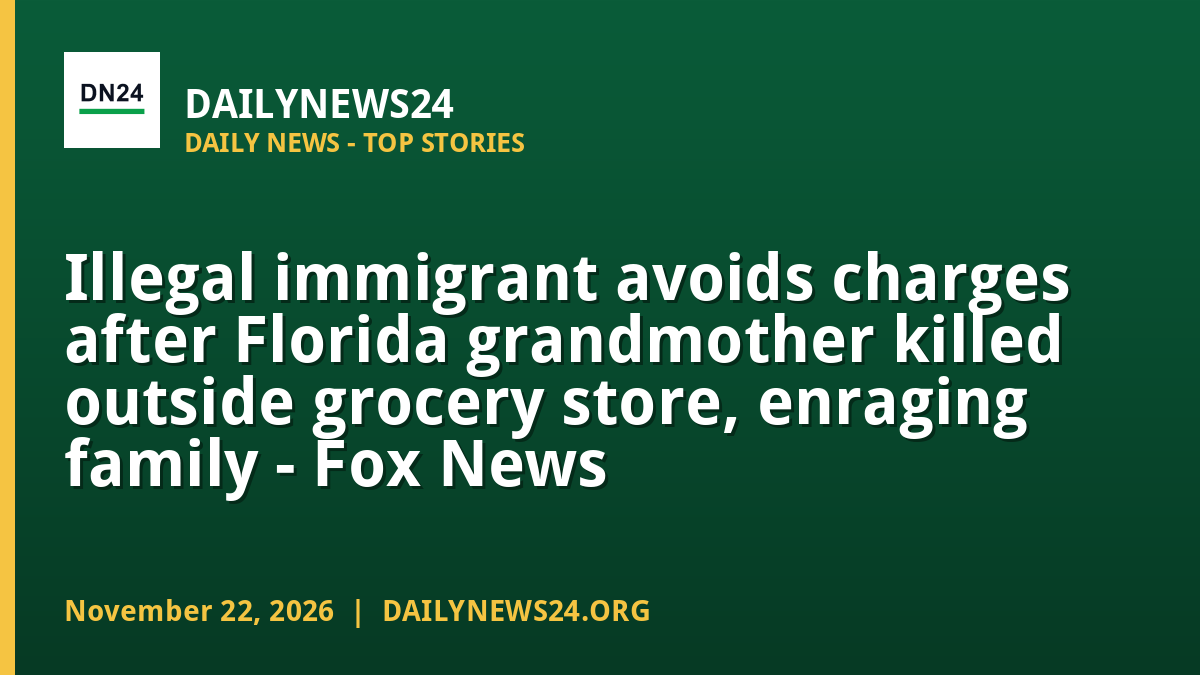
The quiet routine of running errands turned into a life-altering nightmare for a Florida family when a grandmother was struck and killed outside a local grocery store. What began as a routine shopping trip ended in a fatal collision that has since spiraled into a bitter legal dispute. The incident occurred in a high-traffic commercial area, a location where pedestrian safety is often a focal point for community officials and local law enforcement. For the victims' relatives, the event represents more than just a statistical loss; it is a profound personal wound that has left them questioning the fairness of the justice system in their state.
The immediate aftermath of the crash saw emergency responders rushing to the scene, but their efforts were ultimately in vain. The victim, described by the family as a beloved matriarch and active community member, died despite the rapid response of paramedics. Witnesses at the scene reported a chaotic period of confusion and grief, with bystanders attempting to assist before taking shelter. The physical evidence left at the crash site, including debris and skid marks, would later become central to the legal arguments made by both the prosecution and the defense. The severity of the injuries sustained in the impact was indisputable, leading to an immediate investigation by local authorities.
The Legal Path Toward Dismissal
Following the initial investigation, the driver involved in the fatal accident was initially identified as a primary suspect. Authorities reviewed surveillance footage and interviewed witnesses to reconstruct the sequence of events leading up to the collision. However, as the case progressed through the pre-trial phase, a surprising development emerged: the decision to drop all criminal charges against the driver. This move came as a shock to many observers who had expected a more aggressive pursuit of criminal liability given the fatality. The legal team representing the family expressed immediate and visceral disappointment, arguing that the decision undermined the rule of law and failed to deliver justice for the deceased.
The rationale behind the dismissal is rarely made fully public without extensive court filings, but in similar cases, prosecutors often cite a lack of sufficient evidence to prove criminal intent or gross negligence beyond a reasonable doubt. They may argue that the driver did not have enough time to react or that the victim entered the roadway unexpectedly. These technicalities, while legally sound in a vacuum, can feel hollow to those grappling with the raw reality of the loss. The legal system operates on strict standards of proof, which sometimes creates a disconnect between public perception of justice and the finality of a legal verdict. For the family, the closure offered by a dismissal is not closure at all, but an open wound that demands explanation.
The Role of Immigration Status in Public Discourse
In the digital age, the narrative surrounding a fatal accident often extends far beyond the facts of the crash itself. In this particular case, the immigration status of the driver became a prominent element of the public conversation. Reports highlighted that the individual was an illegal immigrant, a detail that fueled a wave of intense public anger and political debate. Social media platforms became battlegrounds where users shared their outrage, often framing the incident through the lens of current political discourse regarding border security and immigration enforcement.
- Public Reaction: Many commentators argued that the lack of charges sent a dangerous message about accountability for non-citizens.
- Legal Nuance: Legal experts pointed out that immigration status does not automatically alter the standard of evidence required for criminal prosecution.
- Political Impact: Local politicians quickly weighed in, using the incident to rally support for stricter enforcement measures.
This layer of complexity has muddied the waters, making it difficult for some members of the public to separate the legal merits of the case from the broader political implications. The family, meanwhile, has asked for the focus to remain on the loss of their loved one rather than on the political winds blowing through the case. They contend that the driver's status should not be a shield against accountability, regardless of the legal hurdles involved in securing a conviction. The intersection of these two issues has created a polarization that complicates any attempt at civil discourse or unanimous support for the grieving family.
Family Grief and the Demand for Justice
Behind the headlines and the political noise lies the profound grief of the victim's family. For them, the dismissal of charges feels like a secondary injury inflicted upon them in their time of deepest sorrow. They have spoken out in interviews and public statements, detailing the daily reminders of the loss and the sense of abandonment they feel from the legal system. The grandmother was not just a victim of a traffic accident; she was a central figure in her family and community, and her absence leaves a void that no legal proceeding can fill.
The family has called for a review of the prosecutor's decision, urging higher-ups in the district attorney's office to reconsider the case. They argue that the evidence supports a charge of vehicular homicide or manslaughter, depending on the specific circumstances of the driver's actions. This appeal to higher authorities is a common step in cases where there is perceived injustice, but it is rarely successful without new evidence or a significant procedural error. The emotional toll on the family is immense, with members reporting struggles with sleep, anxiety, and a persistent sense of rage. Their fight is no longer just about the driver or the law; it is about seeking dignity and recognition for the life taken.
Broader Implications for Pedestrian Safety
The incident has also sparked a broader conversation about pedestrian safety in commercial zones. Grocery stores and similar establishments are designed to accommodate high volumes of foot traffic, but they often struggle to balance this with vehicular access. Experts in urban planning suggest that better infrastructure, such as crosswalks with dedicated signals and speed limits, could reduce the likelihood of such tragedies. However, infrastructure changes take time and require significant funding, leaving communities to rely on driver vigilance and pedestrian caution in the interim.
The case serves as a stark reminder of the fragility of life on the road. Statistics show that pedestrian fatalities are rising nationwide, with older adults being disproportionately represented among the victims. This demographic is often more vulnerable due to slower reaction times and reduced visibility. The tragedy in Florida aligns with these national trends, highlighting the urgent need for systemic improvements in how we design and manage our public spaces. For local officials, this case is not just a legal issue but a public health crisis that demands immediate attention and long-term planning.
What Happens Next
As the legal dust settles, the family's path forward remains uncertain. They may choose to pursue a civil lawsuit, which operates under a different standard of proof and could result in financial compensation and a formal finding of negligence. This route is often more accessible than criminal prosecution and can provide a sense of finality that criminal dismissal does not. Meanwhile, the political fallout is likely to continue, with the incident becoming a reference point in debates over immigration policy and local law enforcement practices.p>
For the community, the question of how to move forward remains open. Will there be changes to traffic laws or infrastructure? Will there be a formal apology or acknowledgment from the authorities? The answers to these questions will shape the legacy of this tragic event. Until then, the family is left to navigate their grief in a public eye that seems more interested in the political angle than the human cost. The story serves as a poignant reminder that behind every statistic and every political talking point, there is a human life and a family left to pick up the pieces.