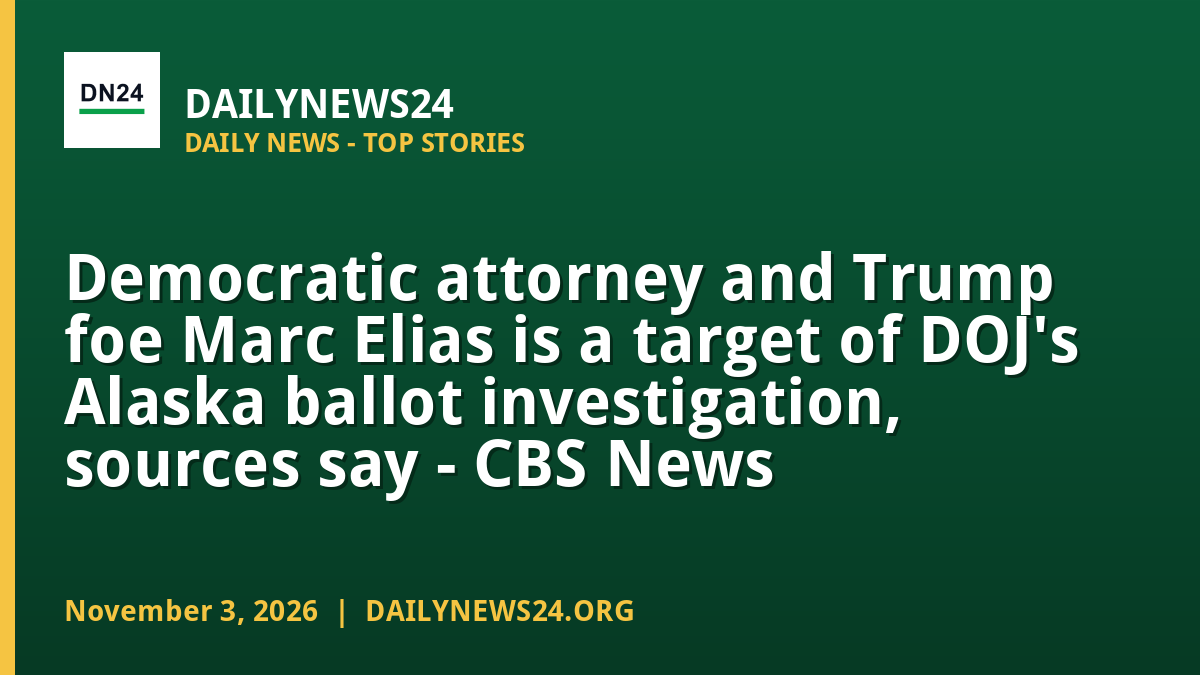
The Department of Justice has officially designated Marc Elias, a prominent Democratic attorney and a vocal opponent of former President Donald Trump, as a "target" in a criminal investigation concerning the 2022 Alaska Senate race. This development, confirmed by sources familiar with the matter, signals a significant escalation in the ongoing legal and political battles surrounding election integrity in the state. The move marks a stark departure from standard prosecutorial practices, raising immediate questions about the political motivations behind the inquiry and the potential implications for future electoral processes.
The Definition of a Target
In federal criminal proceedings, the term "target" carries specific legal weight. Unlike a subject, whose investigation is still preliminary, a target is an individual for whom the government has already assembled substantial evidence of their involvement in a crime. This designation often precedes an indictment. For Elias, who has become a central figure in defending election results against challenges from his political opponents, this status is both a personal legal risk and a symbol of the broader pressure being applied to election officials and advocates.
Procedural Implications
The shift from subject to target indicates that prosecutors believe they have sufficient grounds to proceed with formal charges. This is not merely an administrative update but a critical juncture in criminal law. It suggests that the investigation has moved beyond gathering evidence to evaluating cases for prosecution. Critics argue that this swift progression, particularly in a politically charged context, undermines the perception of impartiality within the Department of Justice.
Background of the Alaska Investigation
The roots of this investigation trace back to the 2022 midterms, when a controversial ballot measure in Alaska allowed voters to choose between a general election or a special election to decide the state's Senate seat. After the initial vote opted for a special election, concerns were raised about the integrity of the process. The Trump administration and its allies had long disputed the results of the 2022 elections, alleging widespread fraud, despite a lack of substantial evidence. The DOJ's involvement now brings these disputes into the federal criminal justice system, transforming political grievances into potential criminal cases.
Key Figures and Allegations
While specific charges have not yet been filed, the focus on Elias suggests that prosecutors are examining his role in advising election officials or challenging the validity of the ballots. Elias has been involved in numerous legal actions related to election administration, positioning him as a key advisor to those defending the integrity of the vote. The investigation likely centers on allegations that irregularities or potential misconduct occurred during the ballot processing or certification phases, with Elias potentially implicated through his legal counsel or strategic guidance.
Political Context and Repercussions
This development is not occurring in a vacuum. It is part of a broader strategy by the Trump-aligned right to scrutinize and potentially overturn election outcomes where they believe they were disadvantaged. The designation of a high-profile Democratic figure as a target in a DOJ investigation is a significant political statement. It signals that the administration is willing to use federal law enforcement tools to address what its supporters view as electoral threats. This approach risks polarizing the public further, as many view the investigation as an overreach motivated by partisan goals rather than a genuine pursuit of justice.
Impact on Election Integrity
The implications for election integrity are profound. If election officials and their legal advisors become targets of criminal probes simply for defending the results of an election, it could create a chilling effect. Officials may become hesitant to take necessary actions to ensure fair and transparent elections, fearing legal repercussions. This uncertainty could undermine public trust in the electoral process, which is a cornerstone of democratic governance. The potential for political interference in the judiciary through criminal investigations is a concern that legal scholars and civil liberties advocates are closely monitoring.
Competing Perspectives
Supporters of the investigation argue that it is a necessary step to ensure accountability and to uncover any genuine irregularities that may have been overlooked. They contend that the integrity of elections must be protected at all costs, and that no individual, regardless of their political affiliation, should be exempt from scrutiny. From this viewpoint, the DOJ is performing its duty to uphold the law and ensure that the will of the people is not compromised by fraud or misconduct.
Critics' Viewpoint
On the other hand, critics argue that this investigation is a politically motivated witch hunt designed to discredit the 2022 election results and intimidate election officials. They point to the lack of credible evidence of fraud in Alaska and the historical precedent of election integrity being upheld through administrative and civil legal channels, not criminal prosecution of lawyers. This perspective holds that the DOJ is being used as a political weapon, eroding the independence of the justice system and setting a dangerous precedent for future elections.
What It Means for Ordinary Readers
For ordinary Americans, this situation highlights the increasing politicization of the justice system and the fragility of trust in electoral institutions. The outcome of this investigation could have far-reaching consequences for how elections are administered and perceived across the country. If the investigation leads to convictions, it could set a precedent for challenging election results in other states. Conversely, if the investigation collapses or is dismissed, it could reinforce confidence in the robustness of the current electoral system. Readers should remain informed and critical of the narratives being pushed by all sides, looking for verified facts rather than partisan spin.
Call for Vigilance
The public has a role to play in maintaining the integrity of the democratic process. Staying informed about the legal developments in the Alaska case and advocating for transparent, non-partisan oversight of elections is crucial. Citizens should support organizations that promote election security and civic education, ensuring that the next generation of voters is equipped with the knowledge to navigate these complex issues. The stakes are high, and the actions of the DOJ in this case will be closely watched as a barometer for the health of American democracy.
Outlook and Future Developments
As the investigation progresses, several key developments will determine its trajectory. The issuance of an indictment would be a major turning point, formally charging Elias and potentially other individuals. The legal defenses mounted by Elias and his team will also be critical in shaping the narrative and the eventual outcome. Watch for statements from the DOJ regarding the evidence they have gathered and the specific laws they allege were violated. Furthermore, the reaction from state and federal courts, as well as from other political figures, will provide insight into the broader implications of this case. The coming weeks will be crucial in determining whether this investigation leads to a significant legal precedent or becomes another chapter in the ongoing political battle over election integrity.