Shifting the Threat Landscape
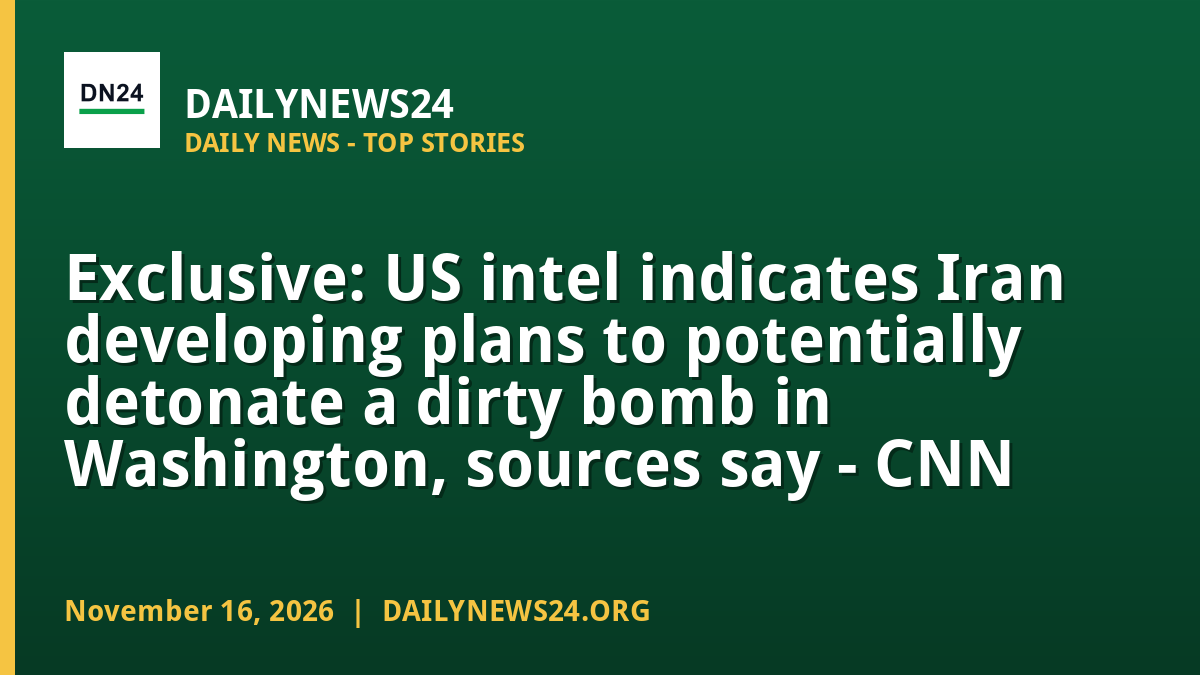
Washington, D.C. faces a distinct and escalating security challenge as United States intelligence agencies indicate that the Islamic Republic of Iran is advancing concrete plans to deploy a radiological dispersal device, commonly known as a dirty bomb, within the nation's capital. This development marks a significant pivot in the strategic calculus of Middle Eastern power dynamics, moving from conventional proxy warfare and cyber operations to the potential use of weapons of mass destruction in a Western metropolis. The revelation, confirmed by multiple senior US officials, suggests a shift in Iranian strategic doctrine, emphasizing direct, high-impact threats against American symbolic and governmental centers rather than relying solely on regional proxies. For the average citizen, this means a heightened state of awareness and a potential increase in security measures in major urban centers across the country, specifically those with significant federal presence.
The concept of a dirty bomb differs fundamentally from a nuclear explosion. While it does not produce a massive fireball or the immediate blast radius associated with atomic weapons, it is designed to scatter radioactive material over a wide area. The primary danger lies in long-term contamination, severe health risks, and the profound economic and social disruption caused by the fear of radiation. By targeting Washington, the potential perpetrators aim to strike at the heart of American governance, causing political instability and panic. The recent confirmation of such plans indicates that the threat is not merely theoretical or speculative but has progressed to the stage of active logistical planning and potential procurement of necessary materials.
Understanding the Mechanism
Experts in nuclear engineering and security studies describe the dirty bomb as a hybrid device combining conventional explosives with radioactive isotopes. When detonated, the explosive force disperses the radioactive particles into the air, creating a plume that can travel downwind. The extent of danger depends on several factors, including the type and quantity of radioactive material used, the altitude of the explosion, and prevailing weather conditions. Unlike a nuclear warhead, a dirty bomb is difficult to track due to its lack of a unique nuclear signature until it is detonated, making pre-emptive detection challenging for intelligence services. This stealth capability is what makes it a preferred tool for asymmetric warfare, allowing state actors to exert immense pressure without risking direct nuclear confrontation that would trigger mutual assured destruction protocols.
The health implications of such an attack are severe but manageable compared to a nuclear blast. Exposure to high levels of radiation can cause acute radiation syndrome, leading to nausea, vomiting, and potential organ failure within hours or days. Less acute exposure increases the long-term risk of cancer and genetic mutations. However, the immediate physical casualties are likely to be lower than in a nuclear event. The greater psychological impact occurs in the aftermath, where decontamination efforts take precedence over medical treatment, and cordons can extend for miles, isolating entire districts. This societal paralysis is often considered the true weapon of such an attack, as it forces governments to divert resources from national defense to internal crisis management.
Intelligence and Attribution
The attribution of this plot to Iran is based on a convergence of signals intercepts, human intelligence (HUMINT), and open-source investigations. US intelligence agencies have long monitored Iranian activities related to nuclear technology, extending their focus from enriching uranium for potential warheads to the diversion of smaller quantities for radiological devices. The specific targeting of Washington D.C. suggests a direct response to US foreign policy actions, particularly those involving sanctions, military deployments in the region, and support for opposing factions in Syria and Iraq. The timing of this intelligence release is critical, as it coincides with increased diplomatic friction and military posturing in the Persian Gulf, indicating that Tehran may be seeking to escalate tensions to deter further American intervention.
Complicating the picture is the involvement of third-party actors who may facilitate the transfer of materials or expertise. While the US government points directly to Iranian state actors, there is a persistent narrative that non-state groups or rogue elements within Iranian security services could be operating with a degree of autonomy. This ambiguity in command and control makes it difficult for Washington to craft a precise counter-strategy. If the plot is attributed to a specific faction within the Islamic Revolutionary Guard Corps, the US response might involve targeted sanctions or cyberattacks. If it is a broader state-level directive, the response could range from diplomatic isolation to military strikes. The lack of public evidence, such as intercepted communications or physical components, leaves room for political debate regarding the validity and severity of the threat, although the consensus among security professionals remains that the risk is real and imminent.
Domestic Security Implications
In response to these intelligence reports, the Department of Homeland Security and the Federal Bureau of Investigation have reportedly increased scrutiny of potential radioactive sources within the United States. This includes enhanced monitoring of medical and industrial radiological materials, which are the most common precursors for dirty bombs. Hospitals, research institutions, and manufacturing plants that use isotopes for therapy or inspection are now subject to more rigorous security protocols. The goal is to prevent the theft or diversion of these materials, which represent the most accessible form of radiological threat. Law enforcement agencies are also reviewing background checks on personnel with access to such materials, aiming to identify any individuals with ties to foreign intelligence services. These measures, while subtle, contribute to a broader narrative of heightened vigilance that permeates the national security apparatus.
For the general public, the immediate impact is likely to be felt through increased visibility of security personnel at government buildings and transportation hubs. The Federal Protective Service may deploy additional officers to protect federal facilities, and there could be temporary restrictions on vehicle access near the White House and Capitol Hill. While these measures are standard in an elevated threat environment, they can cause minor inconveniences in daily life. More importantly, the public is encouraged to be aware of the signs of a radiological incident, such as unusual smells, visible debris, or evacuation orders. Preparedness education campaigns may be launched to inform citizens on how to protect themselves from radiation exposure, including sheltering in place and sealing windows and doors to prevent outdoor air from entering living spaces.
Geopolitical Ramifications
The revelation of this plot has significant implications for US-Iranian relations, which are already strained by the collapse of the 2015 nuclear deal. President Biden's administration, which has sought to re-engage with Tehran to restore the Joint Comprehensive Plan of Action, now faces a complicated decision. Continuing diplomatic efforts may be seen as naive or weak in the face of such a direct threat. Conversely, abandoning diplomacy could push Iran further into isolation, potentially accelerating its nuclear program beyond the scope of a dirty bomb. The US may leverage this intelligence to pressure other nations, particularly those with significant trade relationships with Iran, to enforce stricter sanctions. This multilateral approach aims to cut off the financial and material lifelines that support Tehran's unconventional weapons development. The international community is likely to watch closely to see how Washington balances deterrence with diplomatic engagement in this new phase of conflict.
Allies of the United States, including Israel, the United Kingdom, and France, have shown varying degrees of concern. Israel, which has its own extensive intelligence network monitoring Iranian activities, has likely shared relevant information with Washington. The alignment of intelligence assessments between the US and Israel strengthens the validity of the reports and may lead to coordinated security measures in the region. European partners, while less directly threatened, may contribute to counterintelligence efforts and sanctions enforcement. The international response will be crucial in determining whether Iran feels cornered or merely provoked, as the perception of a global united front against its security interests could alter its strategic calculations. The ripple effects of this revelation may extend to nuclear non-proliferation norms, as other state actors may view the dirty bomb as a viable tool for asymmetric deterrence, potentially lowering the threshold for such attacks globally.
Future Outlook and Watchpoints
In the coming weeks, analysts expect to see a series of developments that will clarify the trajectory of this situation. The first major watchpoint is the release of further details by US intelligence committees in Congress, which may provide more specifics on the stage of the plot. If the plot is in the active procurement phase, there may be arrests or seizures of radioactive materials in other countries. The US government may also announce new sanctions targeting Iranian scientists, shipping companies, or financial institutions involved in the network. These actions would serve as a public demonstration of resolve, signaling to Tehran that its activities are being tracked and will have consequences. The reaction from the Iranian government is also critical; a denial is expected, but any subtle shifts in rhetoric or military posture will be closely monitored by regional observers.
Ultimately, the handling of this intelligence will test the resilience of US domestic security systems and the effectiveness of international cooperation in counter-proliferation. For ordinary readers, the message is one of cautious confidence. The US security apparatus is prepared to detect and mitigate such threats, as evidenced by the early identification of the plot. While the risk cannot be eliminated entirely, the ability to anticipate and prepare for an attack significantly reduces the likelihood of success for the perpetrators. Keeping an eye on official communications from the Department of Homeland Security and local emergency management agencies is advisable. The situation remains fluid, and continuous updates will be necessary as the geopolitical landscape evolves in response to this provocative development.