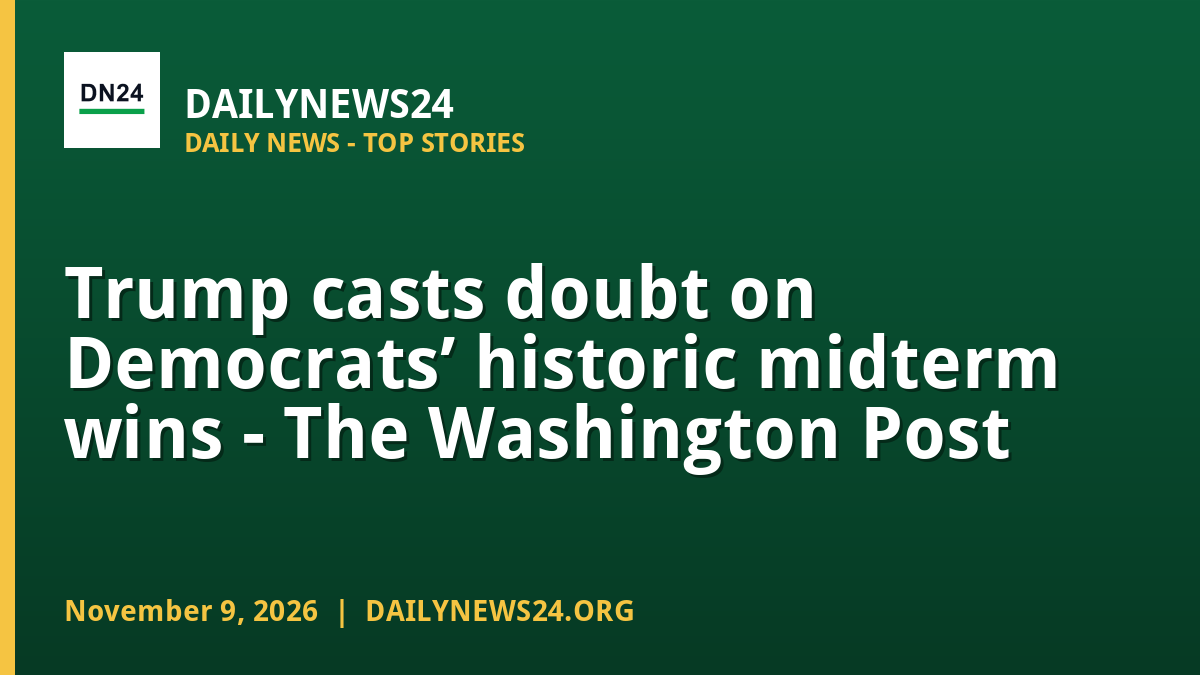
President Donald Trump has reignited intense controversy by casting serious doubt on the integrity of the 2026 midterm election results. Despite the Democratic Party securing historic victories in key legislative races, the President has publicly questioned the validity of the outcomes, suggesting that the process was compromised. This move marks a significant escalation in his rhetoric, shifting from general dissatisfaction with opposition parties to direct challenges against the electoral system itself. The comments have sent shockwaves through the political establishment, raising urgent questions about the stability of American democratic institutions and the potential for further legal or political disputes over the legitimacy of the new congressional majority.
The Nature of the President's Claims
In a series of public statements, the President veered back into familiar territory, echoing narratives that have previously been associated with the 2020 general election. He suggested that the margin of victory for the Democrats was not genuine, implying that external forces or systemic errors had skewed the results. While he did not provide specific evidence of fraud in these immediate remarks, the tone and framing were designed to undermine public confidence in the counting process. This approach is a strategic one, aiming to create a narrative of illegitimacy that could persist long after the official certifications are complete. By linking the current midterms to past accusations of rigging, the administration seeks to delegitimize the incoming Democratic leadership before they even fully assume their duties.
Implications for Congressional Authority
Challenging the Mandate
The historic nature of the Democratic wins makes this challenge particularly potent. With the party gaining significant ground in both the House and the Senate, they have secured a mandate that many analysts view as a clear referendum on the President's executive agenda. By questioning the results, the White House effectively attempts to strip this mandate of its moral and political weight. If the public begins to believe that the election was flawed, the ability of the new Congress to pass sweeping legislation or conduct oversight hearings is significantly weakened. This creates a precarious power dynamic where the executive branch can claim that the legislative branch does not truly represent the will of the people, thereby justifying executive overreach or refusal to cooperate with congressional inquiries.
Key Uncertainties in Specific Races
The President's comments come at a time when several critical races remain technically unresolved or are under intense scrutiny. In particular, the Senate races in Mississippi and Alaska are described as too close to call, with recounts or legal challenges potentially still in motion. These states are pivotal because they can determine the final balance of power in the upper chamber. While the national trend favors the Democrats, the outcome in these specific jurisdictions could shift the overall majority. The administration's focus on these undecided races allows them to maintain a narrative of uncertainty, suggesting that the final tally is not yet secure. This tactic keeps the political atmosphere tense and prevents a clean transition of power, forcing both parties to remain in a state of high alert.
Legal and Institutional Responses
Legal experts and election officials have largely dismissed the President's claims as baseless, pointing to the rigorous auditing processes in place to ensure accuracy. However, the political pressure exerted by the highest office in the land cannot be ignored. State election officials in swing districts are now facing increased scrutiny and potential harassment from supporters of the administration. There is a growing concern that local officials may feel pressured to delay certifications or entertain frivolous legal challenges to appease the White House. This environment fosters a climate of doubt that is difficult to dispel, even when the data clearly shows a fair and accurate count. The independence of election administration is being tested as never before, with figures like former Representative Thomas Massie introducing articles of impeachment against Defense Secretary Pete Hegseth, further complicating the political landscape and signaling a broader breakdown in institutional norms.
The Role of Voting Machine Conspiracy Theories
Amidst the political maneuvering, old conspiracy theories regarding voting machines have resurfaced with renewed vigor. The President's comments have provided fuel for online movements that claim electronic voting systems are inherently untrustworthy. These narratives, while factually unsupported by technical experts, resonate with a segment of the electorate that feels disenfranchised by modern political processes. The resurgence of these theories poses a dual threat: it not only undermines confidence in the current results but also prepares the ground for future challenges to the integrity of the 2028 presidential election. By normalizing the idea that machines can be 'rigged,' the administration is shaping a long-term culture of skepticism that could have lasting effects on voter participation and trust in democratic processes.
Impact on Ordinary Voters
For ordinary readers, the implications of this dispute are tangible and immediate. The uncertainty surrounding the validity of the election results can lead to voter apathy in future cycles, as some citizens may feel that their votes do not truly count if the system is perceived as corrupt. Additionally, the political infighting distracts from substantive policy issues that affect daily life, such as economic stability, healthcare access, and infrastructure development. The focus remains on procedural disputes rather than governance, leaving many Americans feeling disconnected from the political process. This erosion of trust is a critical concern, as it threatens the foundational belief that elections are a fair mechanism for choosing leaders and shaping national policy.
What to Watch Next
As the dust settles on the 2026 midterms, several key developments will determine the trajectory of this political crisis. First, the final certification of the results in Mississippi and Alaska will be crucial; any delays or legal interventions in these states will provide ammunition for the administration's claims. Second, the response from the incoming Democratic leadership will be closely monitored. Will they engage in a defensive counter-narrative, or will they focus on passing legislation to solidify their mandate? Finally, the reaction of the judiciary will be pivotal. If courts begin to entertain challenges based on the President's assertions, it could set a dangerous precedent for future electoral disputes. The coming weeks will be a test of the resilience of American democratic institutions, with the stakes being nothing less than the public's faith in the fairness of their own government.