A Political Earthquake in South America
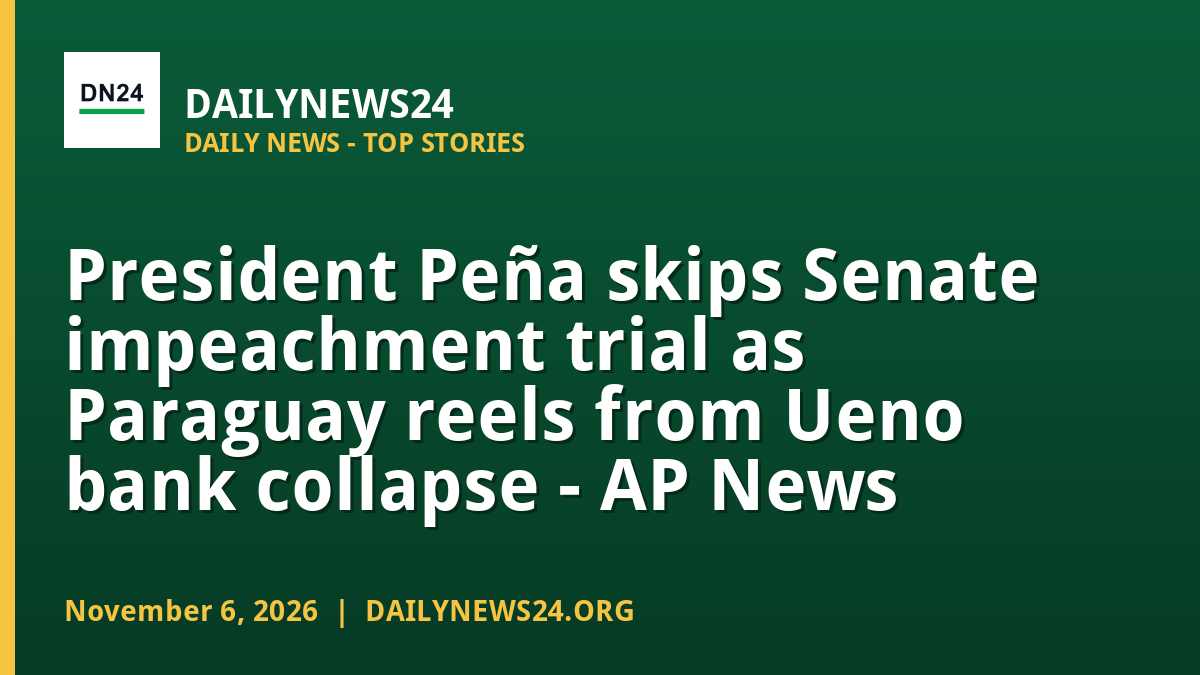
South America witnessed a stunning political upheaval this week when Paraguay’s President Santiago Peña was stripped of power and placed under house arrest. The decision, driven by the discovery of a massive financial scandal involving Ueno Bank, marks a rare instance of a sitting head of state being removed from office during a term of office. This dramatic turn of events has sent shockwaves through regional markets and diplomatic circles, raising urgent questions about the stability of the country’s democratic institutions and its ability to manage a severe economic contraction.
The speed of the impeachment process was unprecedented. Typically, such procedures in Latin America take months of judicial maneuvering and political negotiation. In this case, the legislature moved with extraordinary velocity, citing grounds of administrative misconduct and failure to protect national assets. The resulting isolation of the former president signals a profound break in the political status quo and places the burden of crisis management squarely on the remaining branches of government.
The Ueno Bank Catastrophe
At the heart of this political crisis lies the collapse of Ueno Bank, a financial institution that held a disproportionate share of the country’s private deposits. The bank’s failure was not a gradual process but a sudden rupture, triggered by allegations of mismanagement and illicit lending practices. As the institution became insolvent, it effectively froze access to funds for a large portion of the population, creating an immediate liquidity crisis that compounded the political tension.
Scale of the Financial Freeze
According to reports from major news agencies, approximately 60 percent of the country’s citizens were unable to access their bank accounts following the collapse. This figure is staggering and highlights the systemic nature of the risk that was overlooked by earlier regulatory oversight. For ordinary families, this meant an inability to pay for groceries, utilities, or medical care, turning a financial failure into a humanitarian concern within days.
Why the President Was Targeted
The impeachment of President Peña has been framed by lawmakers as a response to a failure of duty. Critics argue that the executive branch was complicit in or negligent regarding the regulatory environment that allowed Ueno Bank to operate with such high risk. The accusation is not merely of personal corruption, but of a systemic failure to enforce financial standards that should have prevented such a catastrophic loss of public trust.
Competing Perspectives on Responsibility
- Opposition View: They argue that the administration prioritized political allies over financial stability, allowing Ueno Bank to grow unchecked despite warning signs from independent analysts.
- Defense Argument: Supporters maintain that the bank’s collapse was a result of external market pressures and that the president acted in good faith, albeit with a lack of foresight.
- Legal Standpoint: Legal experts note that while financial mismanagement is a basis for impeachment, the speed of the process has raised constitutional debates about due process for the executive branch.
Economic Fallout and Market Reaction
The economic impact of the dual crisis has been immediate and severe. Stock markets in neighboring countries, including Brazil and Argentina, experienced volatility as investors reassessed the risk profile of the entire southern cone. The peso of Paraguay saw a sharp decline against the U.S. dollar, reflecting a loss of confidence in the country’s monetary stability. Businesses, particularly small and medium-sized enterprises that rely on daily cash flow, have reported significant disruptions to their operations.
International financial institutions have issued cautious statements, urging the Paraguayan government to implement transparent measures to restore confidence. While direct intervention in domestic politics is avoided, the implicit message is clear: without a credible plan to address the banking shortfall, the country risks a deeper recession that could have long-term consequences for its social safety net.
Restoring Access to Funds
The most pressing practical issue for citizens is the restoration of access to their savings. The government has announced emergency protocols to unfreeze deposits, but the logistics of managing such a large-scale payout are complex. Banks are working overtime to update their systems, while regulators are scrambling to verify the legitimacy of claims. The uncertainty surrounding when and how much money will actually reach account holders is fueling anxiety and social unrest in urban centers.
Immediate Measures for Citizens
- VIP Accounts: Priority access has been granted to government employees and healthcare workers to ensure essential services continue.
- Cash Withdrawals: Limits on daily withdrawals have been implemented to prevent a complete drain of liquidity from the banking system.
- Digital Payments: Efforts are being made to stabilize mobile payment platforms, offering an alternative to traditional card transactions.
Outlook: What Comes Next
As Paraguay navigates this turbulent period, the focus will shift to the formation of a new executive leadership. The vice president or a designated successor will need to garner enough political support to enact the necessary financial reforms. The international community will be watching closely to see if the new leadership can impose stricter regulatory frameworks to prevent a recurrence of the Ueno Bank scandal. For ordinary readers, the next few weeks will be defined by the speed at which financial access is restored and the clarity of the new government’s economic strategy. The resilience of Paraguay’s democracy will be tested not just by the political maneuvering in Asunción, but by the ability of the state to deliver basic economic security to its people in the face of a historic loss of trust.