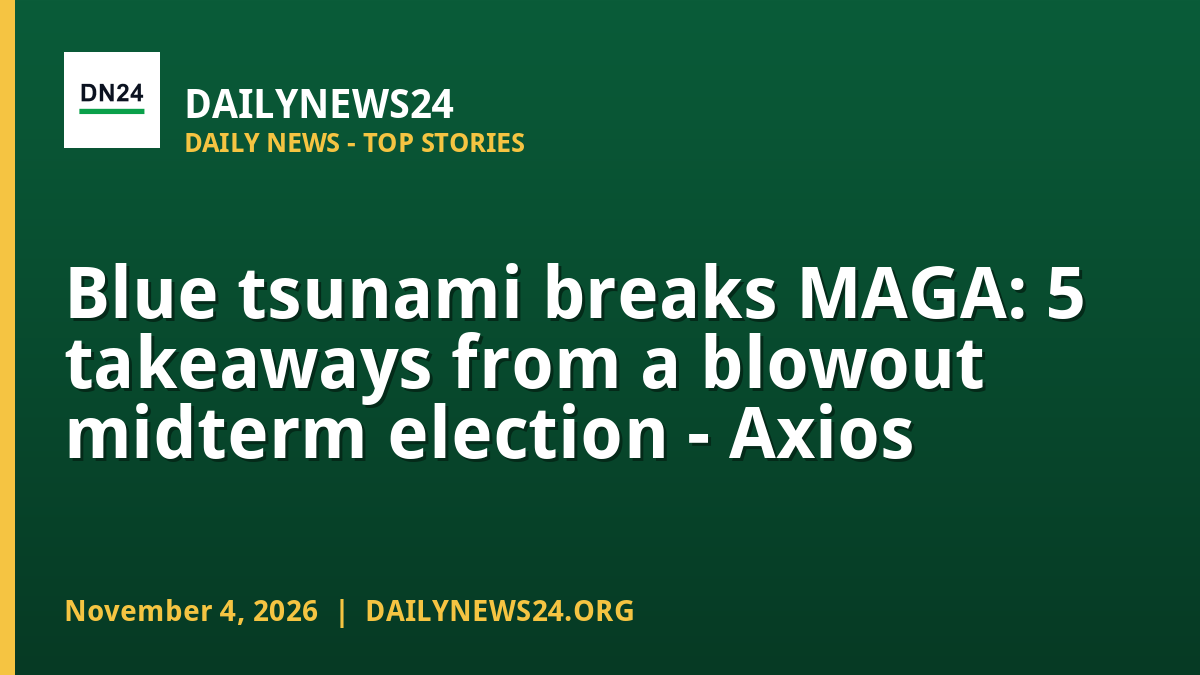
The Shift in Political Momentum
The recent midterm elections have fundamentally altered the landscape of American politics, marking one of the most significant shifts in power in two decades. What began as a modest challenge from the opposition party quickly escalated into a comprehensive mandate, signaling a deep fatigue with the incumbent administration's approach to governance. This outcome was not merely a minor setback for the current leadership but a structural realignment that suggests a durable change in voter sentiment. The margin of victory in key states was wide enough to indicate that this was not a temporary fluctuation but a sustained movement of the electorate. For ordinary citizens, this means a new legislative agenda and a renewed push for policies that were previously stalled in committee.
Analysts point to a convergence of economic anxiety and social values as the primary drivers of this shift. While the economy remained a central concern, the specific grievances have evolved from broad macroeconomic fears to targeted dissatisfaction with cost-of-living pressures and regulatory burdens. Voters in suburban districts, traditionally seen as swing territory, leaned heavily toward the challengers. This demographic shift is critical because these areas often determine the balance of power in the Senate. The data shows that turnout was robust, particularly among younger voters and independents who had previously abstained from midterm cycles.
Senatorial Flips and Institutional Impact
The most immediate consequence of this election cycle is the change in control of the United States Senate. Several key races flipped from Republican to Democratic hands, ending decades of one-party dominance in the upper chamber. These flips were not limited to traditionally blue states but included competitive battlegrounds where the margin of victory was often surprisingly large. The loss of these seats means that the majority party in the Senate will now consist of the opposition, effectively blocking or altering the legislative priorities of the White House.
- Seven critical Senate seats changed hands, altering the majority calculation significantly.
- Three of these flips occurred in states that voted for the incumbent president in the previous cycle.
- The new Senate composition includes a mix of experienced legislators and first-time officeholders.
This structural change impacts the confirmation process for federal judges and agency heads. With the opposition holding the majority, the ability to confirm partisan nominees becomes significantly more difficult. This creates a bureaucratic bottleneck that may slow down the administration's ability to implement its policy goals. For readers, this implies a period of legislative gridlock on major issues unless bipartisan compromise is reached, a rare occurrence in the current political climate.
The Strategic Implications
The strategic implications of these flips extend beyond the immediate legislative session. The new Senate leadership will likely prioritize oversight hearings and investigations into the previous term's actions. This shift from legislative initiative to investigative oversight represents a fundamental change in the role of the Senate. The new majority will also need to build internal cohesion quickly, as the coalition of senators who won their seats did so on different platforms. Some focused on fiscal conservatism, while others emphasized social justice issues. Bridging these internal divisions will be a test of the new leadership's ability to govern effectively.
Economic Anxiety as a Driving Force
Economic conditions played a pivotal role in shaping the outcome of this election. Despite overall GDP growth, the perception of economic well-being among the median household did not match the macroeconomic indicators. Inflation, while stabilizing, had already contributed to a decade of wage stagnation for many workers. The cost of essential goods, including groceries, energy, and healthcare, remained a top concern for voters. Polling data suggests that voters felt their financial circumstances had deteriorated relative to their expectations, even if national economic metrics suggested otherwise.
This disconnect between national statistics and local reality is a recurring theme in modern elections. Voters in industrial and rural areas felt left behind by the economic restructuring that favored tech hubs and coastal cities. The opposition party capitalized on this sentiment by framing the election as a choice between recovery and stagnation. They offered specific policy proposals aimed at lowering everyday costs, such as adjustments to tax credits and subsidies for small businesses. The effectiveness of this messaging was evident in the high turnout in these traditionally red districts.
Policy Priorities for the Future
With control of the Senate, the new majority will likely prioritize several key economic initiatives. These include infrastructure spending, education funding, and energy transition projects. The focus will be on legacy projects that have tangible, visible effects on communities. This approach contrasts with the previous administration's emphasis on deregulation and tax cuts. The new legislative agenda may also include measures to address housing affordability, a topic that has gained significant traction in recent years. These policies are designed to appeal directly to the voter base that turned out in record numbers.
The Role of Media and Misinformation
The digital information landscape played a complex role in these elections. While social media algorithms often amplify polarizing content, the overall trend in this cycle was toward factual reporting and candidate-based campaigning. Voters expressed frustration with misinformation and sought out reliable sources for information. Local news organizations and community events became crucial channels for voter engagement. This shift suggests a growing demand for authenticity and transparency in political communication. The prevalence of deepfake technology and AI-generated content also raised concerns about the integrity of the campaign trail, though no major incidents of widespread manipulation were confirmed.
The effectiveness of ground games also cannot be ignored. The winning party invested heavily in local outreach and volunteer mobilization. This grassroots effort was more effective than pure digital advertising in driving turnout among key demographic groups. The combination of credible digital messaging and tangible local engagement created a comprehensive campaign strategy that resonated with voters. This model may serve as a template for future electoral efforts, emphasizing the importance of holistic campaign management.
Looking Ahead: The Path Forward
The immediate aftermath of the election is characterized by a period of transition and negotiation. The new Senate majority must quickly organize its leadership structure and set its legislative calendar. This period will be marked by intense scrutiny from the previous party, which will likely attempt to frame the new agenda as radical or impractical. The executive branch will face a challenging environment where its proposed budgets and appointments may face significant hurdles. This dynamic creates an opportunity for bipartisan cooperation on issues where consensus is possible, such as border security or infrastructure maintenance.
For the next two years, the focus will be on the president's ability to adapt to this new reality. Will the administration pivot toward moderate policies that can pass the new Senate, or will it continue to push partisan agendas that may be blocked? The answer will depend on the leadership's strategic flexibility. Meanwhile, the opposition party must deliver on its campaign promises to maintain its momentum. The success of the next election cycle will depend on whether the policies enacted in this term yield tangible benefits for voters. The political landscape is now in balance, with both parties having significant stakes in the coming legislative sessions.